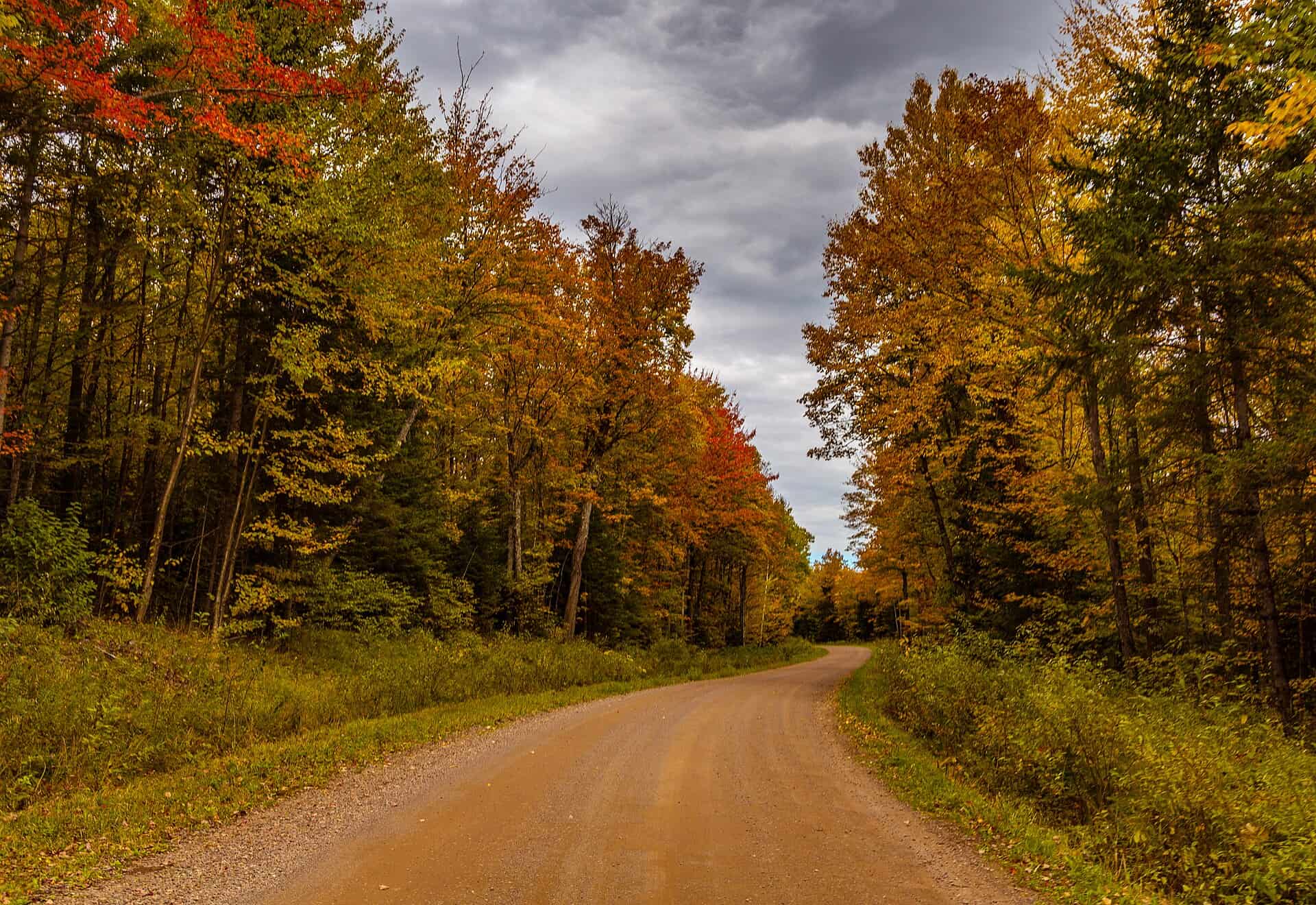
The hard frost everybody up here waits for is not what turns the leaves. The trigger is the calendar.
The U.S. Forest Service is unambiguous about it. Its own explanation of fall color says the timing of the change and the onset of leaf fall is primarily regulated by the calendar as nights become longer, and that none of the other environmental influences, temperature and rainfall included, are anywhere near as unvarying as the steadily increasing length of night through autumn.
Weather controls the quality of the display, not its schedule. The Forest Service describes the best years as a succession of warm, sunny days and cool, crisp but not freezing nights. Not freezing is doing real work in that sentence. The deep frost people treat as the starting gun is not the trigger and is not the ideal condition.

The other thing the guides get wrong
Every fall color guide prints a peak date for Michigan. The Upper Peninsula has fifteen counties and does not have one.
The Upper Peninsula Travel and Recreation Association tracks the region in three separate blocks for exactly that reason. Its reporting has the leaf show starting in mid to late September and peaking across the first three weeks of October, moving west to east and from the interior outward toward the Great Lakes.
Which counties turn first
Western, earliest: Gogebic, Ontonagon, Houghton, Keweenaw, Baraga and Iron.
Central, next: Marquette, Alger, Delta, Dickinson and Menominee.
Eastern, last: Chippewa, Luce, Mackinac and Schoolcraft. This is the block that tends to hold into the third week of October.
The inland before shoreline pattern has a straightforward cause. Superior, Michigan and Huron hold summer heat well into fall and keep the trees near the water warmer for longer. Driving inland in early October is effectively driving forward in the season.

How to time a trip
If you want one working rule: western counties from the last week of September into the first week of October, central through the first two weeks of October, eastern through the third. Ottawa National Forest for the early end of that, Hiawatha for the late end.
Then check the weekly report before you commit to a date. A single windy system can take a peak down in an afternoon, and no seasonal average survives that.
For the western end, Brockway Mountain Drive puts you above the canopy rather than inside it, which is the difference between seeing individual trees and seeing the whole hillside turn at once. Lake of the Clouds in the Porcupine Mountains does the same thing over old growth hardwood.
Further east, the Hiawatha National Forest back roads run later and stay quieter, which is worth knowing on the first two weekends of October, when M-26 and US-41 through the Keweenaw are carrying most of the color tour traffic in the U.P. If your only free weekend is mid October, point the car east rather than west and you will still be inside the peak.
One caveat for this year
Parts of the U.P. have run unusually dry this summer, with some areas in extreme drought for the first time in years. That makes last year’s dates a weaker guide than usual. Lean on the current weekly color reports rather than on when you went in 2025.
Yooper Hub note: send us your color photos with the county and the date and we will build a running map for this season.
Sources: U.S. Forest Service, Science of Fall Colors; Upper Peninsula Travel and Recreation Association fall color reporting.
More worth reading


Yooper Hub community
The conversation
Know something this story missed? Corrections and additions get read by an editor and folded into the article, with credit.
Real neighbors, real names. A Yooper Hub editor reads your first comment before it appears; after that you’re a known neighbor and your comments post right away. No account required. Community guidelines
Nothing here yet. A sentence is plenty: a correction, a name, or what you remember about this place.
Sources, credits, and reporting details
Sources & accountability
How this story was reported
Editorial methodService and public-interest reporting
Last verifiedSep. 9, 2026
Corrections statusNo material correction note is recorded on this article.
AI assistanceResearched and drafted with AI tools. Reviewed and approved by editor Keegan O’Brien.
Verification note: The ledger establishes the two load-bearing claims: the U.S. Forest Service's statement that increasing night length, not frost, regulates fall color timing, and UPTRA's three-region (west/central/east) county breakdown with a mid-to-late-September start and a first-three-weeks-of-October peak moving west to east and interior outward. The article's county-by-county date windows are the writer's working rule derived from UPTRA's regional framing, not agency-published peak dates, and the piece deliberately does not name a single U.P. peak date.
Primary sources
-
Science of Fall Colors — U.S. Forest Service, U.S. Department of Agriculture
Accessed Sep. 9, 2026.
Page quotes verbatim: 'The timing of color changes and the onset of falling leaves is primarily regulated by the calendar as nights become longer' and 'None of the other environmental influences – such as temperature, rainfall, food supply – are as unvarying as the steadily increasing length of night during autumn.' No date shown on page.
-
Fall Color Reports | Upper Peninsula — Upper Peninsula Travel and Recreation Association (UPTRA)
Accessed Sep. 9, 2026.
Page states report is updated every Wednesday in season; at access the most recent report displayed was dated 2025-10-22, so the 2026 weekly reports had not yet begun.
Additional reporting
-
Drought considered severe in southern UP — Daily Press (Escanaba), Jim Anderson
Published Sep. 9, 2026. Accessed Sep. 9, 2026.
Published a week after the article; supports the drought condition but not the phrase 'for the first time in years.'
-
U.S. Drought Monitor, Michigan state map — National Drought Mitigation Center, University of Nebraska-Lincoln
Published Sep. 3, 2026. Accessed Sep. 9, 2026.
Interactive map; category percentages did not render in the fetched text, so the specific 'extreme drought' area is supported via the Daily Press report above rather than read directly from this page.
Photo and media credits
-
Autumn on Ottawa National Forest Road Trip – Michigan Upper Peninsula Fall Colors (29423477943).jpg (featured image) — Tony Webster, via Wikimedia Commons
Featured image record. Published Oct. 1, 2016. Accessed Sep. 9, 2026. CC BY 2.0.
Commons file identified Sept 9 2026 via the Commons API from the author credit and matching aspect ratio.
.jpg)