Here is a number that might make you check the treeline. There are roughly 10,000 black bears living in the U.P. That works out to about one bear for every 30 people up here.
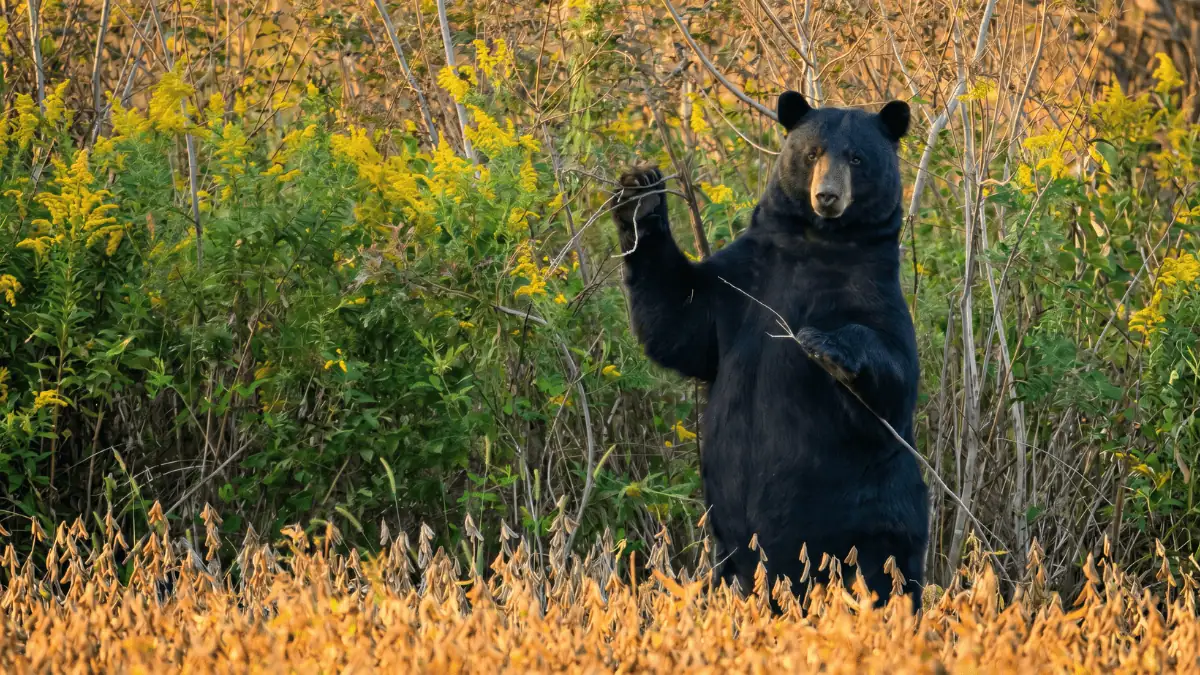
The entire U.P. is considered high-density bear country, and for most Yoopers, that is just part of life.
These are American black bears, the only kind Michigan has. No grizzlies, no browns. And the U.P. is where they thrive, holding around 83 percent of all the bears in the state across some 35,000 square miles of forest, swamp, and berry country.

Michigan DNR estimates show the U.P. bear population has continued to grow over the long term. The agency estimated 10,218 bears in 2022 and 10,350 in its 2024 survey, and it manages that population through bear-management-unit harvest goals and license quotas.
What makes a bear a bear, more than anything, is its nose. A black bear’s sense of smell is thought to be even better than a dog’s. It can pick up the scent of food from a mile away and remember exactly where it found an easy meal for years afterward.

That nose is mostly pointed at berries. Black bears are omnivores that spend the summer fattening up on raspberries, blueberries, and insects, with the occasional fawn or acorn haul thrown in.
And despite their size, they are not looking for a fight. Black bears are shy by nature, and the odds of one actually attacking a person are extremely low. Most of the time, a bear that smells you will simply melt back into the woods.

The trouble starts when a bear learns that people mean free food.
A bird feeder, an unsecured trash can, a greasy grill, or a bowl of dog food on the porch will pull a bear right into the yard, and once it finds a meal, it remembers. So the golden rule up here is simple: do not feed the bears, even by accident. Bring in the feeders in summer, lock up the trash, and clean the grill.
There is a hard truth behind that rule. A bear that gets too comfortable around people usually ends up being put down. As the old saying goes, a fed bear is a dead bear. Keeping your distance is not just safer for you, it is what keeps the bear alive.

If you want a guaranteed, safe look at one, America’s largest bear ranch near Newberry is home to dozens of rescued bears you can see up close.
Out in the wild, the dense forests of the Porcupine Mountains hold some of the highest bear numbers in the state.
So yes, the U.P. is full of bears. But ask just about any Yooper and they will shrug. Keep your trash locked up, give them their space, and the bears and the people up here get along just fine.
Featured image: American black bear. Photo by Iwolfartist via Wikimedia Commons, licensed under CC BY 2.0. Enhanced and resized for Yooper Hub.
More worth reading


Yooper Hub community
The conversation
Know something this story missed? Corrections and additions get read by an editor and folded into the article, with credit.
Real neighbors, real names. A Yooper Hub editor reads your first comment before it appears; after that you’re a known neighbor and your comments post right away. No account required. Community guidelines
Nothing here yet. A sentence is plenty: a correction, a name, or what you remember about this place.
Golden 25 trust review · #2
Verified context for this Yooper Hub story
- Evidence refreshed
- July 13, 2026
- Source readiness
- Evidence package still has unresolved requirements.
- Corrections status
- No material correction note is recorded on this article.
- Image rights
- Featured and in-story images have documented rights records.
Sources, credits, and reporting details
Sources & accountability
How this story was reported
Editorial methodService and public-interest reporting
Accountable editor:Keegan O’Brien, publisher and editor.
Last verifiedJul. 13, 2026
Corrections statusNo material correction note is recorded on this article.
AI assistanceResearched and drafted with AI tools. Reviewed and approved by editor Keegan O’Brien. Tool: Claude Max.
Verification note: Population, biology, conflict-prevention, and safety guidance were checked against current Michigan DNR sources. A causal population-growth sentence was narrowed to the estimates and management practice the DNR actually documents. Local image derivatives retain the creator and license information available in their article captions; original Commons URLs were not preserved for every attachment.
Primary sources
-
Michigan is bear country. And here they come! — Michigan Department of Natural Resources
Published Mar. 12, 2026. Accessed Jul. 11, 2026.
-
Black bears — Michigan Department of Natural Resources
Accessed Jul. 11, 2026.
-
Bear Population Trend Analysis and 2025–26 Recommendations — Michigan Department of Natural Resources / Natural Resources Commission
Published Feb. 13, 2025. Accessed Jul. 11, 2026.
Original URL https://www.michigan.gov/dnr/-/media/Project/Websites/dnr/Documents/Boards/NRC/2025/February-2025/2025_26_Bear.pdf returned 404 on 2026-08-15; link points to the Internet Archive capture of 2025-08-16, which the archive reports as a 200.
Additional reporting
-
Eastern U.P. Citizens Advisory Council division report — Michigan Department of Natural Resources
Published Feb. 1, 2024. Accessed Jul. 11, 2026.
Original URL https://www.michigan.gov/dnr/-/media/Project/Websites/dnr/Documents/Boards/EUPCAC/EUPCAC-Division-Reports/division-report-feb-2024.pdf returned 404 on 2026-08-15; link points to the Internet Archive capture of 2025-03-27, which the archive reports as a 200.
Photo and media credits
-
American black bear featured-image derivative — Iwolfartist attribution / Wikimedia Commons / Yooper Hub derivative
Featured image record. Accessed Jul. 11, 2026. CC BY 2.0.
Supports: Featured-image file used by the article.
The local derivative was enhanced and resized. The attachment caption preserves creator and license, but the original Commons file URL was not retained.
-
Black-bear body photographs — U.S. Forest Service, U.S. Fish and Wildlife Service, and National Park Service credits preserved in article captions
Accessed Jul. 11, 2026. Public domain U.S. federal-government works.
The article page is the retained attribution record for local derivatives whose original Commons file URLs were not stored in attachment metadata.