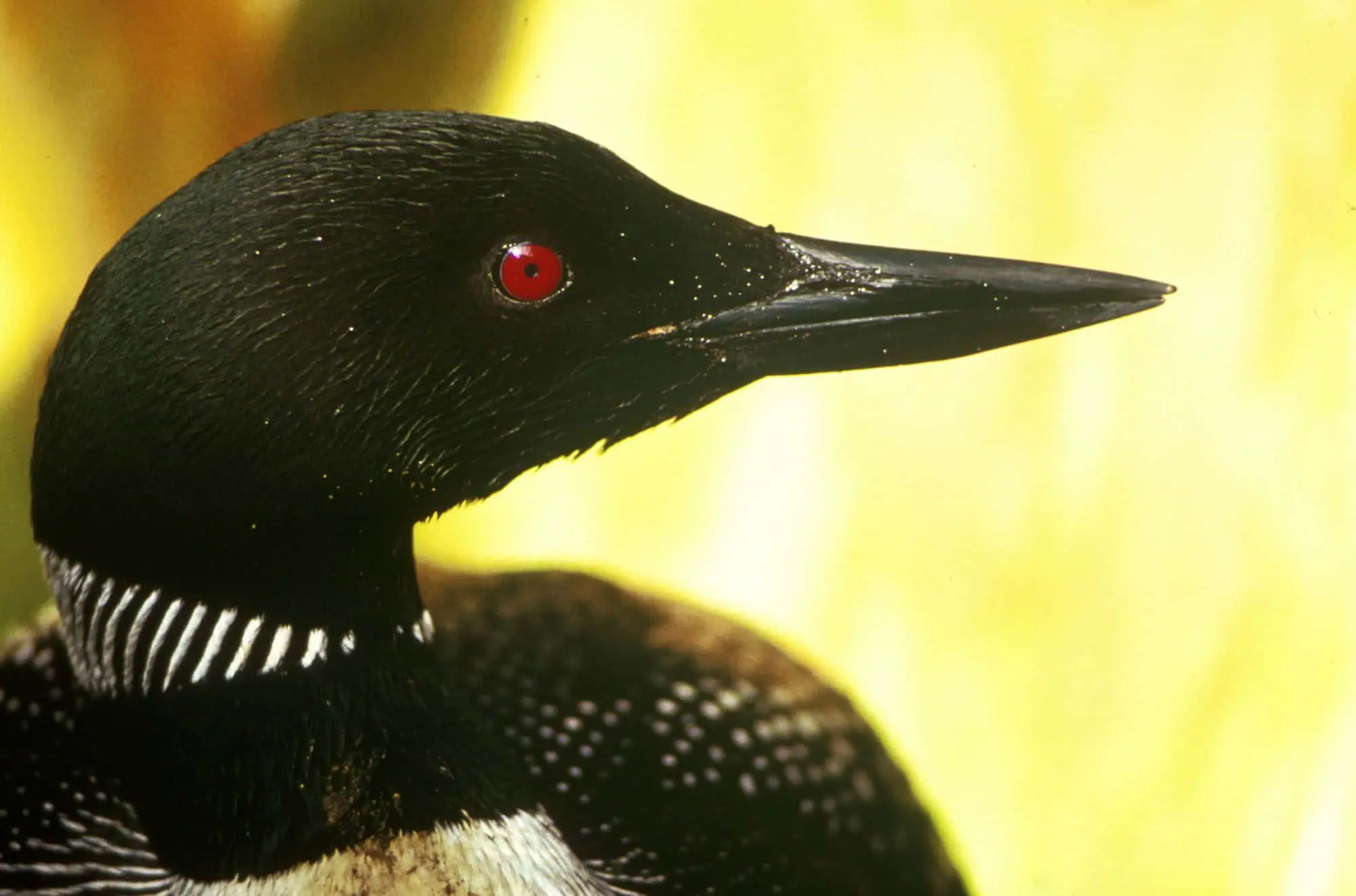
The haunting call of the common loon is the sound of home to anyone who ever spent a summer up north
Ask anyone who grew up summering on a lake in the U.P. what they miss most, and many will say the same thing. The sound. That long, mournful cry drifting across the water at dusk.
That is the call of the common loon, and for a lot of Yoopers, it is the sound of home.
There is nothing else quite like it.
The most famous one is called the wail, a long, rising cry that sounds almost like a wolf’s howl carrying over the water. It is how a pair keeps track of each other when they drift apart. Loons have a “laughing” call too, the tremolo, and the males have a yodel so distinct that every single one is different, like a fingerprint.
If you have never heard it, or you just want to be taken back, listen:
That sound has meant “up north” to generations of people, and it turns up in movies any time a filmmaker wants a lake to feel wild and a little lonely.
The bird behind the call is just as remarkable. Loons look a bit like ducks, but they are built for diving. They have solid bones instead of hollow ones, which makes them heavy enough to slip underwater and chase fish down as deep as 200 feet, holding their breath for up to five minutes.
And here is the part that melts people. In early summer, loon chicks hatch as little balls of black down, and for the first couple of weeks of life, they ride around tucked on their parents’ backs.
Loons are loyal, too. A pair will often come back to the very same lake, and even the same nest, year after year. They winter down on the ocean, then return north the moment the ice goes out, like clockwork. To a lot of folks up here, that first call of the spring is the real sign that winter is finally over.
The U.P. is the best place left in Michigan to hear them.
Loons need clean, quiet water and space away from people, and the U.P.’s wild lakes give them exactly that. They are still listed as a threatened species in the state, with maybe 500 to 775 nesting pairs hanging on, most of them up here.
They are easily spooked, so the kindest thing you can do is keep your distance, slow the boat down, and never crowd a nest. Give them room, and they will keep coming back.
It is one more piece of what makes a U.P. summer feel like nowhere else, right alongside a spring so clear the trout look like they are floating.
And if the call ever lures you out onto the water, the wild lakes of the Porcupine Mountains are about as good as it gets.
So if you find yourself far from home on a summer night, missing a place you cannot quite name, it might just be this. A dark lake, a still evening, and one long, lonesome call rolling across the water. Some sounds you never really leave behind.
More worth reading


Yooper Hub community
The conversation
Know something this story missed? Corrections and additions get read by an editor and folded into the article, with credit.
Real neighbors, real names. A Yooper Hub editor reads your first comment before it appears; after that you’re a known neighbor and your comments post right away. No account required. Community guidelines
Nothing here yet. A sentence is plenty: a correction, a name, or what you remember about this place.
Sources, credits, and reporting details
Sources & accountability
How this story was reported
Editorial methodAggregation
Last verifiedJul. 13, 2026
Corrections statusNo material correction identified in the July 13, 2026 source review.
AI assistanceResearched and drafted with AI tools. Reviewed and approved by editor Keegan O’Brien.
Verification note: CEO-directed review checked the central claims against 1 direct public evidence link on July 13, 2026. No material correction was identified.
Primary sources
-
Direct evidence for: If You Grew Up on a U.P. Lake, This One Sound Will Take You Right Back — Allaboutbirds
Accessed Jul. 13, 2026.
Direct public evidence reviewed against the article on July 13, 2026.
Photo and media credits
-
Common Loon head sideways — Art Weber/U.S. Fish and Wildlife Service / Wikimedia Commons
Featured image record. Accessed Aug. 15, 2026. Public domain.
Supports: Photo credit for the featured image.
Featured image added 2026-08-15. Resized from 2500×1653 to 2000×1322, no crop. Attribution and licence in the caption.
