In November 1920, a beat-up 63-foot tug called the Arbutus slipped out of the Canadian port of Fort William and crossed Lake Superior toward Houghton, with 22 cases of Scotch and 48 cases of rye whiskey hidden in her coal bunkers. She never made her delivery. Somewhere out on the lake, the crew cracked open the cargo and worked their way through an entire case of Scotch. By the time they sobered up they were badly off course and had drifted to Copper Harbor, at the very tip of the Keweenaw, exactly where they did not want to be.
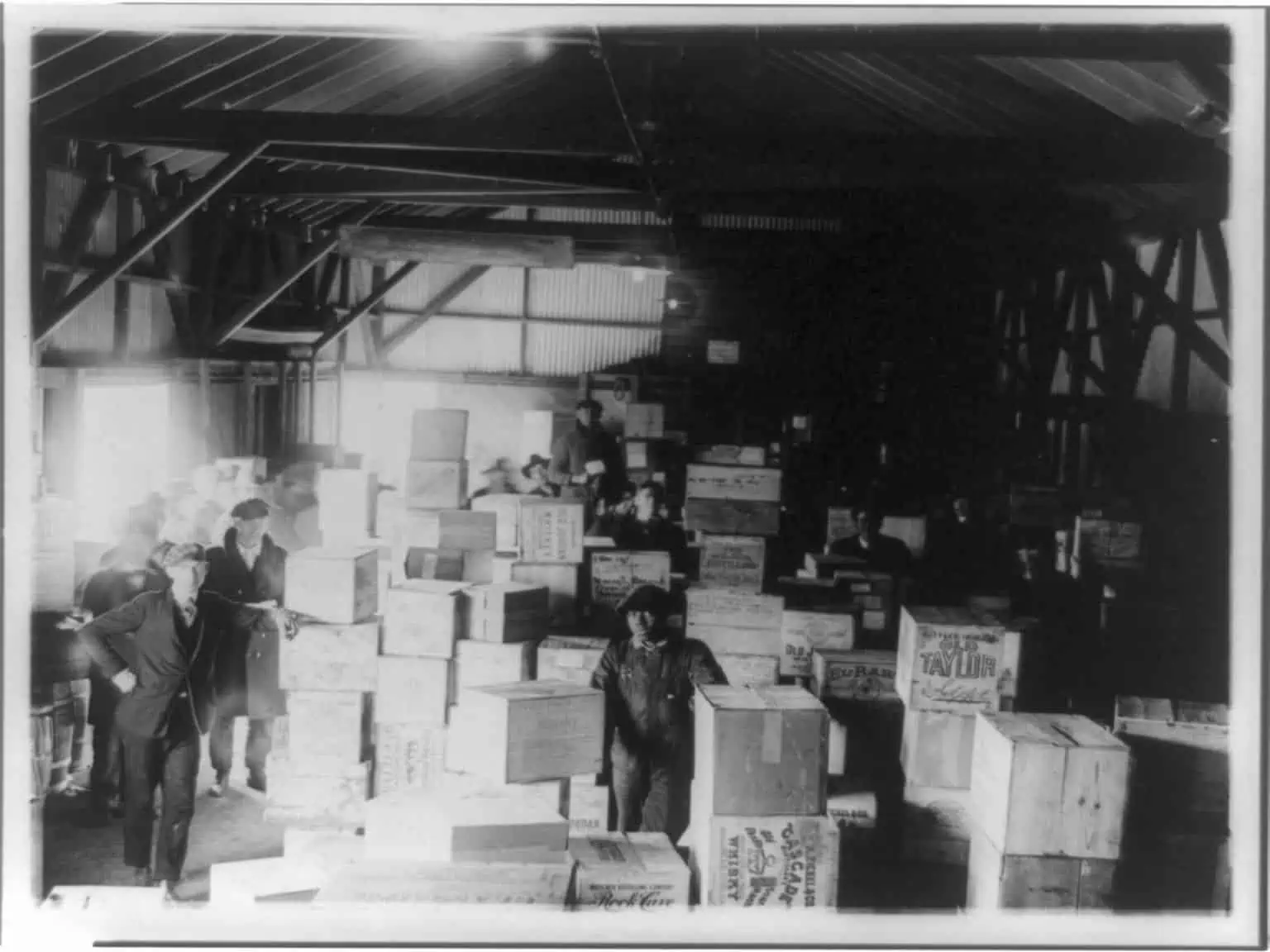
The lighthouse keeper there, Charles Davis, rowed out to see what the strange tug was doing. A crewman cheerfully told him she was carrying “wet goods.” Davis rowed straight back and reported them to customs. The Arbutus was one of countless boats running booze across the U.P.’s Canadian border during Prohibition, and her clumsy end was unusual only in that anyone got caught at all.

A dry state with a wet neighbor
Michigan went dry in 1918, two years before the rest of the country, and that created an opportunity the geography of the U.P. made almost irresistible. Just across the water sat Ontario, where a strange loophole applied. It was illegal to sell liquor to Canadians, but perfectly legal to manufacture it and export it. So Canadian distillers could load a boat with whiskey, wave it off toward a country where it was banned, and break no Canadian law doing it. One historian described it as smugglers leaving Canada with shiploads of alcohol under the protection of Canadian law.
The liquor crossed at every thin point along the border. It came over the St. Marys River right at Sault Ste. Marie, across Whitefish Bay toward Whitefish Point, and straight across Lake Superior from the Canadian ports at the head of the lake. Warehouses in the Canadian Sault stacked up whiskey from Scotland and Quebec, and small boats carried it over a few dozen cases at a time. Deep in the U.P.’s woods, meanwhile, local moonshiners ran their own stills, because the same isolation that hid a smuggler’s boat could hide a backwoods still just as well.

When the Coast Guard was in on it
Here is the part that surprised even the people fighting it. The U.S. Coast Guard, whose job was to stop the smuggling, could not always be trusted to do it. The Soo was the Coast Guard’s regional headquarters for Lakes Superior, Huron, and Michigan, and yet the U.S. consul across the river became convinced that Coast Guard crews were actively helping run liquor across. When the consulate complained, months would pass, and the only response was that the men involved had been quietly transferred somewhere else.
The trade pulled in serious players. The Bronfman family, running liquor out of the Canadian ports at the head of the lake, would parlay their bootlegging fortune into one of the wealthiest dynasties in Canada. Al Capone and Detroit’s notorious Purple Gang both worked the Soo route to keep Canadian whiskey moving down to Chicago and Detroit. Even the grand old resort hotel on Mackinac Island reportedly kept its doors open through the lean years partly on gambling and on fine Canadian whiskey delivered, quietly, by rumrunners.
The lake always collects
As for the Arbutus, her story ended the way a lot of Lake Superior stories do. The tug was seized and held at the Marquette Coast Guard station over the winter. Her Canadian owners swore they had no idea she had been running whiskey, and remarkably, the authorities believed them and gave her back. A year later, in November 1921, she set out from Marquette for the Canadian Sault, ran into the kind of weather Lake Superior is famous for, and sank about 15 miles off Grand Marais. The crew was pulled from the water by the same Coast Guard that had once seized her. Most of the men ever charged in the whole affair paid a 500-dollar fine and walked. The whiskey trade rolled on until Prohibition finally ended in 1933, and the U.P.’s stretch of border went quiet again.
More worth reading


Yooper Hub community
The conversation
Know something this story missed? Corrections and additions get read by an editor and folded into the article, with credit.
Real neighbors, real names. A Yooper Hub editor reads your first comment before it appears; after that you’re a known neighbor and your comments post right away. No account required. Community guidelines
Nothing here yet. A sentence is plenty: a correction, a name, or what you remember about this place.
Sources, credits, and reporting details
Sources & accountability
How this story was reported
Editorial methodArchival synthesis
Last verifiedJul. 13, 2026
Corrections statusNo material correction identified in the July 13, 2026 source review.
AI assistanceResearched and drafted with AI tools. Reviewed and approved by editor Keegan O’Brien.
Verification note: CEO-directed review checked the central claims against 1 direct public evidence link on July 13, 2026. No material correction was identified.
Primary sources
-
Direct evidence for: A Whiskey Smuggler Got Caught in the U.P. After the Crew Drank Too Much of Their Own Cargo — Northern Michigan University
Accessed Jul. 13, 2026.
Direct public evidence reviewed against the article on July 13, 2026.
Photo and media credits
-
cases_of_confiscated____liquor_LCCN88715934.jpg — Creator or rights holder named in the WordPress attachment caption
Featured image record. Accessed Jul. 13, 2026. public domain.
Supports: Featured image used by this article.
Confiscated liquor during Prohibition. Whiskey like this poured across the U.P.’s Canadian border for over a decade. Photo: National Photo Company / Library of Congress (public domain).