In 1895 a Wisconsin lumberman named A.D. Johnston bought 80 acres at the south end of Clark Lake for the pine standing on it. Then he went and looked at what he had bought.
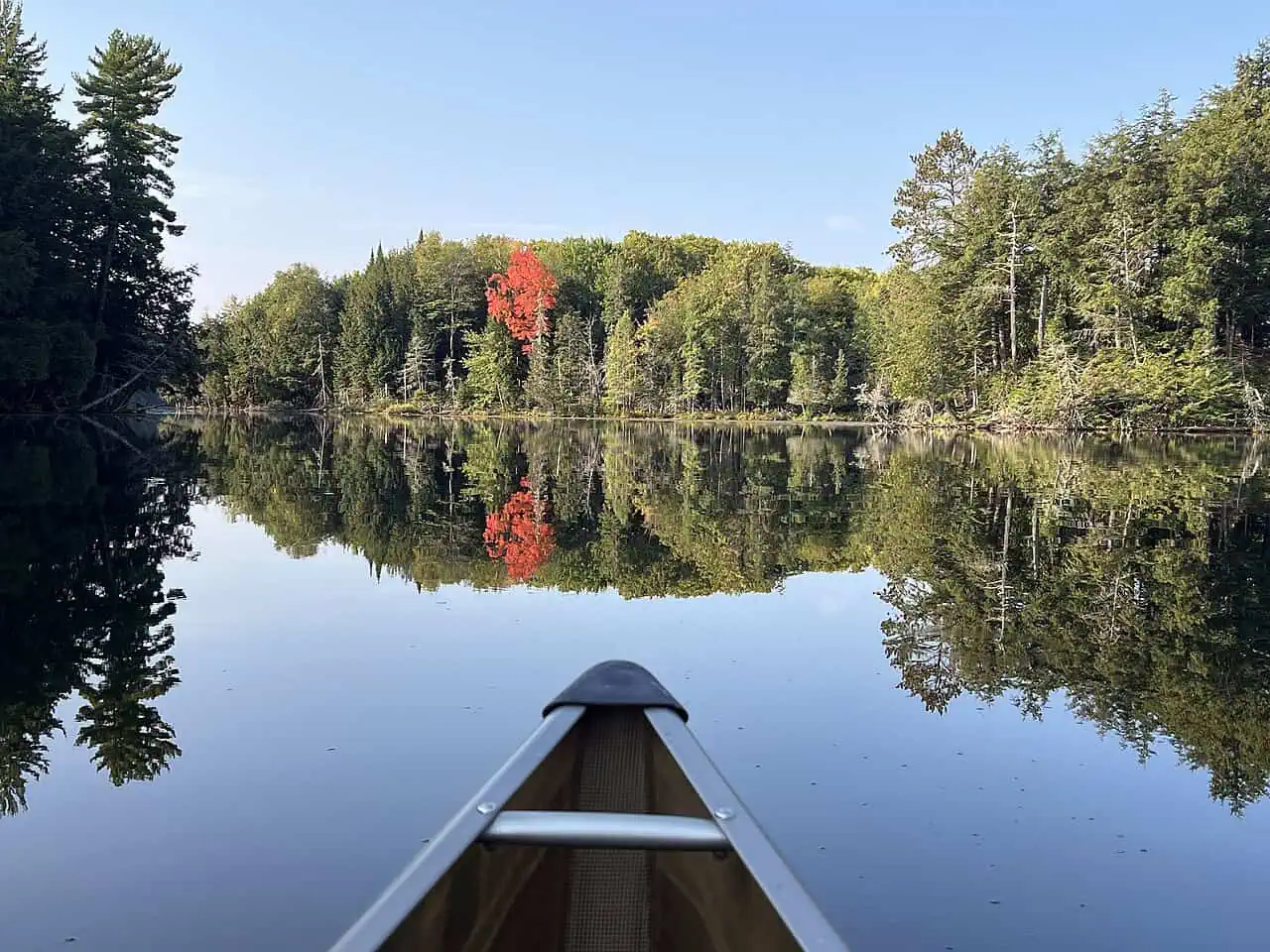
He did not cut it. He decided to keep it instead, and that single change of mind is the reason there is still 400-year-old forest in the western Upper Peninsula.

Everything around it was taken
At the turn of the century, timber companies were felling the oldest and biggest hardwoods in Michigan at a pace that left almost nothing. What happened at Kingston Plains, where cut stumps still sit in open sand a century later, was the normal outcome.
Sylvania got skipped. Johnston’s land became a private retreat, and over the following decades wealthy owners held it as a fishing and hunting preserve rather than a timber lot. Private money kept the saws out until the Forest Service took over.
Long before any of that, this was Ojibwe ground. People were here from as early as 600 A.D., hunting, fishing, gathering wild rice, gardening and making maple sugar. They called it katikitigon — old planting ground.
What is actually in there
The wilderness covers 18,327 acres in Gogebic County, inside the Ottawa National Forest, and was designated in 1987. Inside it are 34 named lakes, some with sand beaches, some ringed with record-size red and white pine.
It is one of the largest tracts of old growth left in the Midwest. Rare orchids grow here. Bald eagles, loons and osprey nest here. There are roughly 30 miles of hiking and portage trail, with maintained portages reaching 18 of the lakes, and about 50 designated backcountry campsites spread along 8 of them.

The rules are the point
Sylvania is managed as designated wilderness, the strictest protection federal land gets, and the restrictions are unusually tight even by that standard.
No motorized or mechanized equipment. No gas boat motors, no snowmobiles, no bicycles — and no portage wheels, which surprises people who assume a wheeled cart is harmless. If you want a canoe on the next lake, you carry it.
A narrow exception exists on a few lakes including Crooked, where small electric motors up to 48 pounds of thrust are allowed, and where certain longtime property owners retain gas motor rights.
Fishing runs under special regulations on most of the lakes: bigger size limits, artificial lures only, bass catch-and-release. That is deliberate. It is why the fish in there are older and larger than in comparable water.
Planning a trip in
The entrance is about seven miles west of Watersmeet, roughly 39 miles east of Ironwood, just off US-2. Backcountry campsites require a permit, recently $15 per night, available at the Sylvania Entrance Station or through recreation.gov. The Forest Service asks visitors to watch its orientation video first, which is worth doing.
If you want the scenery without the portaging, the Clark Lake campground next door has 48 drive-in sites, flush toilets, a swimming beach and canoe landings, and works as a base for day trips.
Two honest warnings. There is no cell service. And the mosquitoes in early summer are severe enough that visitors describe the portages as the hard part — go in late summer or fall if that matters to you. The Porcupine Mountains are the other western anchor if you are building a longer trip.
More worth reading


Yooper Hub community
The conversation
Know something this story missed? Corrections and additions get read by an editor and folded into the article, with credit.
Real neighbors, real names. A Yooper Hub editor reads your first comment before it appears; after that you’re a known neighbor and your comments post right away. No account required. Community guidelines
Nothing here yet. A sentence is plenty: a correction, a name, or what you remember about this place.
Sources, credits, and reporting details
Sources & accountability
How this story was reported
Editorial methodArchival synthesis
Last verifiedAug. 15, 2026
Corrections statusNo material correction note is recorded on this article.
AI assistanceResearched and drafted with AI tools. Reviewed and approved by editor Keegan O’Brien. Tool: Claude Opus 5.
Verification note: Ledger reconstructed 2026-08-15 from Wilderness.net's Forest Service record and the Friends of Sylvania history of the Sylvania Club, with the Ottawa National Forest page for current management.
Primary sources
-
Sylvania Wilderness — Wilderness.net (U.S. Forest Service data)
Accessed Aug. 15, 2026.
-
The Sylvania Club — Friends of Sylvania Wilderness
Accessed Aug. 15, 2026.
Supports: The club era between Johnston's purchase and federal acquisition.
Additional reporting
-
Sylvania Wilderness and Recreation Area — Pure Michigan (Ottawa National Forest listing)
Accessed Aug. 15, 2026.
Supports: Current visitor rules for the wilderness and recreation area.
-
Sylvania Wilderness — Wikipedia contributors
Accessed Aug. 15, 2026.
Supports: Summary and pointers to the above.
Pointer.
Photo and media credits
-
Crooked Lake, Sylvania Wilderness (featured image) — Lee Willaert, U.S. Forest Service
Featured image record. Accessed Aug. 4, 2026. Public domain (U.S. federal government work).
Creator and license from the attachment caption. Attachment 2117, 1280×960.