Every year, on the deadest news day of the calendar, the Associated Press, CNN, and news desks from London to Tokyo run the same story: a list of words the English-speaking world has been ordered to stop using. It has happened every January 1 since 1976.
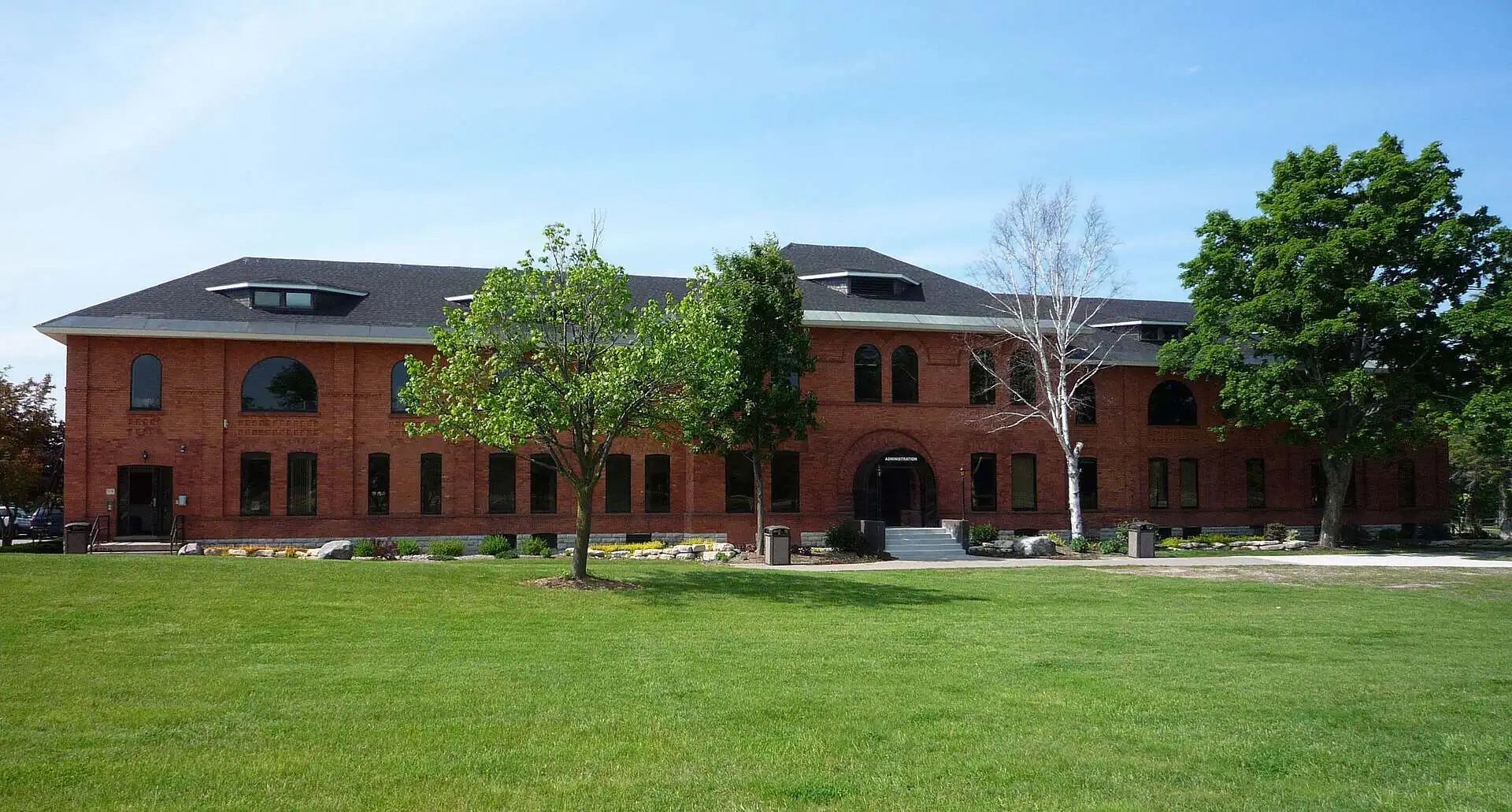
The list does not come from Oxford. It does not come from Merriam-Webster. It comes from a public university of a few thousand students in Sault Ste. Marie, Michigan, and it started as a joke at a party.

A newspaperman with a slow week
In 1975, W.T. “Bill” Rabe was the public relations director at Lake Superior State University. On New Year’s Eve, he and a group of friends and colleagues sat around airing their grievances about language — the phrases that had worn out their welcome, the jargon that meant nothing. Somebody wrote them down.
The next morning, Rabe put out a press release. He gave it a title with all the restraint of a man who knew exactly what he was doing: the List of Words Banished from the Queen’s English for Mis-use, Over-use and General Uselessness.
And here is the detail that explains the whole 50-year run. Rabe was a former newspaperman. He knew something every editor knows and no one else thinks about: the last week of December is a news desert. The politicians have gone home, the courts are closed, nothing is happening, and newsrooms across the country are staring at empty pages with skeleton staffs.
So he handed them something to print. A free, funny, endlessly quotable story, delivered precisely into the vacuum, from a school most of the country could not find on a map.
It worked immediately. The mail that poured in over the following weeks told Rabe he would never run short of material — and by the second year, the list was built entirely from nominations sent in by the public.
The Unicorn Hunters and the burning snowman
The Banished Words List was not a one-off. It came out of a genuinely strange little culture at LSSU that Rabe and his associates cultivated under the banner of the Unicorn Hunters, and it was not even their only surviving invention.

Since 1971, the university has marked the first day of spring by building a snowman and setting it on fire. That is the entire tradition. In a town where winter overstays by several months, the students burn a snowman in effigy every March, and they have been doing it for over half a century.
Rabe eventually retired. The university, recognizing what it had, copyrighted the concept and kept it running.
Fifty years of telling the world to knock it off
The scale now would be unrecognizable to the people at that party. LSSU has taken in tens of thousands of nominations over the decades, and the banished archive runs past a thousand entries — a slow-motion record of what annoyed English speakers in each particular year. Some of them read as period pieces now: you know, user-friendly, bae.
The list published on New Year’s Day 2026 — billed by the university as its golden anniversary, the 50th annual edition — drew more than 1,400 submissions from all fifty states and from as far away as Uzbekistan, Brazil, Japan, and the United Kingdom. A committee makes the final cut each December.
Topping that anniversary list was 6-7, the TikTok catchphrase that had colonized American middle schools. One nominator from Wisconsin submitted that there were six or seven reasons the phrase needed to stop. Another from Utah proposed it was time for the thing to be 86’ed. That is the register the whole enterprise has always operated in: mock-severe, entirely toothless, and irresistible to a copy editor with column inches to fill.
The joke that outlived everybody
Nothing about this should have lasted. It was a party bit, put out by one guy, from a small university on the St. Marys River, with no budget and no authority over the English language whatsoever.
But Rabe understood the actual product. The words were never the point. The point was that on January 1, every newsroom on earth needs something to run, and for fifty years a school in the U.P. has been the one reliably holding out a story.
The U.P. spent ten years getting one word into the dictionary. Sault Ste. Marie has spent fifty getting a thousand of them thrown out. Somewhere in the middle of those two impulses is the whole personality of this peninsula.
More worth reading


Sources, credits, and reporting details
Sources & accountability
How this story was reported
Editorial methodArchival synthesis
Last verifiedJul. 23, 2026
Corrections statusNo material correction note is recorded on this article.
AI assistanceResearched and drafted with AI tools. Reviewed and approved by editor Keegan O’Brien.
Verification note: Initial ledger, verified 2026-07-23 during publication prep. Origin at the 1975 party, the January 1 1976 first publication, the slow-news-week rationale, the Snowman Burning since 1971, the copyright after Rabe retired, and the 2026 submission figures were checked against the university own account and contemporaneous coverage. Sources disagree on the ordinal of the list published January 1 2026: the university and most outlets call it the 50th annual, while one aggregator calls it the 51st. The article uses the university own framing and attributes it. Nominator remarks are paraphrased rather than quoted. Featured image CC BY 3.0, credit Bobak Ha Eri, resized without cropping. No AI-generated or AI-assisted media.
Primary sources
-
Banished Words, LSSU Traditions — Lake Superior State University
Featured image record. Published Jan. 1, 2026. Accessed Jul. 23, 2026. University publication; brief quotation with attribution.
Primary institutional source; origin of the slow-news-week detail that anchors the article.
Additional reporting
-
LSSU releases 45th annual list of Banished Words — WLUC TV6 / Upper Michigan Source
Featured image record. Published Dec. 31, 2019. Accessed Jul. 23, 2026. Copyright Gray Television; cited.
-
LSSU issues 50th annual Banished Words list. First up: 6-7 — Michigan Public (NPR)
Featured image record. Published Jan. 1, 2026. Accessed Jul. 23, 2026. Copyright Michigan Public; cited.
-
Banished Words List reaches golden anniversary — WNEM
Featured image record. Published Jan. 1, 2026. Accessed Jul. 23, 2026. Copyright Gray Television; cited.
Source of the two nominator remarks, both paraphrased rather than quoted in the article.
-
Lake Superior State University Banished Words List — Northern Michigan History
Featured image record. Published Jan. 1, 2025. Accessed Jul. 23, 2026. Copyright northernmichiganhistory.com; cited.
-
Bae, Polar Vortex and Other Words That Should Be Banished — Patch
Featured image record. Accessed Jul. 23, 2026. Copyright Patch Media; cited.
Used only for the example of a period-piece banished word.
Photo and media credits
-
2009-0618-LSSU-Admin.jpg — Bobak Ha Eri / Wikimedia Commons
Featured image record. Published Jun. 18, 2009. Accessed Jul. 23, 2026. CC BY 3.0; credit Bobak Ha Eri.
