Lake Superior off Munising is so clear you can see century-old wrecks from the surface. Press play.
Most of Lake Superior’s shipwrecks are hidden in cold, black water hundreds of feet down. The wrecks off Munising are different. Here, the lake puts them on display.
What you are looking at is a wooden ship that went to the bottom of Lake Superior in 1870, lying close enough to the surface that you can see the whole hull from a boat without ever getting wet.
Where are the Munising shipwrecks?
They are in the Alger Underwater Preserve, a stretch of Lake Superior between Grand Island and the Pictured Rocks coast. Grand Island shelters the bay, so for more than a century ships running from Superior’s storms tried to duck in here for cover, and plenty of them never made it back out. What is left is a scatter of wrecks on a sand and rock bottom, in water clear enough on a calm day to read the shape of a hull from above it.
The star is the Bermuda, a wooden schooner that went down in 1870. She sits upright and nearly intact in Murray Bay off Grand Island, her deck about 12 feet down, close enough that everyone on a boat above her can trace the whole outline at once. Three of her crew drowned. That part tends to get left out of the glass-bottom-boat pitch. Nearby lies what is left of the Herman H. Hettler, a 200-foot lumber hooker running 1,100 tons of bulk table salt from Ludington to Duluth. Seeking shelter from a gale on the night of November 23, 1926, she went off course in the snow and slammed into the rock reef off Trout Point at about 8:30. All 16 of her crew got off in the lifeboats and were towed into Munising. The salt dissolved, and the ship did not stay: the Coast Guard dynamited the hull a few years later as a hazard to navigation, and she is now scattered across half a mile of bottom. Her boiler sits in about 25 feet of water in a debris field that includes piping, tanks and a bath tub.

Seeing them takes no wetsuit and no certification. Tour boats out of Munising run glass-bottom trips over the wrecks all summer, and kayakers paddle right over the Bermuda’s deck. Divers get the same wrecks with nothing to fight: no salt to corrode them, no worms to eat the wood, just cold fresh water that has kept an 1870 hull in the condition it is in.
It is the same lake that swallowed the Edmund Fitzgerald and battered the keepers out at the loneliest lighthouse in America. But right here, on a calm summer morning, it will show you its wrecks like exhibits in a museum, laid out under glass it made itself.
A hundred and fifty years of Great Lakes history, sitting in plain sight, and you do not even have to get your feet wet.
More worth reading


Sources, credits, and reporting details
Sources & accountability
How this story was reported
Editorial methodArchival synthesis
Last verifiedAug. 27, 2026
Corrections statusNo material correction note is recorded on this article.
AI assistanceResearched and drafted with AI tools. Reviewed and approved by editor Keegan O’Brien.
Verification note: Four corrections made to the body on 2026-08-27 before this ledger was written, all found by sourcing claims the draft asserted without one. (1) The draft said of the Hettler's salt cargo 'The salt dissolved. The ship stayed.' She did not stay: the Coast Guard dynamited the hull a few years after the 1926 wreck as a hazard to navigation and she is scattered across half a mile of bottom. The line was memorable and false, and it is now the paragraph's actual subject. (2) The Bermuda's deck was given as 'just feet below the surface'; sources put the wreck in 12 to 30 feet with the deck at about 12, so the copy now says 12 feet. (3) A visibility figure of 'up to 50 feet' appeared in no source consulted and was removed rather than reattributed. (4) The claim that the operator bills its glass-bottom trips as the only tours of their kind in the country could not be found on the operator's own site, so it was cut. The headline said '150-Year-Old Shipwrecks' plural when only the Bermuda is that old, the Hettler being a century, and now names the 1870 wreck singly. CONFLICT LEFT STANDING: the Hettler's length is 210 feet in Baillod's survey and in contemporary accounts, 200 feet on the tour operator's own page, and 235 feet in secondary dive writing. The copy uses 210 as the best-supported figure. Registered length versus overall length is the likely cause and no source consulted resolves it. CHECKED AND EXCLUDED: one secondary site states the Bermuda sank in Munising Bay in 1870, was raised in 1883 and towed to Murray Bay where she sank a second time. Neither Baillod nor the Alger County Chamber records any raising, and Baillod says so explicitly, so the story stays out of the copy. If it is ever substantiated it is a better story than the one told here.
Primary sources
-
Shipwrecks of the Munising Area — Baillod.com
Accessed Aug. 27, 2026.
A shipwreck research survey rather than a tourism page, and the only source consulted that addresses the raised-and-resunk claim at all.
Additional reporting
-
Shipwrecks, Greater Munising Bay — Alger County Chamber of Commerce
Accessed Aug. 27, 2026.
Independent confirmation of both dates and of the Bermuda's depth range.
-
The Herman Hettler — Shipwreck Tours, Munising
Accessed Aug. 27, 2026.
The tour operator's own account, used for the cargo and the debris field. Its 200-foot figure is recorded here because it disagrees with Baillod's 210 and the reader is entitled to know the number is not settled.
-
Shipwrecks along Pictured Rocks National Lakeshore, Alger County — Genealogy Trails
Accessed Aug. 27, 2026.
Compiled from contemporary accounts. Source for the 27 surviving crew and for the dynamiting, the correction that mattered most.
Photo and media credits
-
Embedded YouTube footage of the Munising wrecks — Third-party YouTube uploader, not identified
Accessed Aug. 27, 2026. Embedded via YouTube's standard player; no copy hosted by Yooper Hub and no featured image on this post.
FLAG FOR THE PUBLISHER: the uploader was not identified during this pass. The post carries no featured image, so media clearance reports no_featured_image, but an embed is still somebody's footage. Confirm the channel is a legitimate rights holder before this runs.
-
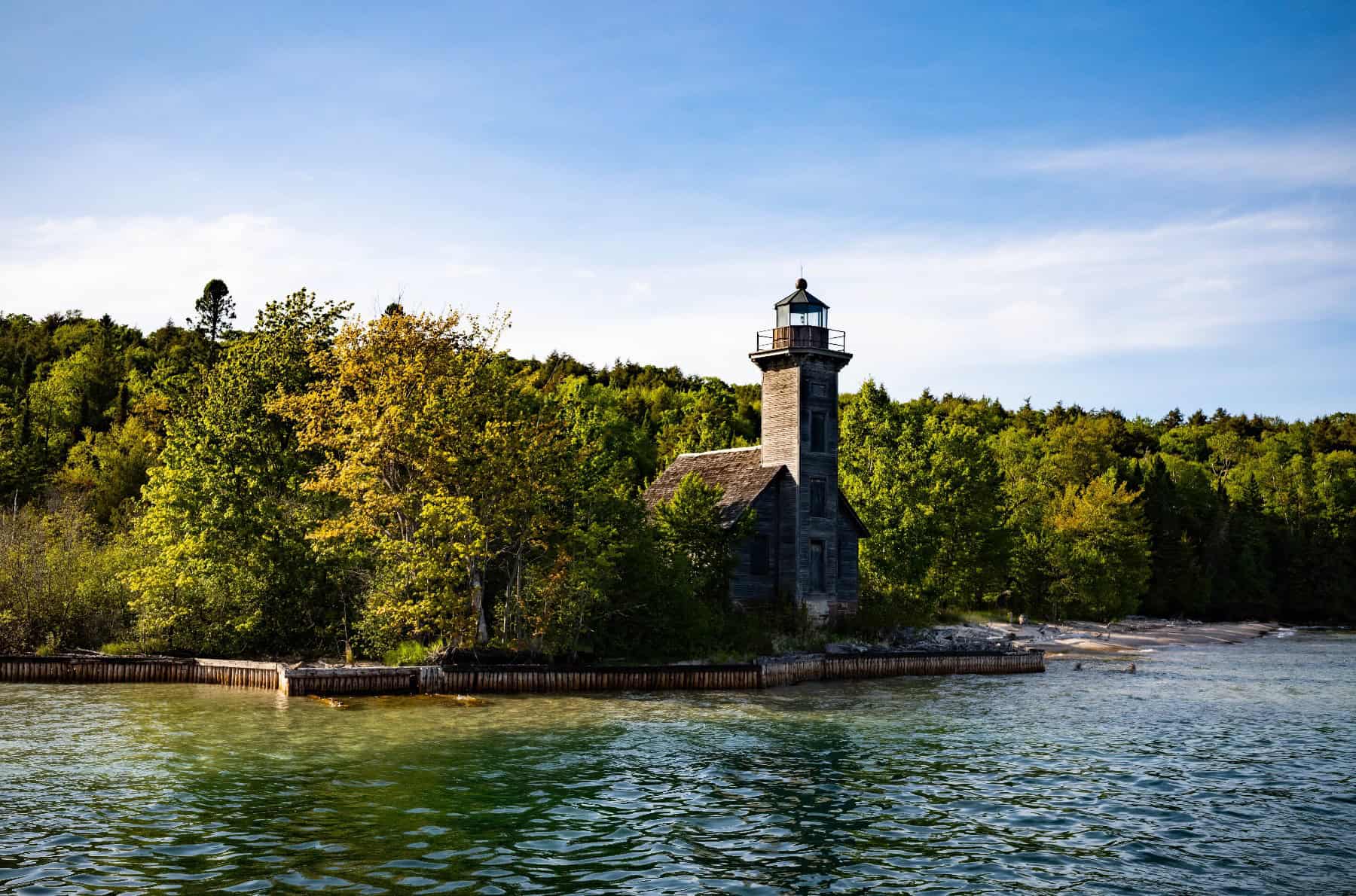
Grand Island East Channel Lighthouse, Lake Superior, Michigan.jpg (featured image) — R Boed, via Wikimedia Commons
Featured image record. Accessed Sep. 9, 2026. CC BY 2.0.
Uploaded Sept 2 2026 from Commons (see supply-recovery-2026-09-02); original 7864×5200, re-encoded at 1800px. Commons file identified Sept 9 2026 via the Commons API from the author credit and matching aspect ratio.
