Stannard Rock sits 24 miles from the nearest land, took five brutal years to build, and nearly killed the men who kept it
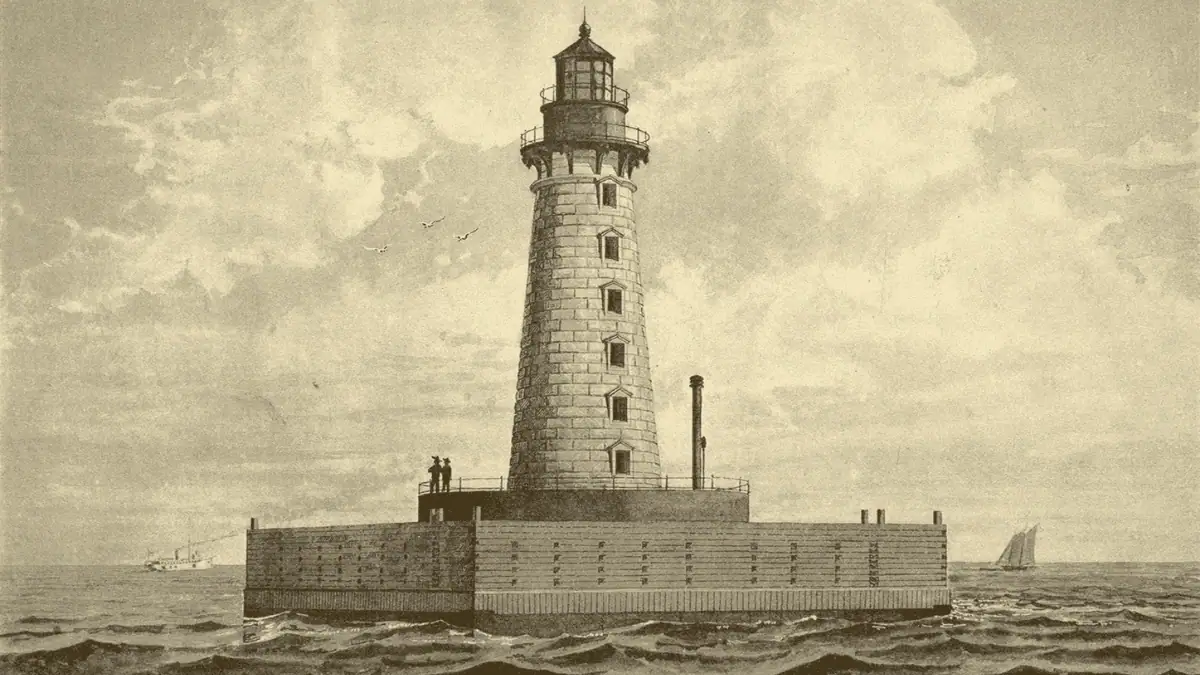

Out past the edge of the Keweenaw, where Lake Superior opens into water in every direction, there is a lighthouse standing completely alone on a reef. No island. No shoreline. Just a stone tower rising straight up out of the lake.
It is called Stannard Rock, and the men who once lived there had another name for it: the loneliest place in North America.
And they meant it.
The nearest land is about 24 miles away. Marquette, the closest harbor, is a rough 44 miles to the south. No other lighthouse in the entire United States sits farther from dry land.
For the men stationed out there, that distance was the whole story. No quick run to town. No walking down to the beach. Just water, weather, and each other, sometimes for weeks on end.
The Coast Guard had a nickname of its own for the place. They called it “Stranded Rock,” and the running joke was that getting sent there was a punishment.
The reef is the reason any of it exists. A lake captain named Charles Stannard found the shoal back in 1835, a hidden ridge of rock barely under the surface, in spots only a few feet down, sitting right in the middle of one of the busiest shipping lanes on the lake.
It was the single most dangerous spot for ships anywhere on Lake Superior. They needed a warning out there. The trouble was building one.
Nobody was even sure a structure could survive that far out. So engineers first dropped a small iron-and-stone marker onto the rock and waited to see if the lake would rip it apart.
It held. So they built.
It took five long years. Every spring, crews came back to find the previous summer’s work battered or undone by winter storms and ice. They hauled stone and concrete into open water and stacked it into a massive crib, then raised a tower nearly 80 feet tall on top of it. When the light finally switched on in 1882, it was one of the most expensive and ambitious lighthouses ever built on the Great Lakes.
And then men lived there, year after year, keeping it burning.
It was a “stag station,” staffed only by men, and the isolation got to some of them. Story has it one keeper was eventually carried off the rock in a straitjacket. Nobody can quite confirm that one, but it says plenty about what the place could do to a person.
The darkest day came on June 18, 1961.
Below the main deck, the station kept more than a thousand gallons of gasoline and propane to run its generators. That morning, it exploded.
The blast tore up through the tower, threw one man clean out of his bunk, and blew a refrigerator straight out the galley window. William Maxwell, the 35-year-old in charge, was killed. Three others lived through it, injured, with their boat gone and their radio dead.
For three days they huddled in the wreckage at the top of the pier, with no way to call for help, until a passing Coast Guard ship finally noticed the light had gone dark and came looking.
It was the last year anyone lived at Stannard Rock. The light was automated in 1962, and these days it runs on its own out there in the dark, guiding freighters the same way it has for more than 140 years.
You still can’t just drive out and see it. There is no road, no dock, no easy way in. It can be reached only by boat, or, like a Coast Guard repair crew a few winters back, by helicopter lowering men down onto a tower caked in ice.
It belongs to the same Lake Superior that swallowed the Edmund Fitzgerald just 17 miles from safety, the same big water the thousand-foot freighters still cross on their way to the Soo Locks. The U.P. has always lived shoulder to shoulder with that lake, beautiful and useful and never quite tamed.
Stannard Rock is the proof of it, standing watch in the loneliest spot on the continent. A little piece of the U.P. so far out in the water that, most days, there’s nobody there to see it at all.
But the light’s still on.
More worth reading


Yooper Hub community
The conversation
Know something this story missed? Corrections and additions get read by an editor and folded into the article, with credit.
Real neighbors, real names. A Yooper Hub editor reads your first comment before it appears; after that you’re a known neighbor and your comments post right away. No account required. Community guidelines
Nothing here yet. A sentence is plenty: a correction, a name, or what you remember about this place.
Sources, credits, and reporting details
Sources & accountability
How this story was reported
Editorial methodAggregation
Last verifiedJul. 13, 2026
Corrections statusNo material correction identified in the July 13, 2026 source review.
AI assistanceResearched and drafted with AI tools. Reviewed and approved by editor Keegan O’Brien.
Verification note: CEO-directed review checked the central claims against 1 direct public evidence link on July 13, 2026. No material correction was identified.
Primary sources
-
Direct evidence for: There’s a Lighthouse So Far Out in Lake Superior, Keepers Called It the Loneliest Place in North America — Lighthousefriends
Accessed Jul. 13, 2026.
Direct public evidence reviewed against the article on July 13, 2026.
Photo and media credits
-
Stannard Rock Light — Creator or rights holder named in the WordPress attachment caption
Featured image record. Accessed Jul. 13, 2026. Public domain.
Supports: Featured image used by this article.
Stannard Rock Light on Lake Superior. Image: Frederick Gutekunst, Public domain, via Wikimedia Commons. Historic 1882 illustration of Stannard Rock Light on Lake Superior, sourced from Wikimedia Commons.