
It took tranquilizer darts, slings, a 600-mile road trip, and 35-below cold, but the western U.P. has had moose ever since
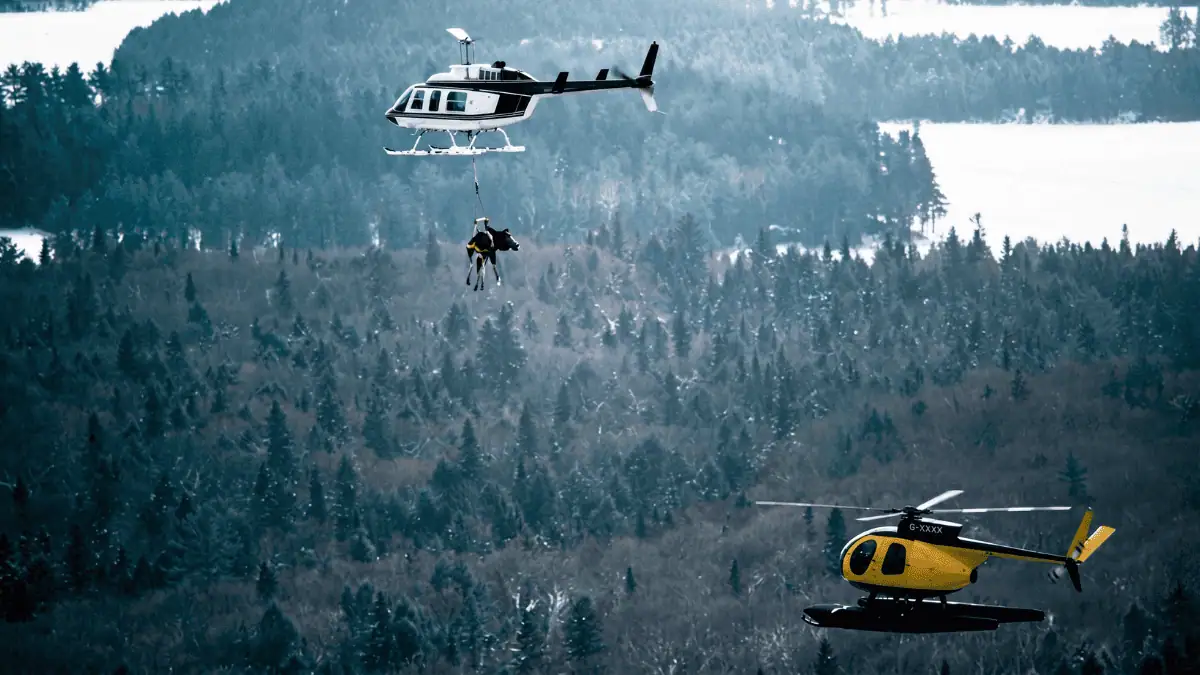
Here is a true U.P. story most people have never heard. About 40 years ago, Michigan brought moose back to the Upper Peninsula by tranquilizing them up in Canada and flying them out one by one, dangling beneath helicopters.
It was called the Michigan Moose Lift, and it is exactly as wild as it sounds.
Michigan’s Moose Lift helped restore moose to the western U.P. in the 1980s. Image/video courtesy of the Michigan Department of Natural Resources.
Moose had all but vanished from the U.P. by the early 1900s. The DNR wanted them back, so they struck a deal with Ontario to bring some down from Algonquin Provincial Park, north of Toronto, where moose numbered in the thousands.
They had been wiped out the hard way. Unregulated hunting took the first share, and the logging boom took the rest, clearing the old forests and opening the door to deer carrying a brainworm parasite that is harmless to deer and deadly to moose. By 1951 a Marquette newspaper was asking in a headline whether the last moose had already left the U.P.
Getting them here was the hard part. A small helicopter would find a moose out on a frozen lake, and a biologist would dart it with a tranquilizer. Once the animal was down, a bigger helicopter swooped in, a crew slipped a sling around it, and the moose was lifted into the air, blindfolded to keep it calm.
It was brutal work. Three people wrestled a groggy 900-pound animal into the harness, sometimes pulling off their gloves to do it, in wind chills that at times approached 100 below. Once the sling was set, the helicopter carried the moose hanging in open air as far as 14 miles back to base camp, where it got a full medical check before it was crated.
From there, each moose was radio-collared, crated, and loaded onto a truck for a 600-mile haul from Ontario to the woods north of Lake Michigamme in Marquette County.
The very first one arrived on January 23, 1985. She was a 965-pound pregnant cow, and she had just made a 16-hour overnight trip from Canada.
It was 35 degrees below zero that day. Almost 400 people showed up anyway, just to watch her step out into her new home.
It went so well that they did it again in 1987 with 30 more moose. By then word had gotten out, and somewhere between 500 and 700 people packed into viewing stands to watch. Cars were backed up six miles down the Peshekee Grade.
All told, 59 moose made the trip. Local sportsmen’s groups chipped in to help cover the roughly $60,000 cost.
Here is the part that still makes people laugh. Michigan did not buy the moose. It traded for them. Ontario wanted a huntable population of wild turkeys, which Michigan had, so the two governments swapped: turkeys went north, moose came south. As one DNR official dryly admitted, it was not a pound-for-pound exchange. Twenty-nine moose came over in 1985, and another 30 followed in 1987.
It worked. Those few dozen transplants became a herd that today numbers somewhere around 500 animals, spread across Marquette, Baraga, and Iron counties in the western U.P.
The climb was steady rather than spectacular: past 200 by the early 1990s, and short of the 1,000 by the year 2000 that biologists had once hoped for. Stable and still growing slowly is what a wildlife reintroduction looks like when it works.

They are not the U.P.’s only moose. A separate herd has roamed Isle Royale out in Lake Superior for over a century. But the moose you might spot along a western U.P. highway today are the descendants of animals that once flew through the air under a helicopter.

If you want to dig into the whole story, Van Riper State Park near Champion has a moose display with photos, antlers, and even footage from the lift. It is also one of the better corners of the U.P. to keep your eyes peeled for the real thing.
Craig Lake State Park just west of there is the other good bet, and a smaller, separate group of moose lives over in the eastern U.P. around Seney National Wildlife Refuge and Tahquamenon Falls. Drive slow and watch the tree line at dawn and dusk.
Moose are famously hard to find on purpose, though, so if you want a guaranteed up-close look at big U.P. wildlife, America’s largest bear ranch near Newberry is a surer bet.
It is one more reason the U.P. never stops surprising you, right alongside wonders like the painted cliffs of Pictured Rocks.
Next time you spot a moose standing at the edge of the woods up here, give a little nod to the helicopter pilots, the dart-gun biologists, and one very patient pregnant cow who started it all at 35 below.
Recommended Reads
The Northern Lights over Lake Superior are pure magic, and here’s where to catch them
Thousands drive past this tiny U.P. town every day and almost nobody knows its story
A U.P. university has been releasing Atlantic salmon into the same river for 40 years
Topics: Michigan Moose Lift, moose, Marquette County, Van Riper State Park, Michigamme, Michigan DNR, wildlife, Upper Peninsula, Yooper
More worth reading


Yooper Hub community
The conversation
Know something this story missed? Corrections and additions get read by an editor and folded into the article, with credit.
Real neighbors, real names. A Yooper Hub editor reads your first comment before it appears; after that you’re a known neighbor and your comments post right away. No account required. Community guidelines
Nothing here yet. A sentence is plenty: a correction, a name, or what you remember about this place.
Sources, credits, and reporting details
Sources & accountability
How this story was reported
Editorial methodAggregation
Last verifiedJul. 13, 2026
Corrections statusNo material correction identified in the July 13, 2026 source review.
AI assistanceResearched and drafted with AI tools. Reviewed and approved by editor Keegan O’Brien.
Verification note: CEO-directed review checked the central claims against 1 direct public evidence link on July 13, 2026. No material correction was identified. Featured image rights and attribution independently verified against the retained source record on 2026-07-14; attachment 466 restored under Keegan O'Brien dated approval.
Primary sources
-
Direct evidence for: Forty Years Ago, Michigan Brought Moose Back to the U.P. by Dangling Them From Helicopters — State of Michigan
Accessed Jul. 13, 2026.
Direct public evidence reviewed against the article on July 13, 2026.
Photo and media credits
-
Michigan DNR Moose Lift bulletin — Michigan Department of Natural Resources
Featured image record. Published Feb. 7, 2025. Accessed Jul. 14, 2026. editor-download authorization and required DNR credit in the 2025-02-07 bulletin; copyright retained, not public domain.
the source caption places this lift image in Canada. Retain that location, the bulletin URL, release date, exact `Lift` identity, and DNR credit.