
Kingsford charcoal is not made in Michigan’s Upper Peninsula today. The company’s current FAQ lists plants in Kentucky, Missouri, Oregon, and West Virginia. But the brand’s origin does run through Dickinson County, where Ford Motor Company turned scrap wood from an enormous lumber operation into a product it could sell.
A car company looks north
Early automobile bodies used large amounts of wood. Ford wanted a dependable supply of hardwood for automobile framework, floorboards, wheels, and other parts, so Henry Ford contacted Edward G. Kingsford, the Ford dealer in Iron Mountain and Ford’s cousin-in-law.
Kingsford arranged the purchase of roughly 313,000 acres of Upper Peninsula timberland for Ford. Construction on the local sawmill and parts operation began in 1920. The settlement around the plant was chartered as the Village of Kingsford in 1923, and the City of Kingsford’s history says employment connected to Ford’s Dickinson County expansion peaked at 7,500 workers in 1925.


Turning scrap wood into charcoal
A sawmill that large produced mountains of chips and offcuts. Ford built a chemical plant to recover value from that waste, and the City of Kingsford says it was operating by 1924. According to the city’s history, each ton of scrap wood yielded about 610 pounds of charcoal that could be formed into Ford Charcoal Briquettes.
The Henry Ford’s collection records explain the process: workers dried and carbonized wood chips, crushed the resulting char, mixed it with starch, and compressed it into briquettes. By the mid-1930s, the Iron Mountain operation was forming nearly 100 tons of briquettes a day.


Sold through Ford dealerships
Ford did not keep the charcoal inside its factories. The company sold bags through automobile dealerships and through hardware, sporting-goods, and department stores. Its 1930s marketing included a brochure titled Ford Charcoal Briquets, Fuel of a Hundred Uses and picnic kits that paired charcoal with a portable grill.
How Ford Charcoal became Kingsford
In 1951, Ford closed the local sawmill and parts plant and sold the chemical operation to local business interests. They formed the Kingsford Chemical Company and renamed the product Kingsford Charcoal Briquettes. The current Kingsford history says the name honored Edward G. Kingsford, the dealer and land agent who had helped Ford establish its Upper Peninsula operations.
Who owns Kingsford charcoal today
The charcoal plant continued operating in Kingsford until 1961. The brand later became part of The Clorox Company, whose most recent annual report still lists Kingsford among its grilling products.
Where Kingsford charcoal is made now
Kingsford’s website now says it converts more than one million tons of leftover wood into briquettes each year, but its current production facilities are outside Michigan — the company’s FAQ lists plants in Kentucky, Missouri, Oregon, and West Virginia. That distinction matters. The U.P. connection is a documented origin story, not a claim that today’s bags contain Dickinson County wood. Ford’s effort to reuse sawmill scrap created the local charcoal operation, and the product eventually carried the name of the U.P. community and the man who helped build it.
More worth reading


Sources, credits, and reporting details
Sources & accountability
How this story was reported
Editorial methodArchival synthesis
Accountable editor:Keegan O’Brien, publisher and editor.
Last verifiedJul. 22, 2026
Corrections statusNo material correction note is recorded on this article.
AI assistanceResearched and drafted with AI tools. Reviewed and approved by editor Keegan O’Brien.
Verification note: Historical claims were reconciled against the City of Kingsford and The Henry Ford's collection records. Current ownership was checked against Clorox's fiscal-2025 Form 10-K. Current production-location and wood-use statements are explicitly attributed to Kingsford's own website. The unsupported current 80-percent market-share figure and unverified Edison-factory claim were removed.
Primary sources
-
The History of the City of Kingsford — City of Kingsford
Accessed Jul. 22, 2026.
Official municipal history by Roger Scott. Used for the local chronology and quantities; not used to establish current market share.
-
Ford Charcoal Briquets — The Henry Ford
Accessed Jul. 22, 2026.
Institutional collection set linking claim-level descriptions to Ford Motor Company artifacts and photographs.
-
Ford in Michigan's Upper Peninsula — The Henry Ford
Accessed Jul. 22, 2026.
Cross-check for the land, automobile-parts, plant, and production claims.
-
Kingsford History — Kingsford Products Company
Accessed Jul. 22, 2026.
Corporate first-party source. The annual wood-use statement is attributed to the company and not presented as an independently audited Yooper Hub measurement.
-
Kingsford FAQ — Kingsford Products Company
Accessed Jul. 22, 2026.
Used to distinguish the documented U.P. origin from the present-day supply chain.
-
The Clorox Company Form 10-K for the fiscal year ended June 30, 2025 — The Clorox Company / U.S. Securities and Exchange Commission
Published Aug. 8, 2025. Accessed Jul. 22, 2026.
Regulatory filing; used only for current ownership and brand relationship.
Photo and media credits
-
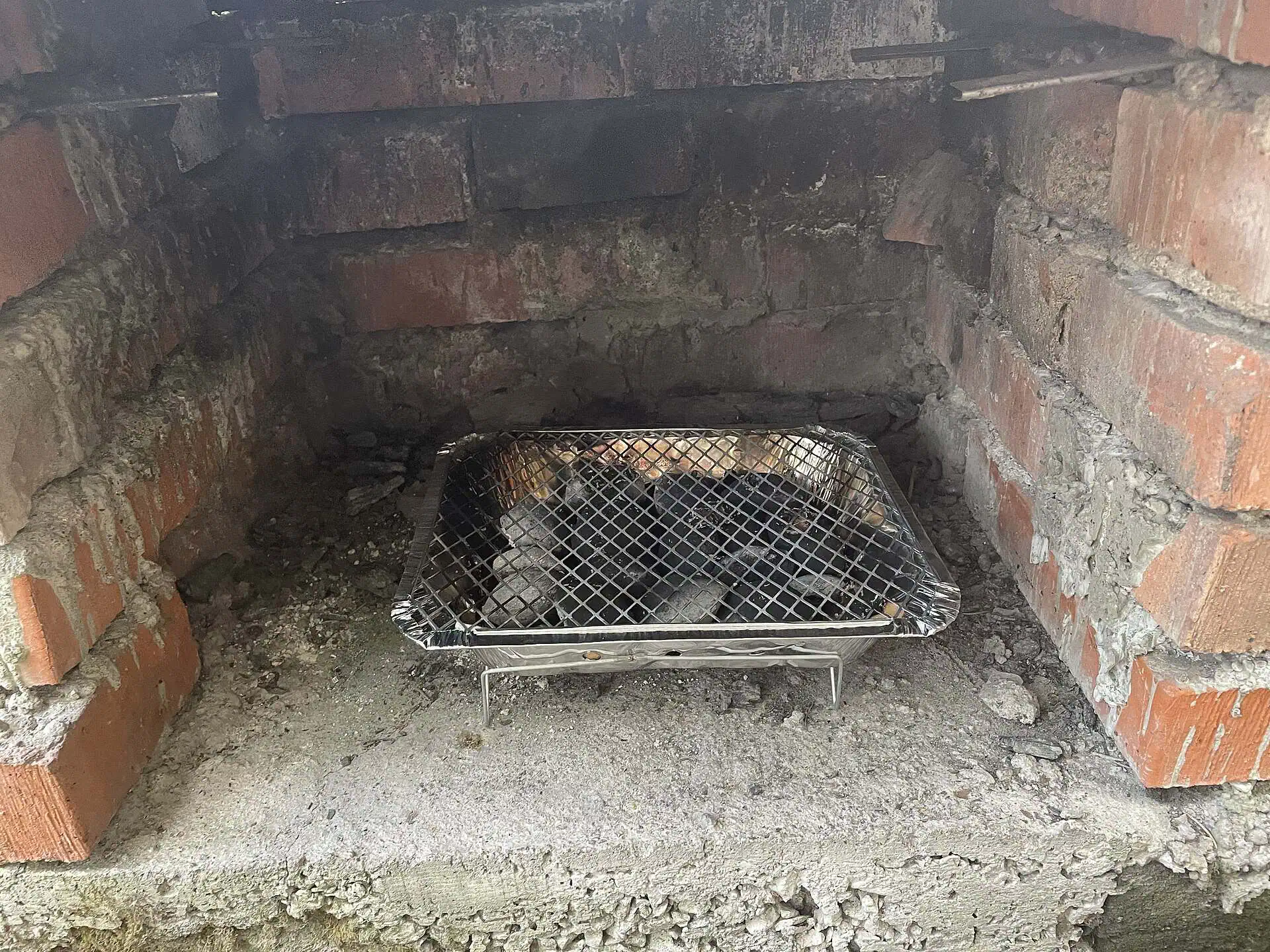
Disposable barbecue 5 hot coal.jpg — Ypsilon from Finland / Wikimedia Commons
Featured image record. Published Jul. 22, 2023. Accessed Jul. 22, 2026. CC0 1.0 Universal Public Domain Dedication.
Supports: Source, creator, and rights record for featured attachment 1850.
Commons identifies this as the uploader's own work. WordPress stores a 1920×1440 derivative of the 4032×3024 source aspect ratio. The completed pixel-identity audit matched it to the exact cited Commons original and found ordinary resizing and lossy recompression sufficient to explain the observed differences; undocumented import-processing and AI-alteration history remain unknown.
-
Ford Model T 1924-1925.jpg — LibertyGroup25 / Wikimedia Commons
Published Jan. 28, 2014. Accessed Jul. 22, 2026. CC BY-SA 3.0 Unported.
Supports: Source, creator, and rights record for inline attachment 1851.
Commons identifies this as the uploader's own work; embedded WordPress metadata credits Christopher Burke. WordPress stores a 1920×1492 web derivative of the 4288×3332 source aspect ratio. The completed pixel-identity audit matched it to the exact cited Commons original and found ordinary resizing and lossy recompression sufficient to explain the observed differences. Credit must link the file and CC BY-SA license and state that Yooper Hub resized it; undocumented import-processing and AI-alteration history remain unknown.
-
Smoldering charcoal briquettes.JPG — Juliancolton / Wikimedia Commons
Accessed Jul. 22, 2026. Public-domain dedication by copyright holder.
Supports: Source, creator, and rights record for inline attachment 1853.
Commons dates the photo only to June 2009 and records a public-domain dedication. WordPress stores a 1920×1285 web derivative of the 3872×2592 source aspect ratio. The completed pixel-identity audit matched it to the exact cited Commons original and found ordinary resizing and lossy recompression sufficient to explain the observed differences; undocumented import-processing and AI-alteration history remain unknown.