Drive US-41 south of L’Anse and you will pass through a town that Henry Ford built from nothing, named after a little girl, and then mostly walked away from. It is called Alberta, and almost no one outside the western U.P. knows it is there. Ford laid out the streets, raised the houses, dammed a creek to make a lake, and put up a sawmill so cleanly run it reportedly never once caught fire. Then he let it quietly fade, because he never really needed it in the first place.
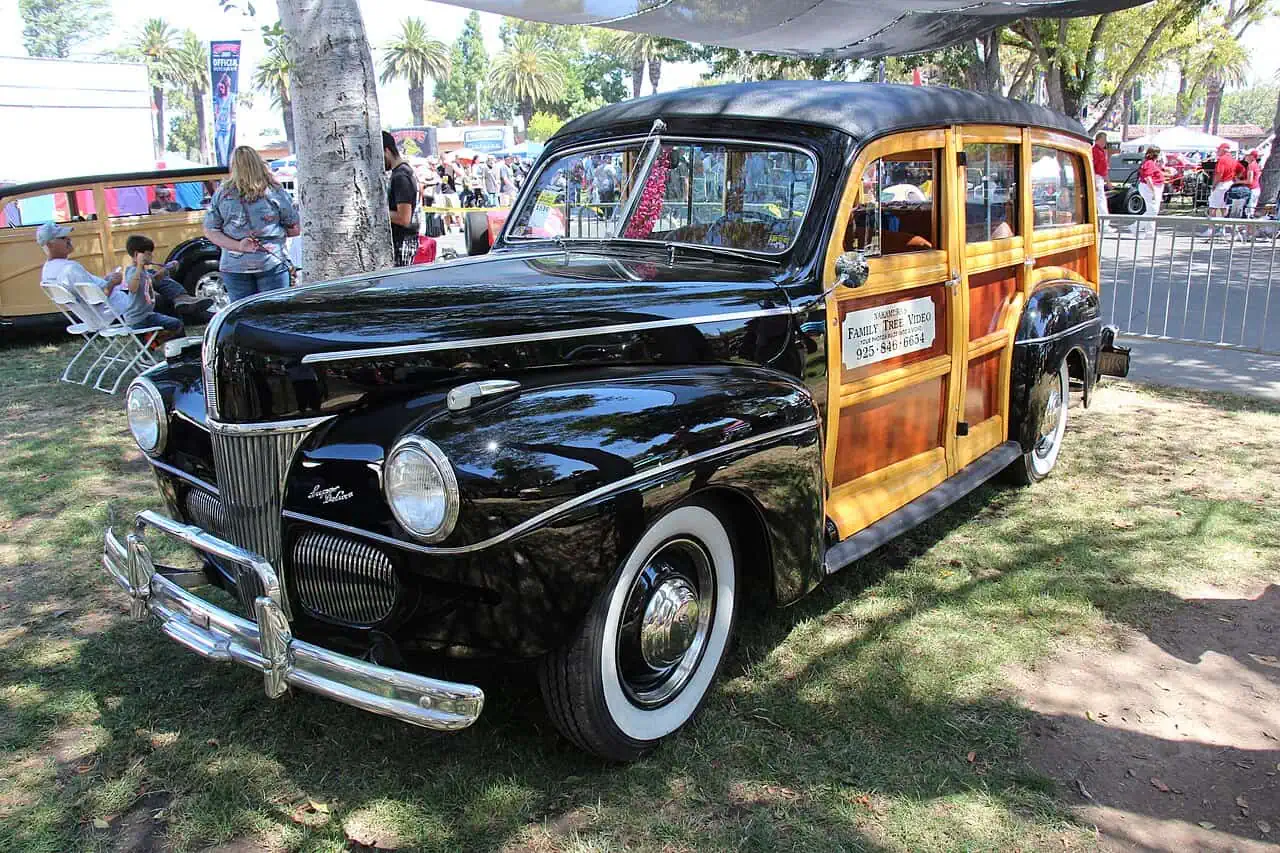
Ford started building Alberta in 1936, deep in the woods of Baraga County about eight miles south of L’Anse. He named it after Alberta Johnson, the daughter of the man who ran his Upper Peninsula operations. The plan was a tidy model town: twelve clapboard houses in neat grids, a pair of schools, and a steam-powered sawmill to turn local hardwood into the wooden bodies of Ford’s station wagons. On paper, it was the perfect little company town.

He didn’t build it for the lumber
Here is the twist that gets left out of most retellings. Ford did not build Alberta because he needed the wood. He already had three far bigger mills running across the U.P., each one cutting twenty to twenty-five times as much lumber as Alberta ever could. The mill at Alberta topped out around 14,000 board feet a day, tiny by the standards of the time. Alberta was never really a business. It was a social experiment. Ford, a farm boy at heart, wanted to prove that ordinary people could split their lives between the mill, the woods, and a small farm, and never have to leave home for a factory job in the city. He called these places his Village Industries and scattered around thirty of them across Michigan. Alberta was one of the few he built entirely from the ground up.
Henry Ford’s northwoods Fordlândia
If that sounds familiar, it should. A few years earlier, Ford had tried almost the same idea on a far grander scale deep in the Brazilian rainforest, a rubber-plantation town called Fordlândia that became one of the most famous failures of his career. Alberta was the quieter northwoods cousin, planned for hundreds of people instead of thousands. And here is the difference that matters: while Fordlândia rotted into a jungle ghost town, Alberta survived. Ford wound the operation down by the early 1940s, the mill ran until 1954, and rather than let it crumble, Ford Motor Company handed the entire town, its sawmill, and 1,700 acres of forest to what is now Michigan Tech.
What’s there now, and why it almost vanished
Today Alberta is Michigan Tech’s Ford Center and Forest, a roughly 3,700-acre outdoor classroom with lodging, a conference center, and the original village still standing in its tidy rows. You can drive right up to it on US-41 and walk the grounds. The sawmill is the catch. It became a museum in 1996, closed to the public in 2017 when its wiring and walkways no longer met safety codes, and in 2022 there were real plans to tear it down. People in L’Anse and Alberta refused to let that happen and formed a Baraga County Historical Society group to save it, hoping to reopen the mill that, by most accounts, outlasted nearly every other sawmill of its era without ever burning to the ground.
Henry Ford built towns all across the U.P., and most of them, places like Pequaming and Big Bay, slipped into ghost towns. Alberta is the one that held on. A model town that never quite became a town, kept standing by the people who refused to let the last piece of it disappear.
Go See It
Alberta Village and the Ford Center, near L'Anse
- Hours
- No public hours are posted by Michigan Tech. The inside of the sawmill is closed to visitors; the outside can be viewed when visiting the village. A pump house welcome center opened in September 2025; no 2026 hours were found.
- Cost
- No admission fee is posted on any page we checked.
- Season
- No season is posted. Viewing from outside only.
- Drive
- From Marquette: 1 hr 5 min (59 mi) via US-41 N
From the Bridge: 3 hr 47 min (222 mi) via US-2 W and M-28 W (toll on the Bridge)
More worth reading


Yooper Hub community
The conversation
Know something this story missed? Corrections and additions get read by an editor and folded into the article, with credit.
Real neighbors, real names. A Yooper Hub editor reads your first comment before it appears; after that you’re a known neighbor and your comments post right away. No account required. Community guidelines
Nothing here yet. A sentence is plenty: a correction, a name, or what you remember about this place.
Golden 25 trust review · #12
Verified context for this Yooper Hub story
- Evidence refreshed
- July 13, 2026
- Source readiness
- Live source review complete.
- Corrections status
- No material correction note is recorded on this article.
- Image rights
- Featured and in-story images have documented rights records.
Sources, credits, and reporting details
Sources & accountability
How this story was reported
Editorial methodArchival synthesis
Accountable editor:Keegan O’Brien, publisher and editor.
Last verifiedJul. 13, 2026
Corrections statusNo material correction note is recorded on this article.
AI assistanceResearched and drafted with AI tools. Reviewed and approved by editor Keegan O’Brien. Tool: Claude Max.
Verification note: The Alberta mill, model community, and present Ford Center role were checked against Michigan Tech.
Primary sources
-
About the Ford Center and Forest — Michigan Technological University
Accessed Jul. 13, 2026.
Supports: Supports the Ford-era history of Alberta and the site's present university role.
Photo and media credits
-
ford-woodie-wagon — Creator or rights holder named in the WordPress attachment caption
Featured image record. Accessed Jul. 13, 2026. CC BY 2.0.
Supports: Featured image used by this article.
Henry Ford's U.P. sawmills cut hardwood for the wood-bodied station wagons of the era, like this 1941 Ford Super Deluxe woodie. Photo: Sicnag / Wikimedia Commons (CC BY 2.0).