They sat hidden on the beaches for a billion years before a Yooper with a flashlight figured them out
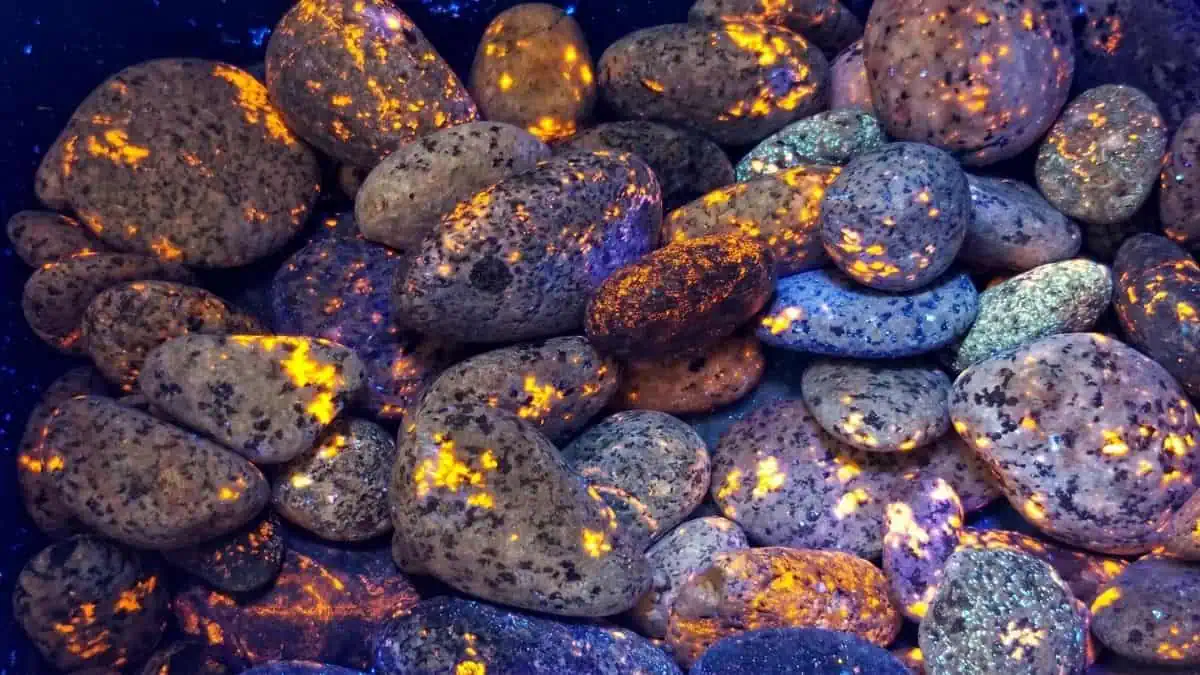
Walk a Lake Superior beach by day and you would step right over them. Plain gray rocks, nothing special. But shine a UV light on the right one after dark, and it glows like an ember in the sand.
They are called Yooperlites, and the best part of the story is that they were hiding in plain sight for thousands of years before anyone noticed.
A Yooperlite is a chunk of syenite, an ordinary-looking gray stone, that happens to be packed with a mineral called sodalite. Sodalite is the magic ingredient. Under ultraviolet light, it blazes a fiery orange and yellow, sometimes in scattered flecks, sometimes in veins, sometimes in an all-over glow that looks like a tiny galaxy.

The wild thing is how recently we found out. For all of Michigan’s history, these rocks sat on the beaches looking like nothing at all. Then in June 2017, a rockhound from Brimley named Erik Rintamaki took a UV flashlight down to the Lake Superior shore one night, on a hunch about how minerals react to the light.
He came home with two glowing stones the size of dimes, and he had no idea what they were.
He sent samples off to Michigan Tech and a university up in Canada, and they confirmed it: these were fluorescent sodalite rocks, the first ever verified in the state. Rintamaki gave them a name that stuck, mashing together “Yooper” and the glow.
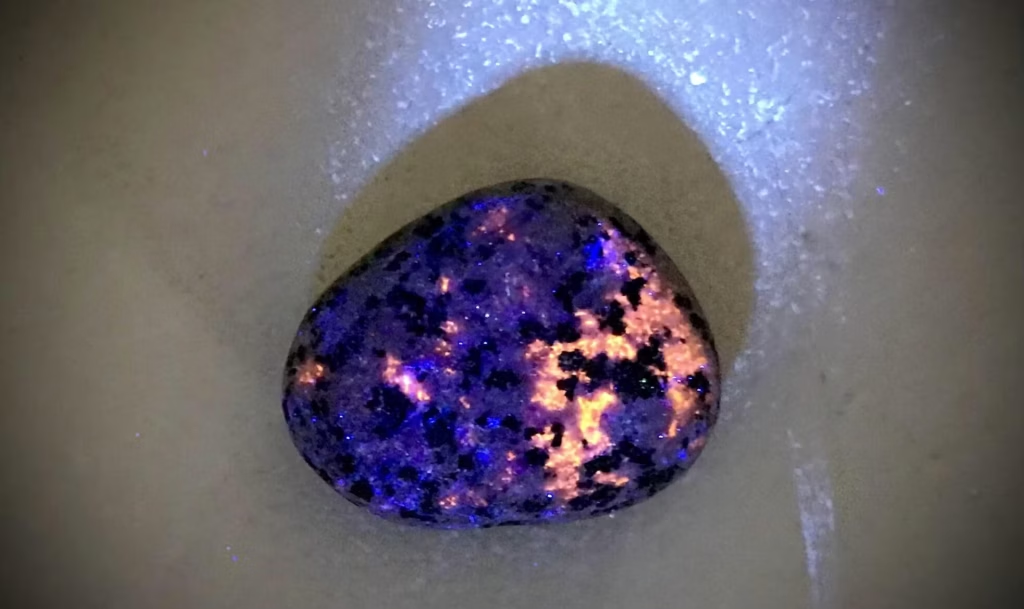
Word got out fast. Photos of the glowing rocks went around the world, and suddenly people were walking Lake Superior beaches in the dark with UV flashlights, hooked on the hunt. Today you can even book a guided Yooperlite tour with Rintamaki himself.
If you want to try it, the rules are simple. Wait for dark, grab a 365 nanometer UV flashlight, and walk slowly along the waterline, scanning for that telltale orange glow. The eastern U.P. beaches are the hot spots, from Grand Marais to Paradise, because that is where the glaciers dropped them closest to their Canadian source. These are the same Lake Superior shores that give us wonders like Pictured Rocks.

And here is a thought to sit with while you hunt. The glow inside those rocks is more than a billion years old, formed in the deep past and hauled here by ice. You are just the first person to ever see it shine.
So next summer, when the sun goes down, do not head inside just yet. Grab a flashlight and hit the beach. There is buried treasure out there on the shores of Lake Superior, and it has been waiting a billion years for you to find it.
Image credits: Yooperlite photos courtesy of Erik Rintamaki / Yooperlites.com. Used with permission.
More worth reading


Yooper Hub community
The conversation
Know something this story missed? Corrections and additions get read by an editor and folded into the article, with credit.
Real neighbors, real names. A Yooper Hub editor reads your first comment before it appears; after that you’re a known neighbor and your comments post right away. No account required. Community guidelines
Nothing here yet. A sentence is plenty: a correction, a name, or what you remember about this place.
Sources, credits, and reporting details
Sources & accountability
How this story was reported
Editorial methodAggregation
Last verifiedJul. 13, 2026
Corrections statusNo material correction identified in the July 13, 2026 source review.
AI assistanceResearched and drafted with AI tools. Reviewed and approved by editor Keegan O’Brien.
Verification note: CEO-directed review checked the central claims against 1 direct public evidence link on July 13, 2026. No material correction was identified.
Primary sources
-
Direct evidence for: These Lake Superior Rocks Look Ordinary by Day, Then Glow Like Lava After Dark — Store
Accessed Jul. 13, 2026.
Direct public evidence reviewed against the article on July 13, 2026.
Photo and media credits
-
Yooperlites glowing under UV light — Creator or rights holder named in the WordPress attachment caption
Featured image record. Accessed Jul. 13, 2026. Used with permission.
Supports: Featured image used by this article.
Photo courtesy of Erik Rintamaki / Yooperlites.com. Used with permission. Yooperlite rocks glowing under UV light. Photo courtesy of Erik Rintamaki / Yooperlites.com. Used with permission for YooperHub. Cropped/edited for YooperHub.