The dream of breaking away from Michigan is older than the Mackinac Bridge, and it nearly came true
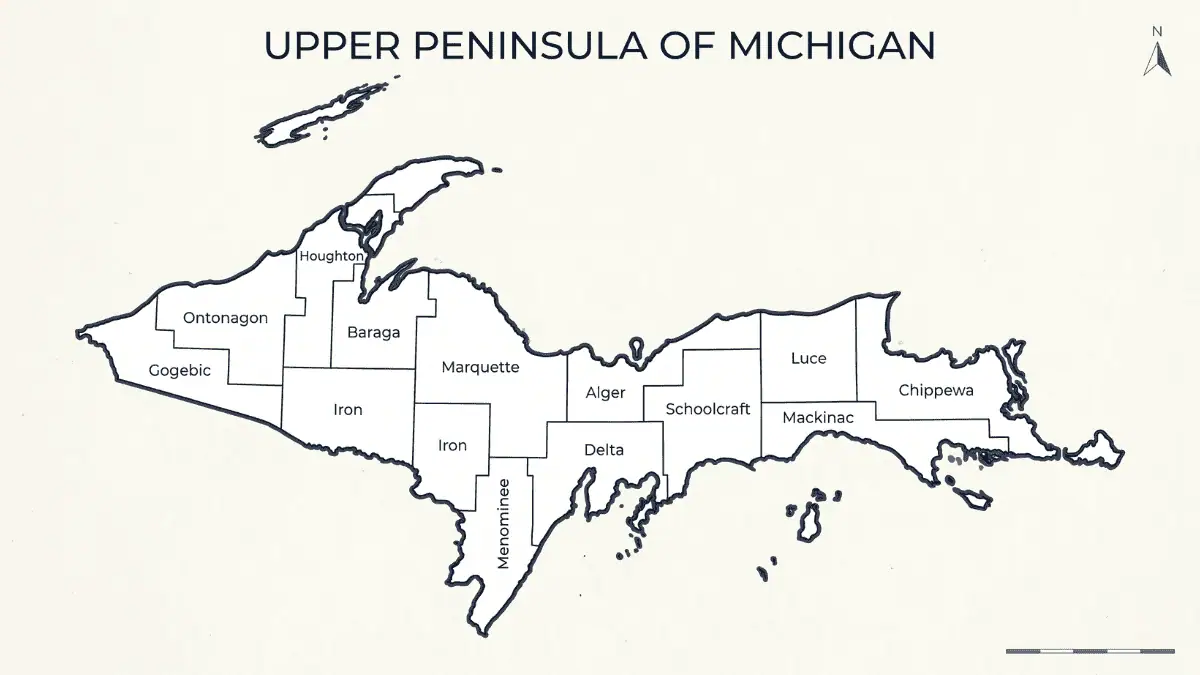
In 1975, the U.P. came closer than most people realize to tearing up the map. That November, voters in Marquette and Iron Mountain cast ballots on whether to break away from Michigan and form the 51st state.
They would have called it the State of Superior, after the big lake.
And the idea was anything but new.
Yoopers had been talking about going it alone since at least the 1840s. According to the Beaumier U.P. Heritage Center at Northern Michigan University, businesspeople in nearly every U.P. county pushed for it, holding conventions roughly every 10 years to keep the dream alive.
The first real push came in 1858, with a convention in Ontonagon to fold the U.P., northern Wisconsin, and a slice of Minnesota into a brand-new state called Superior, or maybe Ontonagon. The New York Times even wrote that it saw no reason the new state shouldn’t take its place in the union.
There is a deep irony here. The U.P. only became part of Michigan in the first place as a kind of consolation prize. In the 1830s, Michigan and Ohio were feuding over a strip of land around Toledo. Michigan gave up its claim to Toledo, took the U.P. instead, and became a state in 1837.
Plenty of people thought Michigan got the short end of that deal. Then prospectors found copper and iron up north, and the U.P. turned out to be one of the richest mineral regions in the country.
But the feeling of being a world apart never really faded. Up here, Wisconsin has always felt closer than Lansing. Plenty of Yoopers root for the Packers over the Lions. And the sense that downstate politicians forget the U.P. exists is older than the Mackinac Bridge.
The modern campaigns kept coming. In 1959, an Ironwood man named Ted Albert publicly called for a “divorce” from the Lower Peninsula. A few years later, in 1962, the Upper Peninsula Independence Association gathered some 20,000 signatures for a separation vote, though it fell short of what it needed.
The biggest push of all came in the 1970s, led by longtime state Representative Dominic Jacobetti. This time the spark was economic. Many Yoopers feared a wave of new environmental rules would choke the mining, logging, and farming the region ran on, and resentment over Mackinac Bridge tolls and being overlooked by Lansing had boiled over.
It all came down to that 1975 ballot. When the votes were counted, the answer was no. Only about 29 percent of Marquette voters and 32 percent in Iron Mountain backed the split. It was the last serious run at statehood the U.P. has made.
The truth is the math never quite worked. The U.P. is tied tightly to Michigan’s economy, and on its own it would be the least-populated state in the country, with only around 300,000 people.
None of that has dimmed the famous Yooper independent streak, the same one that gave the world its own way of talking.
It is the same pride that turned a roadside stop like Da Yoopers Tourist Trap into a shrine to U.P. life.
So no, the U.P. never did become the State of Superior. But ask just about any Yooper, including the ones who moved away years ago, and a lot of them will tell you it has always felt like its own country anyway.
Recommended Reads
The humble pasty fed generations of U.P. miners, and Yoopers still argue about ketchup versus gravy
Forty years ago, Michigan brought moose back to the U.P. by dangling them from helicopters
Thousands drive past this tiny U.P. town every day and almost nobody knows its story
Topics: State of Superior, 51st state, U.P. history, secession, Marquette, Iron Mountain, Yooper, Michigan history
More worth reading


Yooper Hub community
The conversation
Know something this story missed? Corrections and additions get read by an editor and folded into the article, with credit.
Real neighbors, real names. A Yooper Hub editor reads your first comment before it appears; after that you’re a known neighbor and your comments post right away. No account required. Community guidelines
Nothing here yet. A sentence is plenty: a correction, a name, or what you remember about this place.
Sources, credits, and reporting details
Sources & accountability
How this story was reported
Editorial methodAggregation
Last verifiedJul. 13, 2026
Corrections statusNo material correction identified in the July 13, 2026 source review.
AI assistanceResearched and drafted with AI tools. Reviewed and approved by editor Keegan O’Brien.
Verification note: CEO-directed review checked the central claims against 1 direct public evidence link on July 13, 2026. No material correction was identified.
Primary sources
-
Accessed Jul. 13, 2026.
Direct public evidence reviewed against the article on July 13, 2026.
Photo and media credits
-
State of Superior Upper Peninsula Map — Creator or rights holder named in the WordPress attachment caption
Featured image record. Accessed Jul. 13, 2026. public domain.
Supports: Featured image used by this article.
Base map adapted from a public domain map via Wikimedia Commons. Featured image for Yooper Hub article about the Upper Peninsula’s proposed State of Superior. Base map adapted from a public domain map via Wikimedia Commons.