Every Yooper has driven it, and every downstater on the way to Pictured Rocks has suffered it. Twenty-five miles of M-28 between Seney and Shingleton without a single curve, a hill, or much of anything else. It is called the Seney Stretch, it is the longest curveless run of highway in Michigan and one of the longest east of the Mississippi, and even the state’s own tourism people have called it the most boring route in Michigan. Yoopers will tell you it is 25 miles long, then admit it feels like 50. Around here, surviving it is practically a rite of passage.
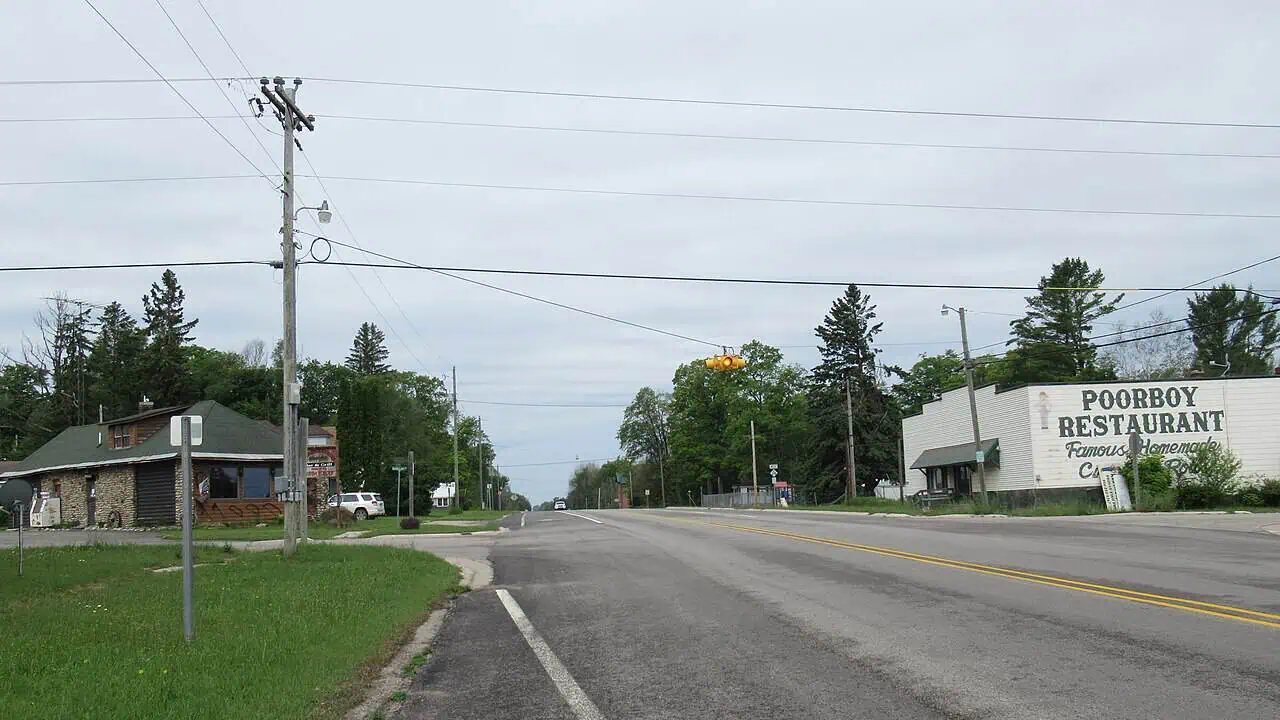
The obvious question is why anyone would build a road that straight, and the answer starts with what the road is crossing. The Stretch runs through the Great Manistique Swamp, a vast, spring-fed wetland that is about as flat as land gets. There are no hills to wind around and no lakeshore to follow, so when the road went through in the 1920s, running parallel to the old Duluth, South Shore and Atlantic railroad line, the engineers simply drew a line and built it. And no, the old story about highways needing a curve every so many miles so planes can land, or so drivers stay awake, is a myth. Nothing requires a road to bend. This one just never had a reason to.

The most boring road in Michigan is hiding the good stuff
Here is what the boring reputation gets wrong. That flat, scrubby jack pine swamp on either side of your windshield is one of the most wildlife-packed landscapes in the state. Twelve named rivers and creeks flow beneath the Stretch, every one of them sliding south toward the Manistique River. And just off the eastern end, down M-77, sits the Seney National Wildlife Refuge, 95,000 acres of ponds and wetland where more than 200 bird species have been logged, from trumpeter swans and loons to bald eagles, with wolves, bears, moose, and otters in the mix. The refuge even played a starring role in bringing the Canada goose back from the brink in the 1930s and 40s, back when the bird was genuinely rare. The drive looks empty. It is anything but.
Seney was once the wildest town in the U.P.
The quiet little town at the east end of the Stretch has a past that would make a Hollywood western blush. In the white pine boom of the 1880s and 90s, Seney was a notorious lumberjack hell-town, packed with saloons, gambling, and worse, the kind of place preachers used as a warning. When the pines ran out, the wildness went with them. A few decades later a young Ernest Hemingway got off the train there, fished the nearby rivers, bragged about pulling in 200 trout, and turned the burned-over country around Seney into the setting of his classic story Big Two-Hearted River. Not bad literary credentials for the most boring road in the state.
How to survive the Stretch
Locals have this down to a science. Gas up and grab coffee before you commit, because there is nothing out there once you do. A year-round rest area guards the western end like a base camp. Watch your speed, since a dead straight road has a way of quietly pulling your foot down, and watch the shoulders at dawn and dusk, because deer treat the Stretch like their own crossing. In winter, respect it completely. The wind comes across that open swamp with nothing to slow it down, and whiteouts on the Stretch are the stuff of Yooper legend. And if you have twenty minutes to spare, turn south at Seney and take the refuge’s wildlife drive. It is the best possible rebuttal to the road you just survived.
Plenty of places brag about their scenic drives. The U.P. is maybe the only place that brags about its boring one. Twenty-five miles, zero curves, and a story better than most winding roads could ever tell.
More worth reading


Yooper Hub community
The conversation
Know something this story missed? Corrections and additions get read by an editor and folded into the article, with credit.
Real neighbors, real names. A Yooper Hub editor reads your first comment before it appears; after that you’re a known neighbor and your comments post right away. No account required. Community guidelines
Nothing here yet. A sentence is plenty: a correction, a name, or what you remember about this place.
Sources, credits, and reporting details
Sources & accountability
How this story was reported
Editorial methodService and public-interest reporting
Last verifiedJul. 13, 2026
Corrections statusNo material correction identified in the July 13, 2026 source review.
AI assistanceResearched and drafted with AI tools. Reviewed and approved by editor Keegan O’Brien.
Verification note: CEO-directed review checked the central claims against 1 direct public evidence link on July 13, 2026. No material correction was identified.
Primary sources
-
Direct evidence for: The Most Boring Road in Michigan Is 25 Miles of Dead Straight U.P. Highway — U.S. Fish and Wildlife Service
Accessed Jul. 13, 2026.
Direct public evidence reviewed against the article on July 13, 2026.
Photo and media credits
-
m28-seney-stretch-corridor — Creator or rights holder named in the WordPress attachment caption
Featured image record. Accessed Jul. 13, 2026. CC0.
Supports: Featured image used by this article.
M-28 running flat and straight through the eastern U.P. near McMillan, along the corridor of the famous Seney Stretch. Photo: Notorious4life / Wikimedia Commons (CC0).