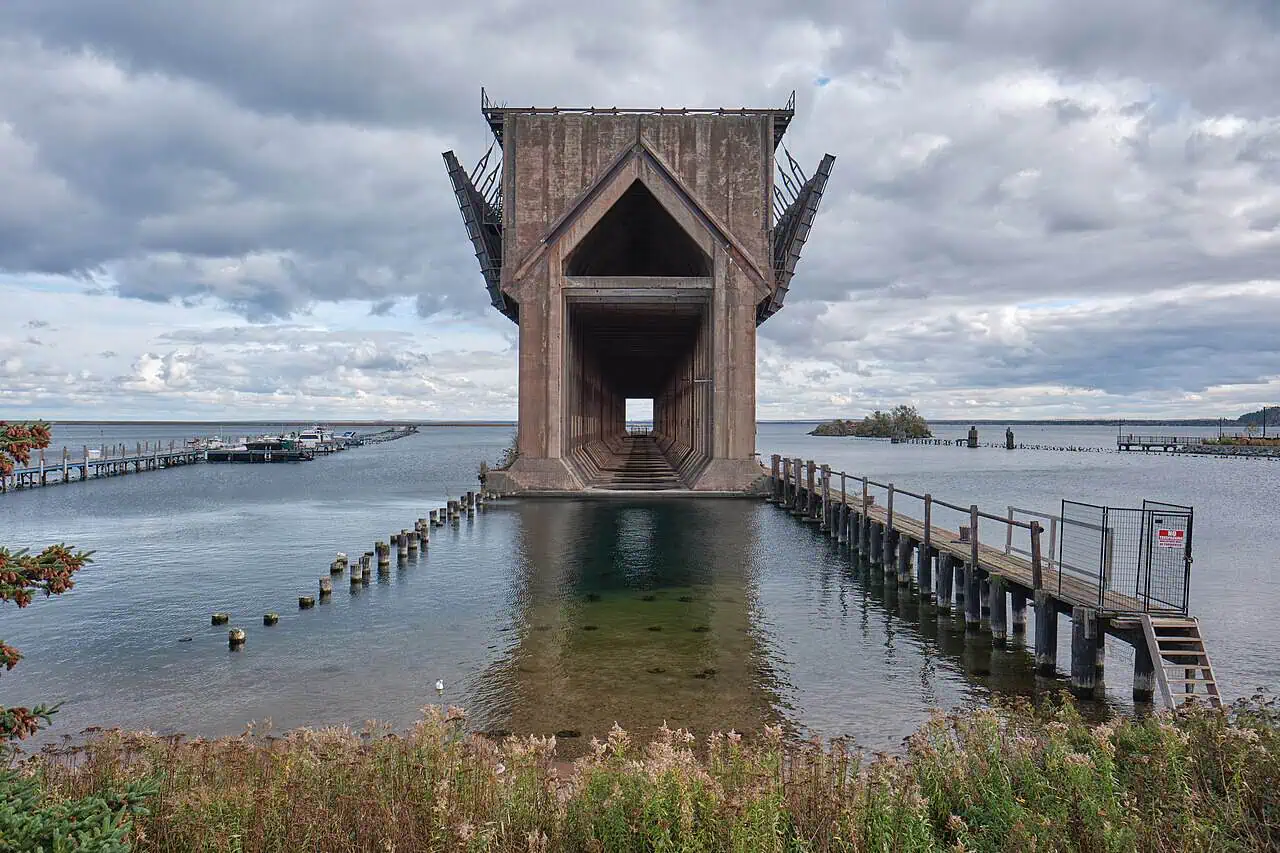
The most photographed object in Marquette has not done a day of work since 1971.
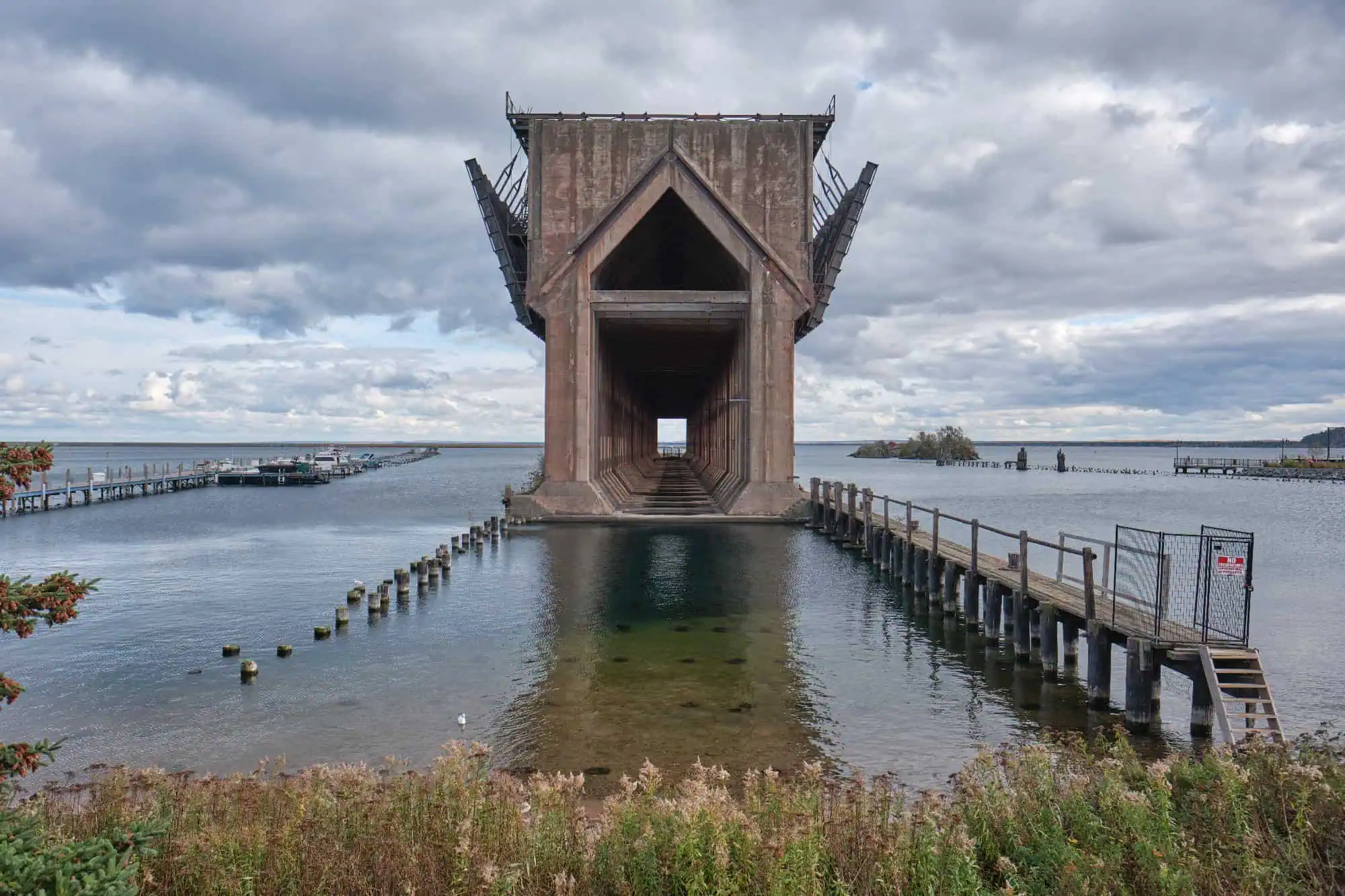
The Lower Harbor Ore Dock sits in Lake Superior a stone’s throw from downtown, a wall of concrete and steel that is on the t-shirts, the bumper stickers, and roughly every photograph anybody takes of the city. It is a decommissioned piece of industrial equipment, and Marquette has quietly made it the civic logo.

Marquette invented the thing
The problem in the 1850s was loading. Ore got hauled to the water and then shoveled into schooners by hand, off piles on the dock, and boats sat waiting for days.
The fix came out of Marquette. Engineers at the Lake Superior Iron Company built the first pocket ore dock — a dock tall enough to hold ore in bins above the waterline, with chutes that dropped it straight down into a hull. Gravity did the work that men with shovels had been doing. Loading went from days to hours.
The nation’s first dock built exclusively for iron went up here in the 1850s. Every ore dock on the Great Lakes since is a descendant of that idea.
The 1931 dock
The structure standing today was built in 1931 by the Duluth, South Shore and Atlantic Railroad, later the Soo Line. It cost about $1,350,000, which the Mining Journal has put at over $20 million in current money.
Rail cars ran out along the top and dumped ore into steel pockets underneath the tracks — 148 of them, by the Mining Journal’s count. A chute swung down into an open hatch, a door at the bottom opened, and about twenty tons ran into the boat. Repeat until the freighter sat low in the water.
The first load out of the new dock was 10,103 tons of iron ore from Ford’s Blueberry Mine west of Ishpeming. It took 92 minutes.
That is the number worth sitting with. Ten thousand tons, in an hour and a half, in 1931.

Why it stopped
The dock ran forty years and changed hands repeatedly — DSSA to the Soo Line, then Wisconsin Central, then Canadian National. Market conditions turned in the early 1970s and it was decommissioned in 1971.
Marquette once had six ore docks, with three working the Lower Harbor at the same time. Now there is one still operating anywhere in Michigan, and it is the Presque Isle dock at the north end of town, which opened in the early 1910s and still loads freighters seasonally with iron pellets bound for mills in Ohio, Indiana and Pennsylvania by way of the Soo Locks.
What happens to it now
A group called the Friends of the Ore Dock has been working to turn the Lower Harbor structure into public space using private investment — the plan being a walkable promenade on the lower portion and a garden on top.
It is an unusual idea and a slow one, and it has been circulating for years without a finished result. Whether it happens is an open question. What is not in question is that the city has already decided what the dock means, regardless of what gets built on it.
Seeing both
The Lower Harbor dock is right at the start of the Marquette multi-use path, easy to reach on foot from downtown, and it is the classic photograph — especially at sunrise, when the light comes up behind it off the lake.
The better use of an afternoon is the Presque Isle dock north of town. Watching ten thousand tons of iron pellets pour into a freighter is the same operation that built the place, still running. Check freighter schedules before you go; loading is seasonal and irregular. While you are up that end, the Black Rocks are a short walk away.
More worth reading


Yooper Hub community
The conversation
Know something this story missed? Corrections and additions get read by an editor and folded into the article, with credit.
Real neighbors, real names. A Yooper Hub editor reads your first comment before it appears; after that you’re a known neighbor and your comments post right away. No account required. Community guidelines
Nothing here yet. A sentence is plenty: a correction, a name, or what you remember about this place.
Sources, credits, and reporting details
Sources & accountability
How this story was reported
Editorial methodArchival synthesis
Last verifiedAug. 15, 2026
Corrections statusNo material correction note is recorded on this article.
AI assistanceResearched and drafted with AI tools. Reviewed and approved by editor Keegan O’Brien. Tool: Claude Opus 5.
Verification note: Ledger reconstructed 2026-08-15 from the Marquette Regional History Center's Northern Tradition posts, the state historical marker, and the Mining Journal's Then and Now piece.
Primary sources
-
Celebrating Marquette's Iconic Ore Dock — Marquette Regional History Center (The Northern Tradition)
Published Feb. 19, 2021. Accessed Aug. 15, 2026.
-
Lower Harbor Ore Dock historical marker — Iron Ore Heritage Trail, via HMdb
Accessed Aug. 15, 2026.
Supports: Marker text on the dock's construction, operation and closure.
Additional reporting
-
Then and Now: Marquette Lower Harbor Ore Dock — The Mining Journal
Published Oct. 1, 2023. Accessed Aug. 15, 2026.
Supports: The dock's afterlife since 1971 and its place in the city's image.
-
The Ore Docks of Marquette — Marquette Regional History Center
Published Aug. 13, 2018. Accessed Aug. 15, 2026.
Supports: Context on the city's earlier wooden docks and the LS&I dock still working in the upper harbor.
Photo and media credits
-
Lower Harbor Ore Dock (featured image) — Chris Rycroft, via Wikimedia Commons
Featured image record. Accessed Aug. 5, 2026. CC BY 4.0.
Creator and license from the attachment caption. Attachment 2101, 1280×853.