The latest count from Isle Royale, the longest-running wolf and moose study on Earth, is one of the most dramatic in its 68 years
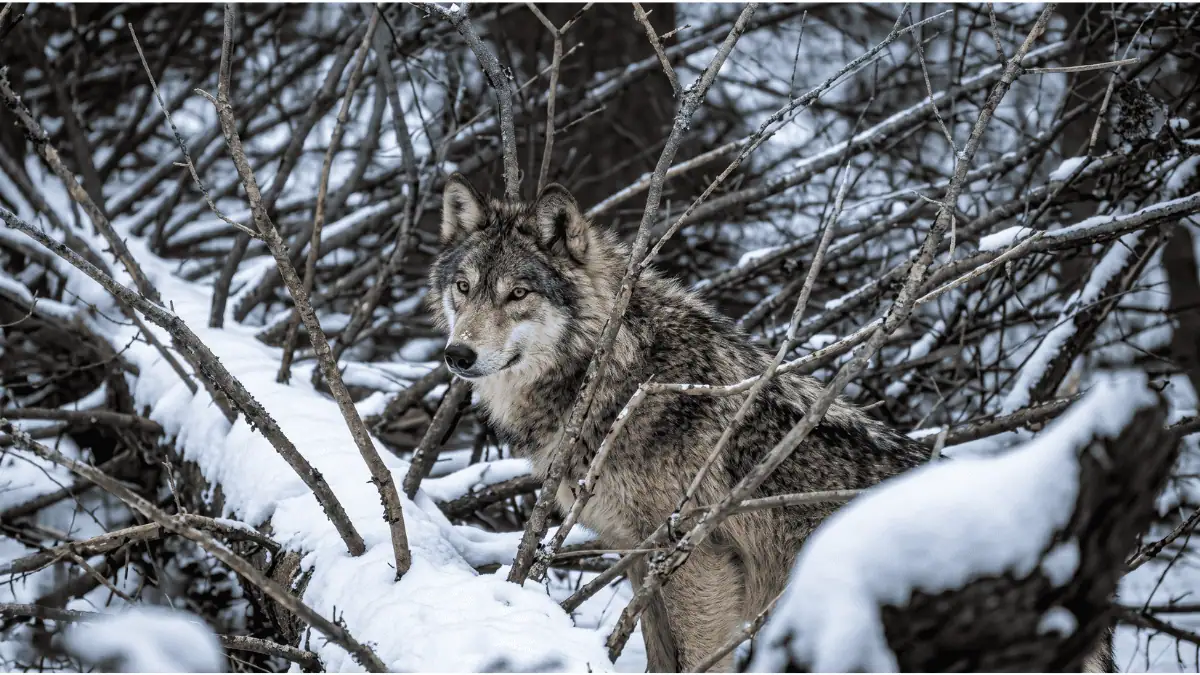
Out on a remote island in Lake Superior, the wolves are thriving like they have not in half a century. The moose, on the other hand, are vanishing.
The latest numbers from Isle Royale, the wild national park tucked into Michigan’s far northwestern corner of Lake Superior, are some of the most dramatic researchers have seen in decades.
The wolf count is up to an estimated 37 animals, split into three big packs. That is the most wolves on the island since the late 1970s.
Here is what makes that remarkable. Just about a decade ago, the island was down to two wolves. Two. Inbreeding had nearly wiped them out.
To save them, the National Park Service brought in 19 new wolves from around the Lake Superior region between 2018 and 2019. It worked, and then some.
“We found that there were 37 wolves on the island, split amongst three packs,” said Sarah Hoy, a Michigan Tech researcher who co-led this year’s survey. “They’re rather large packs, so packs of 10 to 12 wolves, which is notably larger than they have been in the past.”
All those wolves have to eat. And on Isle Royale, that means moose.
The moose population has crashed to about 524, down a staggering 75 percent from roughly 2,000 back in 2019. Researchers figure wolves took down nearly a quarter of the herd in just the past year.
And for the first time in the 68 years scientists have been doing this count, they did not spot a single moose calf.
“The wolf and moose populations are now approaching the edge of where they have been in the past, with moose low and wolves high,” said Rolf Peterson, who has studied the island’s wildlife for more than 50 years.
That kind of long view is the whole point of Isle Royale. Scientists from Michigan Tech have surveyed the island’s wolves and moose every winter since 1958, making it the longest-running predator and prey study in the world.
This year’s crew ran the survey from late January into early March, in brutal cold. At one point an ice bridge even formed between the island and the mainland, the first one in over a decade.
For the rest of us, the closest we are likely to get to U.P. wildlife like this is somewhere a lot safer than a wolf pack’s hunting ground, like America’s largest bear ranch up near Newberry.
Isle Royale is one of those far-flung U.P. treasures, like the Northern Lights dancing over Lake Superior, that remind you how wild this place still is. It is also one of the least-visited national parks in the country, with no roads and no cars, reachable only by boat or seaplane.
Out there, with no one watching most of the time, the oldest story in the north woods just keeps writing itself, one winter at a time.
Recommended Reads
A U.P. university has been releasing Atlantic salmon into the same river for 40 years
Thousands drive past this tiny U.P. town every day and almost nobody knows its story
A U.P. family is racing to save the 100-year-old Toonerville Trolley before it’s scrapped
Topics: Isle Royale, wolves, moose, Lake Superior, Michigan Tech, wildlife, Keweenaw, Upper Peninsula, national parks
More worth reading


Yooper Hub community
The conversation
Know something this story missed? Corrections and additions get read by an editor and folded into the article, with credit.
Real neighbors, real names. A Yooper Hub editor reads your first comment before it appears; after that you’re a known neighbor and your comments post right away. No account required. Community guidelines
Nothing here yet. A sentence is plenty: a correction, a name, or what you remember about this place.
Sources, credits, and reporting details
Sources & accountability
How this story was reported
Editorial methodAggregation
Last verifiedJul. 13, 2026
Corrections statusNo material correction identified in the July 13, 2026 source review.
AI assistanceResearched and drafted with AI tools. Reviewed and approved by editor Keegan O’Brien.
Verification note: CEO-directed review checked the central claims against 1 direct public evidence link on July 13, 2026. No material correction was identified. Featured image rights and attribution independently verified against the retained source record on 2026-07-14; attachment 411 restored under Keegan O'Brien dated approval.
Primary sources
-
Direct evidence for: A Decade Ago, This Lake Superior Island Was Down to 2 Wolves. Now There Are 37, and the Moose Are Disappearing Fast. — Michigan Technological University
Accessed Jul. 13, 2026.
Direct public evidence reviewed against the article on July 13, 2026.
Photo and media credits
-
National Park Service: Wolves — National Park Service
Featured image record. Accessed Jul. 14, 2026. U.S. federal work, public domain.
Supports: A gray wolf on Isle Royale in winter. Photo: National Park Service (public domain).
do not claim that the pictured animal is a particular wolf or one of the wolves counted in the article's survey year.