It happens every June. You’re out walking the property, or the kids spot something in the tall grass, and there it is — a tiny, spotted fawn, curled up all by itself, big eyes blinking up at you. No mama deer anywhere in sight. Your heart breaks a little. Surely it’s been abandoned… right?
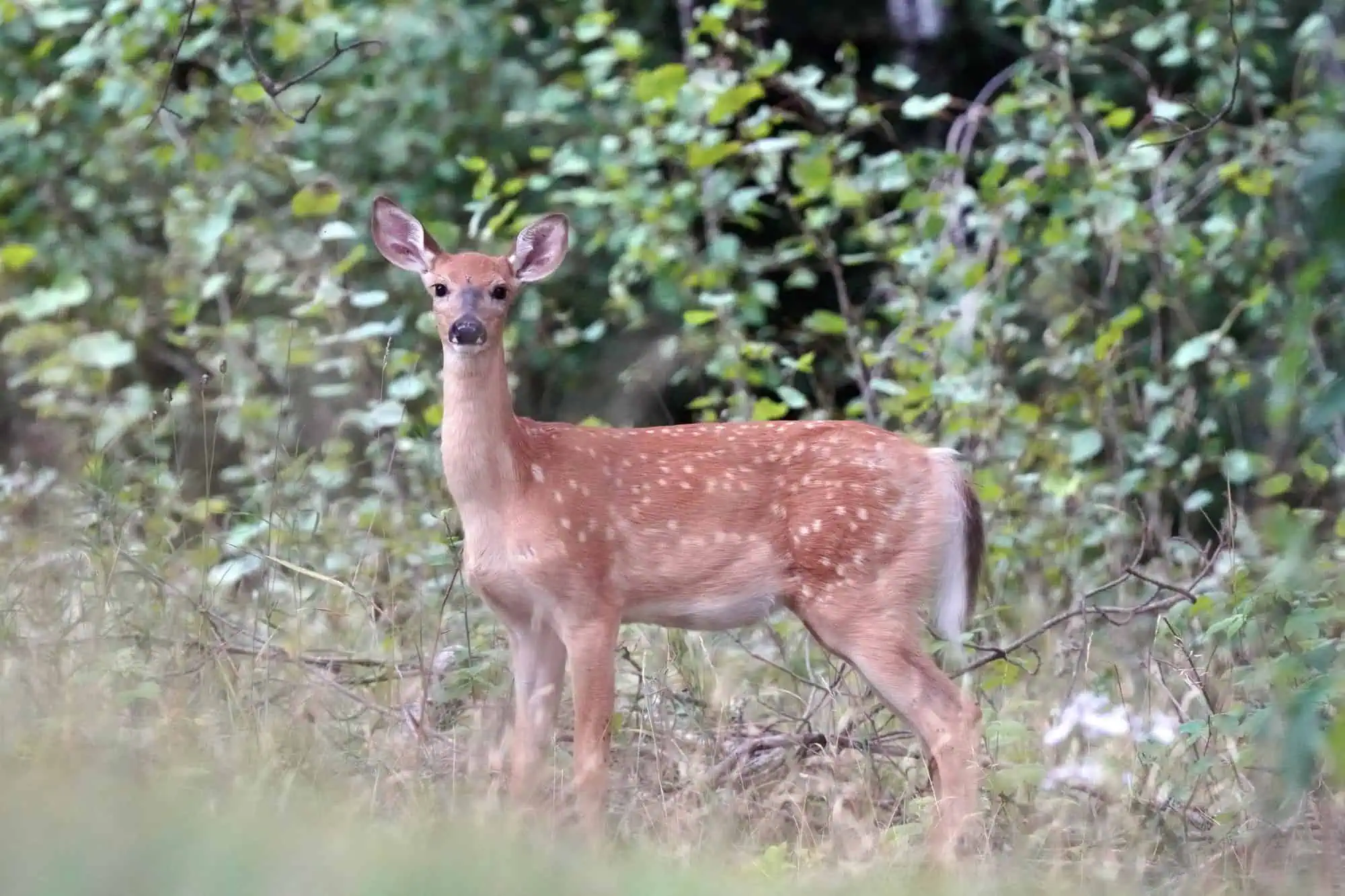
Here’s what the experts want every Yooper to know: almost certainly, it hasn’t been. And the most loving thing you can do is leave it right where it is.
Mom Isn’t Gone — She’s Working
A doe doesn’t sit next to her fawn all day. She tucks it away in the grass or brush and heads off to feed, coming back just a few times a day to nurse — sometimes only around dawn and dusk. To us it looks like neglect. It’s actually a survival strategy: a full-grown deer hanging around constantly would draw predators straight to her baby, so she keeps her distance on purpose.
A Fawn Is Built to Be Left Alone
That little one is better equipped than it looks. Its spotted, reddish-brown coat blends right into the dappled light on the forest floor, it gives off almost no scent, and its instinct is to freeze and lie perfectly still when something comes near. Staying quiet and hidden isn’t a sign something’s wrong — it’s exactly what it’s supposed to do. And yes, young fawns look skinny and a little wobbly; that’s normal too, not a sign of starvation.
Why “Rescuing” Backfires
The folks at Superior Wildlife Rehabilitation & Education Center in Marquette say more than half the baby animals that come through their doors were “orphaned” by well-meaning people — not by nature. Taking a fawn home, even for a day, usually does real harm: stress, the wrong food, and a lost chance to be raised by its own mother. It’s also against the law in Michigan to keep a wild deer — only licensed wildlife rehabilitators can legally care for one.
When a Fawn Actually Does Need Help
There are real exceptions. Call a licensed wildlife rehabilitator or the DNR if a fawn is:
- visibly injured, or covered in flies, fly eggs, or maggots
- crying or bleating nonstop for hours
- wandering aimlessly, clearly weak or cold
- lying next to a dead doe
- in immediate danger, like out in the middle of a road
Good rule of thumb: if a fawn is lying there quiet and calm, leave it and check from a distance over the next 24 hours. If it’s still in the same spot crying, hasn’t moved, or looks hurt — that’s when you make the call. (If it’s somewhere genuinely dangerous, you can gently move it a short distance to safety nearby, but otherwise, hands off.)
Who to Call
In the U.P., a licensed rehab like Superior Wildlife in Marquette can walk you through it, or you can reach the Michigan DNR Wildlife Division at 517-284-9453. Don’t try to raise it yourself — the kindest and most legal move is to get it to someone licensed.
So if you come across a fawn this month, take a breath, snap a quick photo from a distance if you must, and walk away. You’re not abandoning it. You’re doing exactly what it needs.
For more on living alongside the U.P.’s wildlife, check out the rest of Yooper Hub.
Guidance via the Michigan DNR (michigan.gov/wildlife) and Superior Wildlife Rehabilitation & Education Center, Marquette.
Spread the word, Yoopers — this is the time of year folks need the reminder. Tag someone who needs to see it. 👇
More worth reading


Yooper Hub community
The conversation
Know something this story missed? Corrections and additions get read by an editor and folded into the article, with credit.
Real neighbors, real names. A Yooper Hub editor reads your first comment before it appears; after that you’re a known neighbor and your comments post right away. No account required. Community guidelines
Nothing here yet. A sentence is plenty: a correction, a name, or what you remember about this place.
Sources, credits, and reporting details
Sources & accountability
How this story was reported
Editorial methodAggregation
Last verifiedJul. 13, 2026
Corrections statusNo material correction identified in the July 13, 2026 source review.
AI assistanceResearched and drafted with AI tools. Reviewed and approved by editor Keegan O’Brien.
Verification note: CEO-directed review checked the central claims against 1 direct public evidence link on July 13, 2026. No material correction was identified.
Primary sources
-
Direct evidence for: If You Find a Fawn Curled Up Alone This Month, the Kindest Thing You Can Do Is Walk Away — State of Michigan
Accessed Jul. 13, 2026.
Direct public evidence reviewed against the article on July 13, 2026.
Photo and media credits
-
White-tailed deer fawn (54736222042) — U.S. Fish and Wildlife Service – Midwest Region / Wikimedia Commons
Featured image record. Accessed Aug. 15, 2026. Public domain.
Supports: Photo credit for the featured image.
Featured image added 2026-08-15. Resized from 7200×4800 to 2000×1333, no crop. Attribution and licence in the caption.
.jpg)