The letter reached the Quincy Smelting Works on a summer day in 1923, and it came a very long way to get there. It had been mailed from Finland, it was written in Finnish, and it was a confession.
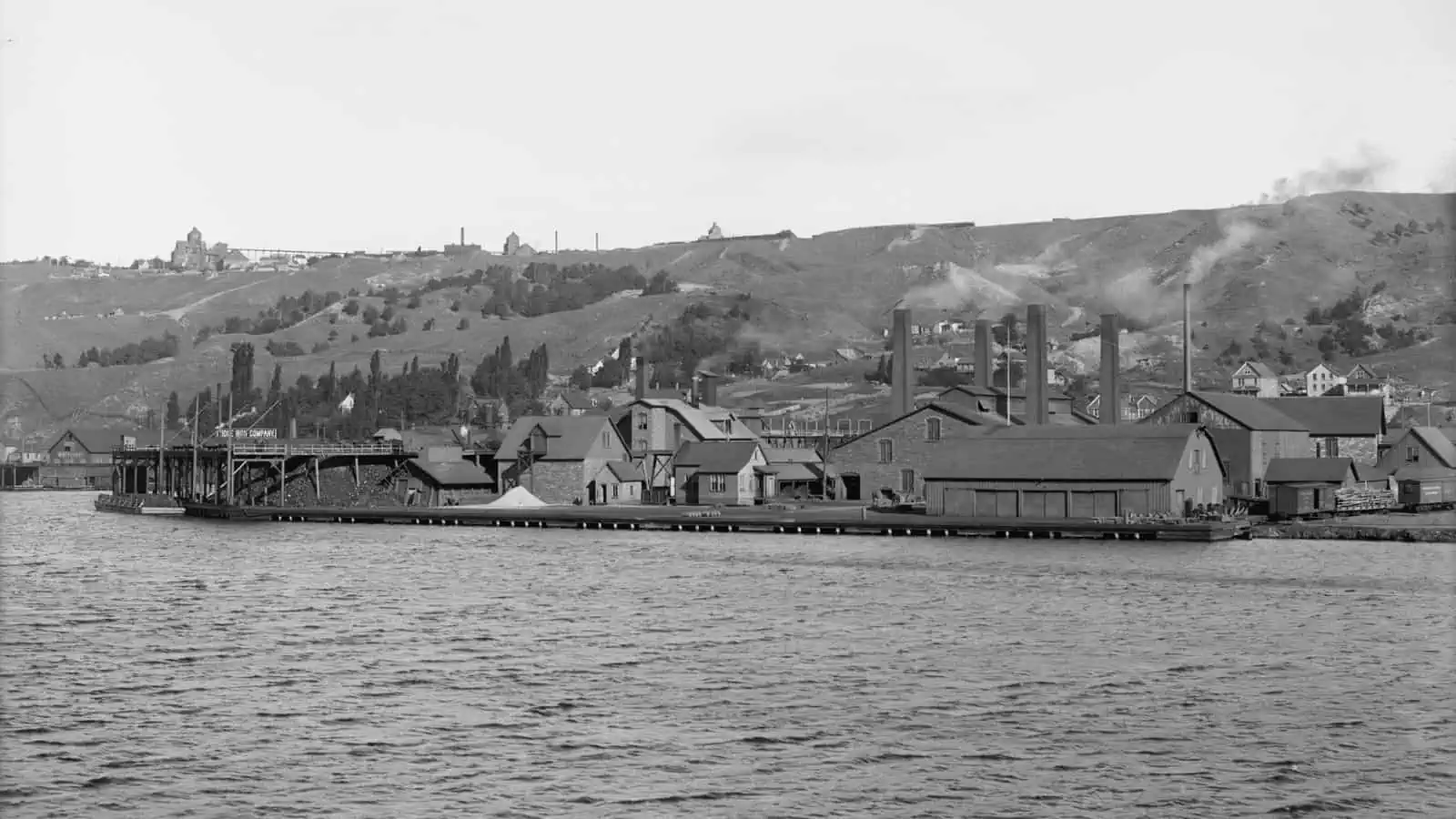
Sixteen years earlier, a man named Charles Heikkinen had worked at the smelter in Ripley, on the north bank of the Keweenaw Waterway. In 1907 he took sixteen pounds of copper that did not belong to him. Then he left, went home to Finland, and, by every indication in the record, thought about it for the next sixteen years.
His letter asked the superintendent for forgiveness. He wanted his conscience, he wrote, to be at peace, because it had been troubled. And he asked the company a practical question that is the strangest and most human part of the whole business: how much did he owe?
Consider what he was doing. Nobody was looking for him. He was living in another country, across an ocean, under no legal jeopardy that any statute would still recognize. The company had almost certainly written off sixteen pounds of copper without noticing it was gone. The only thing compelling him to write that letter was the thing he could not put down.
The Quincy Smelting Works had been built in 1898, so when Heikkinen worked there it was barely a decade old and running hard, taking in copper rock and turning it into ingots. Up the hill above Hancock, the same company’s mine would later install the largest steam hoist ever built. He was one of a great many Finns who came to the Upper Peninsula for exactly that kind of work; Finnish immigrants arrived in the U.P. and the Minnesota Iron Range in such numbers that their descendants still make up much of the population in both places.
The superintendent wrote back about a month later. The reply acknowledged the letter, said the company appreciated him owning up to it, and answered the question. The copper was worth two dollars. The Michigan Tech archivists who hold the file put that at about $36.73 in 2024 money.
Two dollars. Sixteen years.
In March 1924, Heikkinen wrote again. This time the envelope had the two dollars in it, and he had added interest.
The last letter in the file is Quincy’s, acknowledging the money and the interest, with a line that reads like a man shaking his head as he types it: gratitude that there are such honest men in Finland.
All five letters sit today in the Michigan Tech Archives and Copper Country Historical Collections in Houghton, catalogued as the Quincy Mining Company Smelter Theft Letters. It is a small collection. Most of it is in Finnish.
That is the part worth sitting with. A company kept these. Somebody at Quincy read a confession about two dollars of copper, wrote a courteous reply, filed the correspondence, and the file survived the smelter itself. The works shut down in 1931, came back in 1948, closed for good in 1971, and spent decades afterward as a Superfund site before that designation was lifted in 2013. The buildings still stand at Ripley as part of a National Historic Landmark district.
The copper Heikkinen took is long gone into somebody’s wire or kettle. The letters about it are still here, in a box, in the town he mailed them to.
More worth reading


Sources, credits, and reporting details
Sources & accountability
How this story was reported
Editorial methodArchival synthesis
Last verifiedAug. 14, 2026
Corrections statusNo material correction note is recorded on this article.
AI assistanceResearched and drafted with AI tools. Reviewed and approved by editor Keegan O’Brien. Tool: Claude.
Primary sources
-
Quincy Mining Company Smelter Theft Letters (MS-771) — Michigan Technological University Archives and Copper Country Historical Collections
Published Jun. 28, 2024. Accessed Aug. 14, 2026.
Institutional archive describing a collection it holds. Lead image on that page is the original letter dated 15 July 1923; we did NOT reproduce it, as that needs permission from copper@mtu.edu.
Additional reporting
-
Quincy Smelter — Wikipedia
Accessed Aug. 14, 2026.
-
Finnish Americans — Wikipedia
Accessed Aug. 14, 2026.
Photo and media credits
-
Quincy-smelter-c1906.jpg (featured image) — Detroit Publishing Co., via Wikimedia Commons
Featured image record. Accessed Aug. 14, 2026. Public domain.
Original 9350×7302, circa 1906, so it shows the works about a year before the 1907 theft. Cropped to 16:9 (crop box 0,800,9350,6059) and resized to 1600×900, q85. Attachment 2338.
