Horace Greeley is the man history remembers for telling young men to go west. What is less well known is that he put his own money north — into a copper mine in Keweenaw County that never made anybody a dollar.
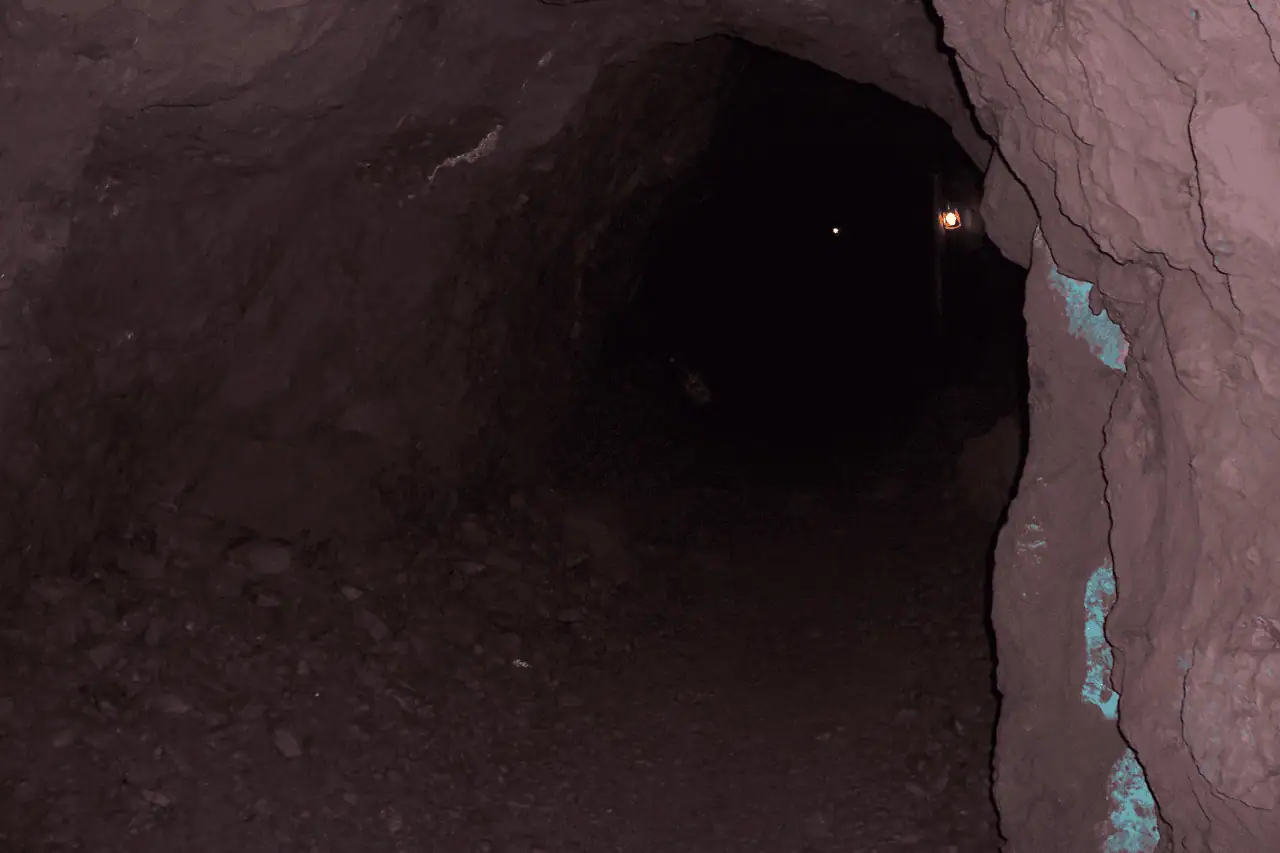
You can walk into that mine this summer. The Delaware sits right off US-41, about twelve miles south of Copper Harbor, and it is one of the oldest underground copper mines on the peninsula.

How a New York editor ended up with Keweenaw stock
The story on the historical marker at the site is almost too good. A backwoodsman named Bailey turned up claiming he had found a vein of copper, and offered Greeley stock in a mining company built around it. Greeley took it, and spent roughly three years not just holding the stock but talking other people into buying in as well. The marker lists him as a stockholder and agent of the mine.
Bailey’s find was not at the Cliff or the Central — the two properties in that district that actually paid. It was at the Delaware. Greeley later wrote, with the weariness of a man who had learned something expensive, that there are easier ways to get rich than digging metal out of the ground.
Forty years, five shafts, no profit
The Delaware opened in 1847 and closed in 1887. Over those four decades it sank five shafts and blasted down to nearly 1,400 feet. The National Park Service puts it plainly: the mine operated for forty years and never turned a profit for its investors.
It was not for lack of trying or lack of money. Its fissure veins and conglomerate lodes kept promising more than they produced, and the company kept spending against that promise. At its height in the late 1870s the settlement of Delaware held about 1,150 people and more than two hundred buildings. Today a handful of houses are left.

The men who dug it
Most of the workforce came from Cornwall, and they brought their own technology with them — including the one piece of Cornish engineering that outlasted every mine in the district. The pasty, a folded meat pie a miner could carry down the shaft and eat without a plate, is now the signature food of the entire Upper Peninsula. The copper companies are gone. The pasty is on every menu from Ironwood to the bridge.
They brought their ghosts too. The tommyknockers that Cornish miners listened for in the rock came over on the same boats.
What you can actually do there now
Delaware Mine Tours has been running visitors into the first level since 1977, and the operation expanded this month with new self-guided tours of level one underground.
The tour is a real descent, not a simulation. You go down about 100 feet of stairs through the shaft and then walk roughly 1,700 feet through the original workings, with veins of native copper still visible in the walls. Above ground there are ruins of the original mine buildings, antique engines and rail equipment, and poor rock piles where you can pick through the waste for copper the company left behind.
The site is a Keweenaw Heritage Site and an official partner of Keweenaw National Historical Park, though it is privately owned and run — currently by the family of Tom Poynter, who bought and revived it.
Planning a visit
Delaware is in Grant Township, on US-41 between Mohawk and Copper Harbor. The season runs roughly mid-May through mid-October, daily, and admission has recently run $14 for ages 13 and up and $9 for ages 6 to 12, with under-6 free. Hours and pricing shift year to year, so call ahead at 906-289-4688.
Bring a jacket. It is about 45 degrees down there in August. And if you are making a Copper Country day of it, the Quincy Mine hoist in Hancock is on the way up.
More worth reading


Yooper Hub community
The conversation
Know something this story missed? Corrections and additions get read by an editor and folded into the article, with credit.
Real neighbors, real names. A Yooper Hub editor reads your first comment before it appears; after that you’re a known neighbor and your comments post right away. No account required. Community guidelines
Nothing here yet. A sentence is plenty: a correction, a name, or what you remember about this place.
Sources, credits, and reporting details
Sources & accountability
How this story was reported
Editorial methodArchival synthesis
Last verifiedAug. 15, 2026
Corrections statusNo material correction note is recorded on this article.
AI assistanceResearched and drafted with AI tools. Reviewed and approved by editor Keegan O’Brien. Tool: Claude Opus 5.
Verification note: Ledger reconstructed 2026-08-15 from the National Park Service heritage-site page, the state historical marker and the mine's tour listing.
Primary sources
-
Delaware Mine (Keweenaw National Historical Park heritage site) — National Park Service
Accessed Aug. 15, 2026.
-
The Delaware Mine historical marker — Western Upper Peninsula Heritage Trail, via HMdb
Accessed Aug. 15, 2026.
Supports: Marker text on the mine's history and Greeley's investment.
Additional reporting
-
Copper Mine Tours (Delaware Mine) — Visit Keweenaw
Accessed Aug. 15, 2026.
-
Delaware Mine — Wikipedia contributors
Accessed Aug. 15, 2026.
Supports: Summary and pointers.
Pointer.
Photo and media credits
-
Inside the Delaware Mine (featured image) — Shone Brooks, via Wikimedia Commons
Featured image record. Accessed Aug. 5, 2026. CC BY-SA 4.0.
Creator and license from the attachment caption. Attachment 2122, 1280×853.