Sixteen miles up the Lake Superior shore from Marquette, hidden behind the trees off County Road 550, sits the largest log cabin in the world. Fifty rooms. Twenty-three bedrooms. A mile of private beach and its own island. And the man who built it, a kid from Marquette, also helped finance the Empire State Building and assemble the company that became General Motors. His name was Louis Kaufman, and this was his summer camp.
Kaufman built it between 1919 and 1923, bringing in more than 400 Scandinavian craftsmen and spending over five million dollars, something like seventy million today. The lodge runs 26,000 square feet, an L-shaped mountain of logs stacked over a steel frame, with more than two dozen stone fireplaces and a great room over sixty feet long. The mantel above one of those fireplaces is a beam pulled from a ship that sank in Lake Superior. George Gershwin once played the piano in that room, and the tennis court out back was designed by the tennis legend Bill Tilden.

The Marquette boy who helped build an American skyline
Here is the part most people miss while they are gawking at the log cabin. Louis Graveraet Kaufman was not just wealthy. He was a Marquette native who went to New York, ran a major bank, and ended up with his fingerprints on some of the most famous things in the country. He helped draw up the financing for the Empire State Building. He helped assemble the companies that merged into General Motors. The same man who shaped a piece of the New York skyline and the American auto industry wanted a place back home in the U.P., and what he wanted was the biggest log cabin anyone had ever seen.
Built out of spite, named after his kids
There is a reason it sits where it does, and it is a little petty. Kaufman, who was Jewish, was shut out of the exclusive Huron Mountain Club farther up the shore, the private playground of the region’s old-money families. So he built his own retreat to outdo the grand camps the Vanderbilts and Rockefellers were putting up in the Adirondacks. Even the name is a quiet family joke. Granot Loma comes from the first two letters of his five children’s names, Graveraet, Ann, Otto, Louis, and Marie, layered over the fact that the lodge sits on a hill of granite. His kids and the bedrock, hidden in plain sight.
Beavers, a private train, and a proposed rocket pad
The stories only get stranger. Kaufman ran a private railroad spur right to the door, so he and his guests could board a train car in New York and not step off until they reached the lodge. The farm next door raised dairy cows, racehorses, and pheasants, and for a while beavers, until the beaver operation fell apart because, as the old caretaker told it, boys from Big Bay kept sneaking in at night to steal the beavers and sell them back to Kaufman. Fred Astaire and Mary Pickford stayed here. Gerald Ford once eyed the place as a Western White House. And not long ago there was a serious proposal to build a vertical rocket launch site on the property, which drew exactly the kind of local pushback you would expect.
Can you actually see it?
This is the catch. Granot Loma is private and has been for generations, so you cannot just pull in for a tour. Chicago bond trader Tom Baldwin bought it in 1987, poured millions into restoring it, and has had it on and off the market ever since, once asking forty million dollars with no taker. You can catch glimpses from County Road 550 and better ones from the water, and it opens now and then for weddings and private events. Mostly, though, it stays exactly what Kaufman built it to be: a private kingdom in the woods that almost no one gets to see.
Drive that stretch of CR 550 and you would never guess what is back in the trees. The largest log cabin on earth, built by a Marquette kid who helped raise the Empire State Building, named after his children, and still keeping watch over Lake Superior a hundred years later.
More worth reading


Yooper Hub community
The conversation
Know something this story missed? Corrections and additions get read by an editor and folded into the article, with credit.
Real neighbors, real names. A Yooper Hub editor reads your first comment before it appears; after that you’re a known neighbor and your comments post right away. No account required. Community guidelines
Nothing here yet. A sentence is plenty: a correction, a name, or what you remember about this place.
Golden 25 trust review · #1
Verified context for this Yooper Hub story
- Evidence refreshed
- July 13, 2026
- Source readiness
- Live source review complete.
- Corrections status
- No material correction note is recorded on this article.
- Image rights
- Featured and in-story images have documented rights records.
Sources, credits, and reporting details
Sources & accountability
How this story was reported
Editorial methodArchival synthesis
Accountable editor:Keegan O’Brien, publisher and editor.
Last verifiedJul. 13, 2026
Corrections statusNo material correction note is recorded on this article.
AI assistanceResearched and drafted with AI tools. Reviewed and approved by editor Keegan O’Brien. Tool: Claude Max.
Verification note: Construction dates, architecture, Kaufman association, room and fireplace counts, naming, Lake Superior location, and National Register status were checked against NPS and SAH records. The commercial estate site was used only for owner-supplied history and current property descriptions. The featured-image caption was corrected to disclose that it shows Isle Royale, not Granot Loma.
Primary sources
-
Granot Loma — National Register Digital Asset — National Park Service
Published Apr. 4, 1991. Accessed Jul. 11, 2026.
Additional reporting
-
Granot Loma (Louis G. and Marie Young Kaufman Summer Estate) — Society of Architectural Historians / University of Virginia Press
Accessed Jul. 11, 2026.
-
Granot Loma — A Piece of History — Granot Loma property website
Accessed Jul. 11, 2026.
Commercial property source; physical and historical claims were cross-checked against NPS and SAH records where possible.
-
The Pictured Rocks: An Administrative History — National Park Service / U.S. Government Publishing Office
Accessed Jul. 11, 2026.
Photo and media credits
-
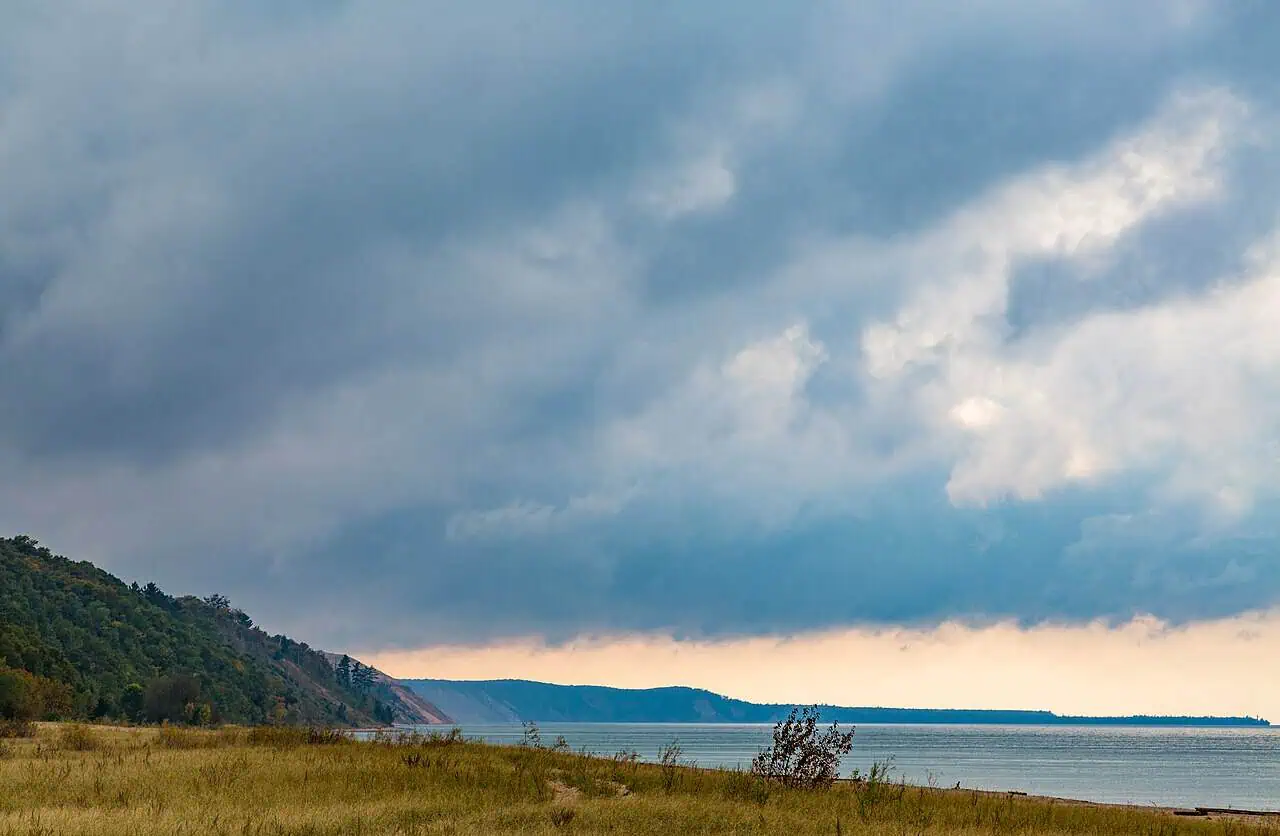
Lake Superior Shore at Isle Royale National Park — Tony Webster / Wikimedia Commons
Featured image record. Published Sep. 17, 2019. Accessed Jul. 11, 2026. CC BY 2.0.
Yooper Hub uses a resized local derivative and now labels the image as illustrative.
-
View of Empire State Building from Rockefeller Center — Dllu / Wikimedia Commons
Accessed Jul. 11, 2026. CC BY-SA 4.0.
Supports: Body-image source for the Empire State Building photograph.
.jpg)
