You can hear it in the way people stretch their vowels. You can see it on the street signs in Hancock, written in both English and Finnish. You can taste it in a loaf of cardamom-scented nisu, and on a Saturday night you can sweat it out in a sauna. By at least one measure, Michigan’s Upper Peninsula is the most Finnish place in America.
It’s not just a feeling. Five counties in the western U.P. — Houghton, Keweenaw, Baraga, Ontonagon, and Gogebic — are the only counties in the entire United States where people claiming Finnish ancestry are the single largest group. Across the whole peninsula, roughly one in six people traces their roots to Finland, and one small township near Houghton, Stanton, is about 47 percent Finnish, the highest share anywhere in the country. Nowhere outside Europe is more Finnish than this.
How copper pulled a piece of Finland across the ocean
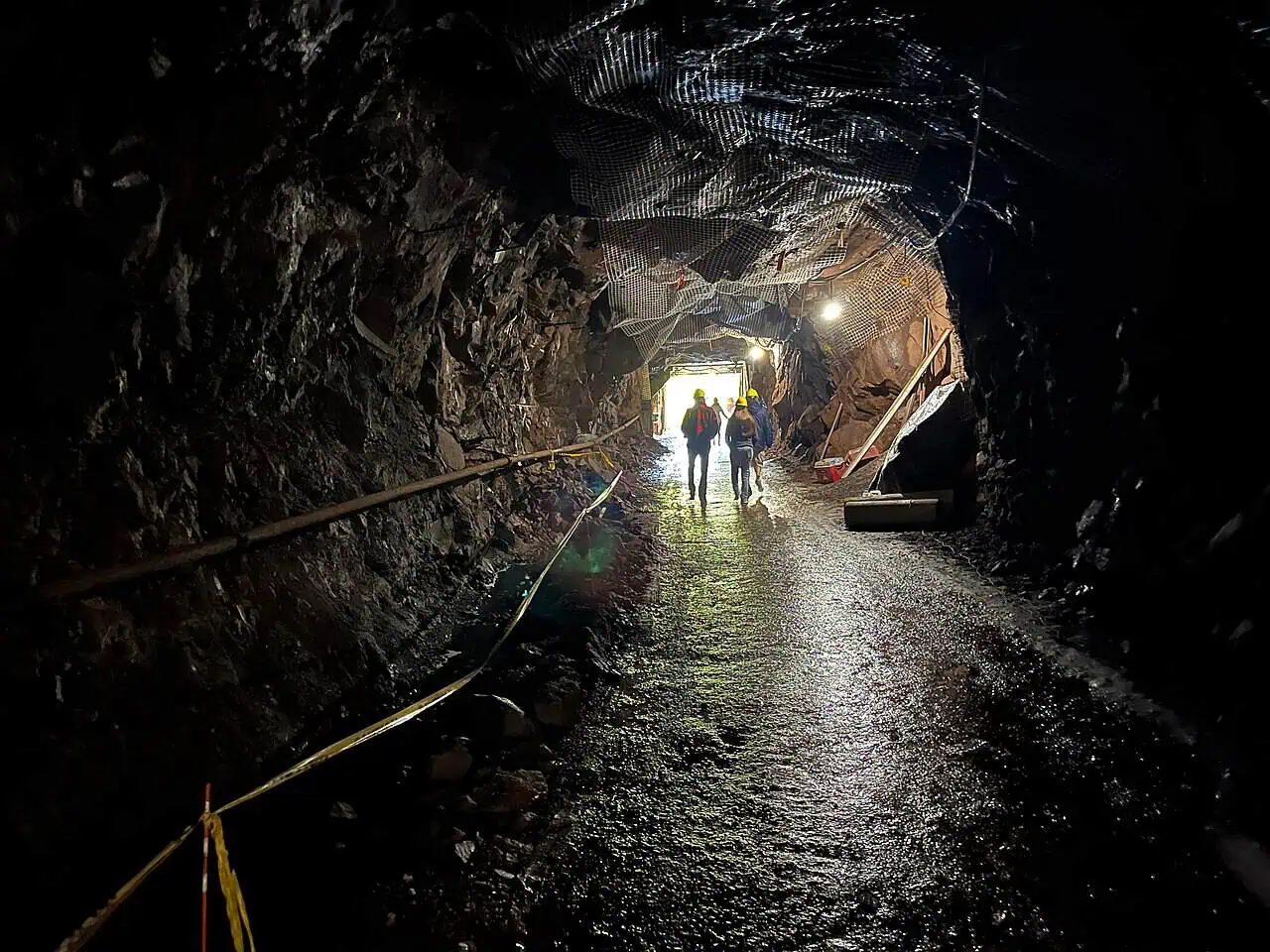
The story starts underground. When copper was booming in the Keweenaw in the late 1800s, mining companies went looking for workers, and Finland was a country people were desperate to leave — poor, short on farmland, and under the thumb of the Russian Empire, which had begun drafting young Finnish men into its army. Between the 1860s and the 1920s, around 350,000 Finns crossed to the United States, and a huge share of them headed for the U.P. The first permanent Finnish settlers stepped off the dock in Hancock in 1865 — fittingly, on Midsummer Eve, one of Finland’s biggest holidays. By 1873 more than a thousand Finns were living in the Copper Country, and they built a whole world to go with it: Lutheran churches (two Finnish denominations were born in nearby Calumet), temperance halls, cooperative stores, and, in 1877, the first Finnish-language newspaper in the United States.
The college that closed, and the heart that got saved
In 1896, Finnish immigrants in Hancock founded Suomi College to keep their language and faith alive. It grew into Finlandia University, the last college in all of North America founded by Finnish immigrants. Then, in 2023, after 127 years, it ran out of road — buried under debt and falling enrollment, it shut its doors for good. But the piece that mattered most didn’t die with it. A national campaign called “Saving Finland in America” rallied more than 900 donors and raised some $5 million, and the Finnish American Heritage Center — which holds the largest collection of Finnish-American materials in the world — stayed open in Hancock under new ownership.
The pasty isn’t actually Finnish (and other myths)
Here’s one that surprises people: the pasty, the U.P.’s beloved hand-held meat pie, isn’t Finnish at all. It was brought over by Cornish miners and adopted by everyone else, Finns included. The genuinely Finnish foods on a U.P. table are things like nisu, that cardamom sweet bread, and pannukakku, a custardy baked pancake. And St. Urho’s Day, celebrated across the region every March 16 in grape purple and green? That wasn’t carried over from the old country either — it was invented in Minnesota in the 1950s as a tongue-in-cheek warm-up to St. Patrick’s Day.
What is unmistakably Finnish is the sauna — and up here it’s said the Finnish way, “SOW-na,” not “SAW-na.” A Saturday-night sauna is still a genuine ritual in a lot of U.P. households. So is sisu, the Finnish word for a kind of stubborn, bone-deep grit, which Yoopers long ago adopted as something close to an unofficial motto.
Where to go full Finn
If you want to feel it firsthand, the Finnish American Heritage Center on Quincy Street in Hancock is open to the public, with archives, an art gallery, and events year-round. Every January, Hancock throws Heikinpäivä, a midwinter Finnish festival with a parade, polar-bear plunges, and general defiance of the cold. Downtown, you’ll spot those bilingual street signs, and local bakeries still turn out fresh nisu. For your next trivia night: the U.P. was also home to “Finland Calling,” a Finnish-language TV show hosted by Carl Pellonpaa that ran on Marquette’s WLUC from 1962 all the way to 2015 — 53 years on the air.
So the next time you hear a Yooper draw out their vowels, or somebody waves you toward the sauna on a Saturday night, you’re bumping into a living piece of Finland — one that copper carried across the Atlantic more than 150 years ago, and that never left.
More worth reading


Yooper Hub community
The conversation
Know something this story missed? Corrections and additions get read by an editor and folded into the article, with credit.
Real neighbors, real names. A Yooper Hub editor reads your first comment before it appears; after that you’re a known neighbor and your comments post right away. No account required. Community guidelines
Nothing here yet. A sentence is plenty: a correction, a name, or what you remember about this place.
Golden 25 trust review · #10
Verified context for this Yooper Hub story
- Evidence refreshed
- July 13, 2026
- Source readiness
- Live source review complete.
- Corrections status
- No material correction note is recorded on this article.
- Image rights
- Featured and in-story images have documented rights records.
Sources, credits, and reporting details
Sources & accountability
How this story was reported
Editorial methodAnalysis
Accountable editor:Keegan O’Brien, publisher and editor.
Last verifiedJul. 13, 2026
Corrections statusNo material correction note is recorded on this article.
AI assistanceResearched and drafted with AI tools. Reviewed and approved by editor Keegan O’Brien. Tool: Claude Max.
Verification note: The Finnish-ancestry measure and its survey limitations were checked against the Census ACS definition. The article should identify its geography and estimate year whenever it states a ranking. Featured image rights and attribution independently verified against the retained source record on 2026-07-14; attachment 1303 restored under Keegan O'Brien dated approval.
Primary sources
-
ACS variable B04006_039E: Finnish ancestry — U.S. Census Bureau
Accessed Jul. 13, 2026.
Supports: Defines the ACS estimate used for people reporting Finnish ancestry.
-
ACS ancestry table B04006 — U.S. Census Bureau
Accessed Jul. 13, 2026.
Supports: Official table for comparing Finnish ancestry across selected geographies.
Photo and media credits
-
Keweenaw Quincy Mine, Hancock MI — Wickanninish
Featured image record. Published Sep. 14, 2023. Accessed Jul. 14, 2026. CC BY-SA 4.0; photographed 2023-09-14.
replace the false hoist / above-Hancock caption and alt. The retained image shows the view out from a deep tunnel.
