Before the California Gold Rush became legend, another American mineral rush was already taking shape along Lake Superior. The Keweenaw Peninsula held something extraordinary: immense deposits of native copper, metal that could sometimes be separated from the surrounding rock without first being smelted from an ore.
Beginning in the 1840s, that copper drew investors, engineers and workers to one of the most remote corners of the country. The industry they built reshaped the Upper Peninsula, supplied a growing nation and left behind the towns, traditions and industrial landmarks that still define Copper Country.
Copper Country began thousands of years before the boom
The commercial rush was not the beginning of copper mining here. According to the National Park Service, Indigenous peoples began mining Keweenaw copper at least 8,000 years ago—the earliest known metalworking in North America. They used stone tools to free copper from shallow pits and fashioned it into tools, fishhooks, beads and bracelets. Keweenaw copper objects have been found at archaeological sites across the continent.
That history matters. Copper Country did not begin when outside investors arrived, and the land was not empty. In the 1842 Treaty of La Pointe, Ojibwe bands ceded mineral-rich territory to the United States while retaining treaty rights to hunt, fish and gather in their ancestral homelands.

How “copper fever” reached the Keweenaw
Michigan state geologist Douglass Houghton described the region’s copper deposits in an 1840 report and urged caution. Speculation raced ahead anyway. The federal government opened a mineral land agency in Copper Harbor in 1843, and the first serious American mining ventures followed.
Many early attempts failed. The breakthrough came at the Cliff Mine near Eagle River, which opened in 1845 and became the first large-scale profitable mine on the peninsula. The opening of the St. Marys Falls Ship Canal—the Soo Locks—in 1855 then gave Lake Superior shipping a direct route to Detroit, Chicago and markets beyond. Copper Country was no longer quite so isolated.
A company, a town and an industrial giant
The richest operation grew around the Calumet conglomerate lode. Calumet & Hecla Mining Company formed in 1871 after two neighboring companies merged. In its first year, the new company produced 16.2 million pounds of copper and paid $2.4 million to stockholders, according to the National Park Service mining timeline.
The operation transformed Red Jacket, the community now called Calumet. Shafts, rock houses, rail lines and mills spread across the landscape. The company also helped build schools, a library, a bathhouse and medical facilities. In 1900, the Calumet Theatre opened and brought nationally known performers to a town far from any major metropolitan center.

The workers who made Copper Country
The wealth did not come from rock alone. Mining companies recruited workers from around the world, and immigrant families built churches, mutual-aid societies, halls, businesses and neighborhoods around the mines. Cornish mining knowledge joined Finnish, Italian, Irish, Croatian, Slovenian, French-Canadian and many other traditions. Their languages, foods and customs became part of U.P. life.
Underground work remained dangerous. Miners climbed long ladders, drilled and blasted rock, handled heavy machinery and faced cave-ins, misfires and fire. New compressed-air drills and stronger explosives increased production, but they did not remove the risk. The 1895 Osceola Mine fire killed 30 men and boys—the deadliest single mining accident in Keweenaw history.
Tension over pay, safety, working conditions and the labor-saving one-man drill erupted in the Copper Country Strike of 1913–14. The conflict divided communities and brought the Michigan National Guard to the region. During a Christmas Eve gathering for striking families, panic at Calumet’s Italian Hall killed 74 people, including 60 children. The Italian Hall disaster remains one of the darkest events in U.P. history.
Did Keweenaw copper electrify America?
Keweenaw copper helped meet the country’s growing need for metal during a critical stretch of industrial expansion. It went into items ranging from Civil War equipment and munitions to machinery and electrical systems. When telephones and electric lighting spread in the late 1800s, demand for conductive copper wire surged. The National Park Service notes that U.S. copper consumption jumped by nearly one-third in 1899 alone.
But the honest version is bigger than a single region. Western mines—especially those in Montana—were already outproducing Michigan consistently by 1887. Keweenaw copper did not wire America by itself. It helped supply the nation at a pivotal moment, then competed with larger and less expensive deposits elsewhere.

Why the boom ended
Deeper mines, lower-grade rock, costly production and competition gradually weakened the industry. World War I briefly lifted demand, but copper prices fell afterward. The Great Depression forced more shutdowns, and World War II brought only temporary relief.
Calumet & Hecla closed in 1968. By then, Keweenaw Peninsula mines had produced an estimated 10.5 billion pounds of copper since the mid-1840s. White Pine, which mined copper sulfide rather than native copper, continued in Ontonagon County until underground operations stopped in 1997.
The boom is over. Copper Country is still here.
The industry left scars as well as landmarks. Mine waste reshaped shorelines and contaminated parts of Torch Lake, prompting a federal Superfund cleanup. Abandoned shafts created hazards. Population loss changed communities that had once expected the boom to last forever.
Yet the legacy is visible everywhere: sandstone buildings, shaft-rockhouses, workers’ neighborhoods, family names, pasties, saunas and the stubborn sisu associated with life in the U.P. Congress established Keweenaw National Historical Park in 1992 to preserve and interpret that nationally important story.
The Keweenaw was never merely a distant place that happened to contain copper. For more than a century, it was connected to global migration, industrial technology, labor conflict and America’s growing appetite for electricity. Copper Country helped build the modern U.P.—and left a history worth telling accurately.
Sources & further reading
- Keweenaw National Historical Park: History & Culture
- NPS copper mining timeline: prehistory to 1850
- NPS copper mining timeline: 1851–1900
- NPS copper mining timeline: 1901–1950
- NPS copper mining timeline: 1951–present
- Library of Congress: Detroit Publishing Company photograph collection
Featured image: Historical image from B.E. Tyler’s 1903 “Souvenir of the Copper Country,” digitally restored and colorized. This story was reviewed and expanded using the public historical records linked above.
Explore more: Keweenaw Stories
More worth reading


Yooper Hub community
The conversation
Know something this story missed? Corrections and additions get read by an editor and folded into the article, with credit.
Real neighbors, real names. A Yooper Hub editor reads your first comment before it appears; after that you’re a known neighbor and your comments post right away. No account required. Community guidelines
Nothing here yet. A sentence is plenty: a correction, a name, or what you remember about this place.
Sources, credits, and reporting details
Sources & accountability
How this story was reported
Editorial methodService and public-interest reporting
Last verifiedJul. 13, 2026
Corrections statusNo material correction identified in the July 13, 2026 source review.
AI assistanceResearched and drafted with AI tools. Reviewed and approved by editor Keegan O’Brien.
Verification note: CEO-directed review checked the central claims against 6 direct public evidence links on July 13, 2026. No material correction was identified.
Primary sources
-
Direct evidence for: How Keweenaw Copper Built the U.P.—and Wired a Growing America — National Park Service
Accessed Jul. 13, 2026.
Direct public evidence reviewed against the article on July 13, 2026.
-
Direct evidence for: How Keweenaw Copper Built the U.P.—and Wired a Growing America — National Park Service
Accessed Jul. 13, 2026.
Direct public evidence reviewed against the article on July 13, 2026.
-
Direct evidence for: How Keweenaw Copper Built the U.P.—and Wired a Growing America — National Park Service
Accessed Jul. 13, 2026.
Direct public evidence reviewed against the article on July 13, 2026.
-
Direct evidence for: How Keweenaw Copper Built the U.P.—and Wired a Growing America — National Park Service
Accessed Jul. 13, 2026.
Direct public evidence reviewed against the article on July 13, 2026.
-
Direct evidence for: How Keweenaw Copper Built the U.P.—and Wired a Growing America — National Park Service
Accessed Jul. 13, 2026.
Direct public evidence reviewed against the article on July 13, 2026.
-
Direct evidence for: How Keweenaw Copper Built the U.P.—and Wired a Growing America — Loc
Accessed Jul. 13, 2026.
Direct public evidence reviewed against the article on July 13, 2026.
Photo and media credits
-
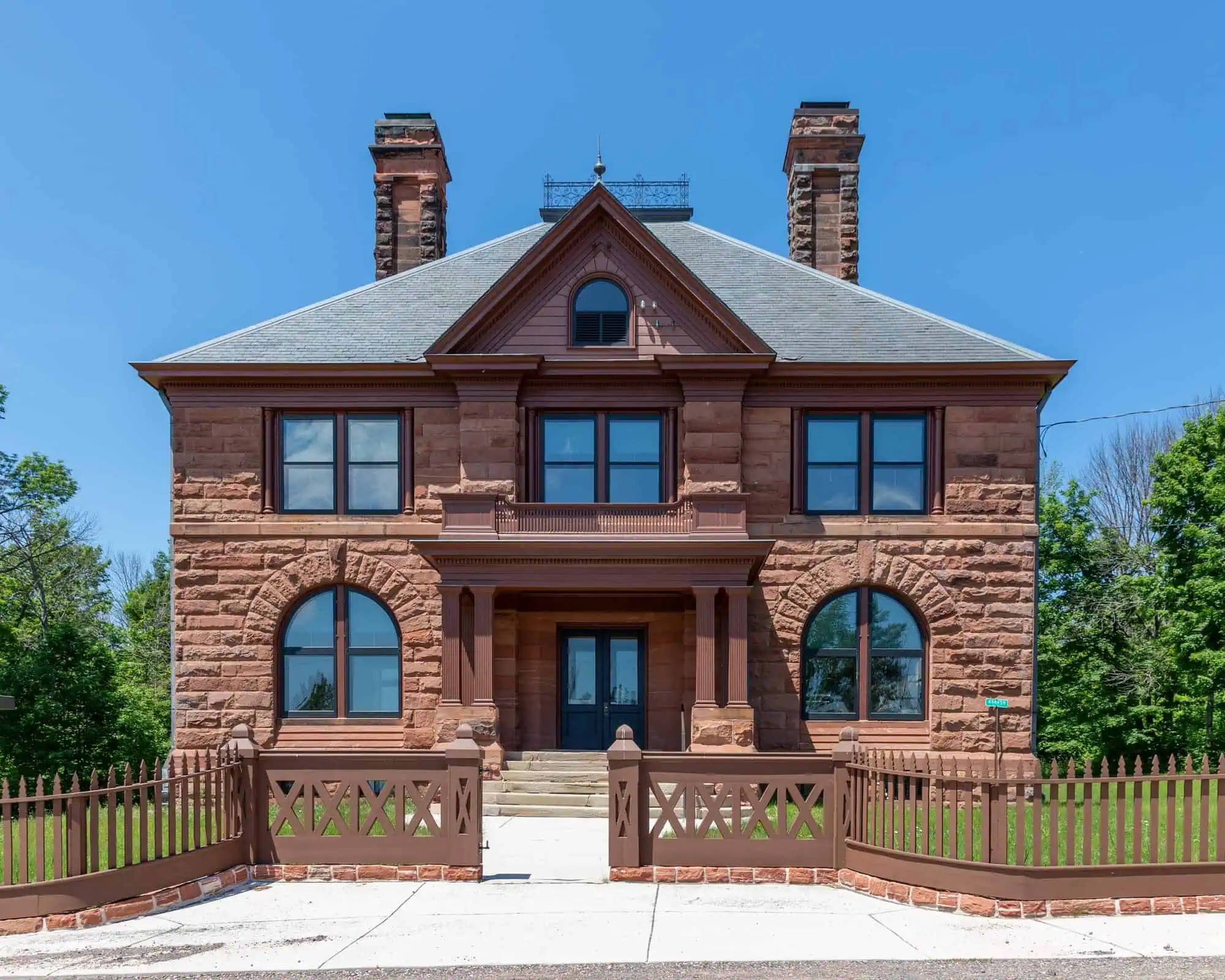
Quincy Mine Office Hancock Michigan 2020-9888 — Paul R. Burley / Wikimedia Commons
Featured image record. Published Jun. 21, 2020. Accessed Aug. 15, 2026. CC BY-SA 4.0.
Supports: Photo credit for the featured image.
Featured image added 2026-08-15. Resized from 4492×3594 to 2000×1600, no crop. Attribution and licence in the caption.
