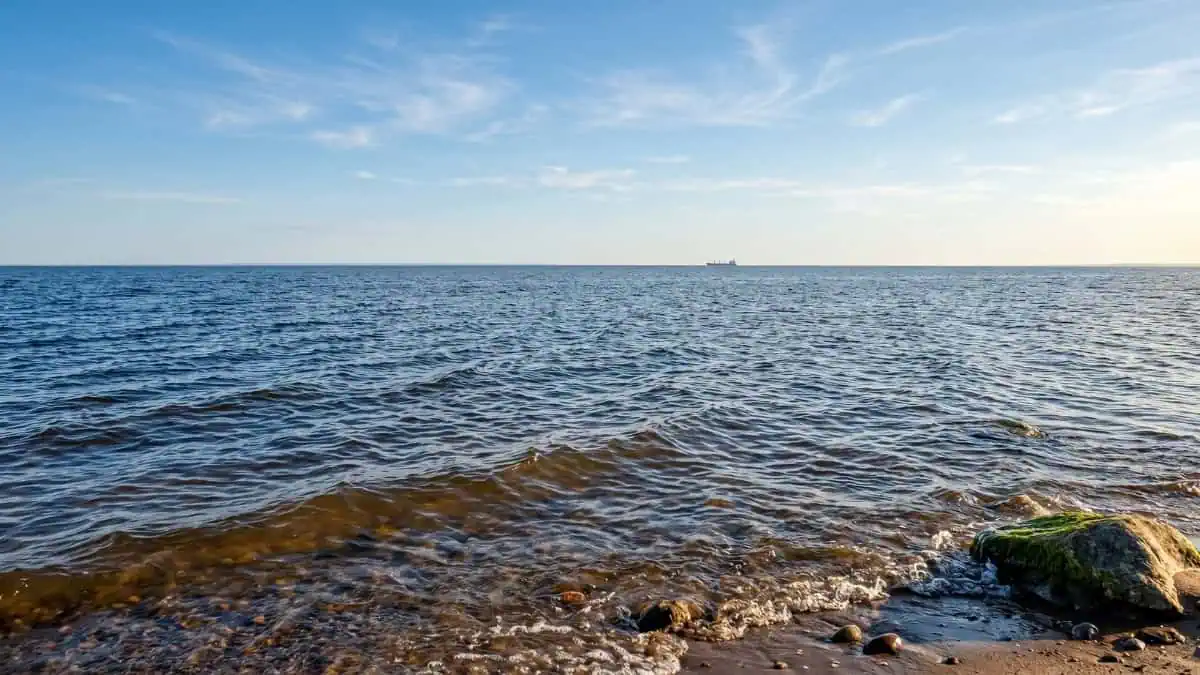
Stand on a Lake Superior beach and look straight out, and you will not see the other side. Just water running flat to the horizon, the way an ocean does. There is a good reason for that. Superior is so enormous it is less a lake than an inland sea.
How big are we talking? Let’s run the numbers, because they are absurd.
Lake Superior is the largest freshwater lake on Earth by surface area. It covers about 31,700 square miles, which is roughly the size of the entire state of Maine. One lake, the size of a state.
And it is not just wide. It holds about 10 percent of all the fresh surface water on the planet. Let that sink in. One in every ten gallons of fresh water sitting on the surface of this entire world is right here, in the U.P.’s backyard.

Here is the one that really breaks people’s brains. Lake Superior holds as much water as all four of the other Great Lakes combined, and then you could pour in three more Lake Eries on top of that and it would still fit. There is so much water in it that you could spread it out and cover both North and South America, every inch of both continents, under a foot of water.
It is deep, too. Around 1,300 feet at its deepest point, enough to hide a skyscraper underwater. It is the coldest and deepest of the Great Lakes, and that cold runs the whole show.
The water is so cold, year round, that a single drop of it stays in the lake for about two hundred years before it ever flows out. Two centuries. The water lapping at your feet on the beach has been in this lake since long before your grandparents were born.

That same brutal cold gives Superior its eeriest reputation. They say the lake never gives up her dead, and that is not just an old sailor’s line. The water stays so cold down deep that the bodies of those lost in its hundreds of shipwrecks often never rise to the surface. It is one of the reasons the Edmund Fitzgerald and so many others still rest somewhere below.
It is a moody, powerful thing. Storms can throw up waves more than 30 feet tall. It almost never freezes over completely, even in the dead of a U.P. winter. The Ojibwe called it gichi-gami, the great sea, and they had it exactly right.
But here is what the numbers leave out. For all its size and all its danger, Superior is also breathtaking up close. It is the deep blue water and pounding waves at Pictured Rocks. It is the glowing Yooperlites you hunt on its beaches after dark. It is sea glass and driftwood and the cleanest, clearest water you will ever wade into, even if it does freeze your ankles off.
For the folks who grew up on its shores and moved away, this is the one that aches the most. Not a postcard. The smell of it. The sound of those waves. The way the cold hits your chest the second you dive in.
So the next time somebody downstate calls it “just a lake,” you can set them straight. It is the largest freshwater lake in the world, it holds a tenth of the planet’s fresh water, and it could swallow the other Great Lakes whole.
Yoopers just call it the lake. As if there could ever be another one.
Featured image credit: Lake Superior from McLain State Park in Michigan’s Upper Peninsula. Original photo by Yinan Chen via Wikimedia Commons, public domain. Cropped/enhanced for Yooper Hub.
Explore more: Lake Superior Stories
More worth reading


Yooper Hub community
The conversation
Know something this story missed? Corrections and additions get read by an editor and folded into the article, with credit.
Real neighbors, real names. A Yooper Hub editor reads your first comment before it appears; after that you’re a known neighbor and your comments post right away. No account required. Community guidelines
Nothing here yet. A sentence is plenty: a correction, a name, or what you remember about this place.
Sources, credits, and reporting details
Sources & accountability
How this story was reported
Editorial methodService and public-interest reporting
Last verifiedJul. 13, 2026
Corrections statusNo material correction identified in the July 13, 2026 source review.
AI assistanceResearched and drafted with AI tools. Reviewed and approved by editor Keegan O’Brien.
Verification note: CEO-directed review checked the central claims against 1 direct public evidence link on July 13, 2026. No material correction was identified.
Primary sources
-
Accessed Jul. 13, 2026.
Direct public evidence reviewed against the article on July 13, 2026.
Photo and media credits
-
Lake Superior Horizon From McLain State Park — Creator or rights holder named in the WordPress attachment caption
Featured image record. Accessed Jul. 13, 2026. public domain.
Supports: Featured image used by this article.
Lake Superior from McLain State Park in Michigan’s Upper Peninsula. Original photo by Yinan Chen via Wikimedia Commons, public domain. Cropped/enhanced for YooperHub. A wide Lake Superior horizon view from McLain State Park, used to illustrate the size and ocean-like scale of Lake Superior. Original public domain photo by Yinan Chen via Wikimedia Commons.