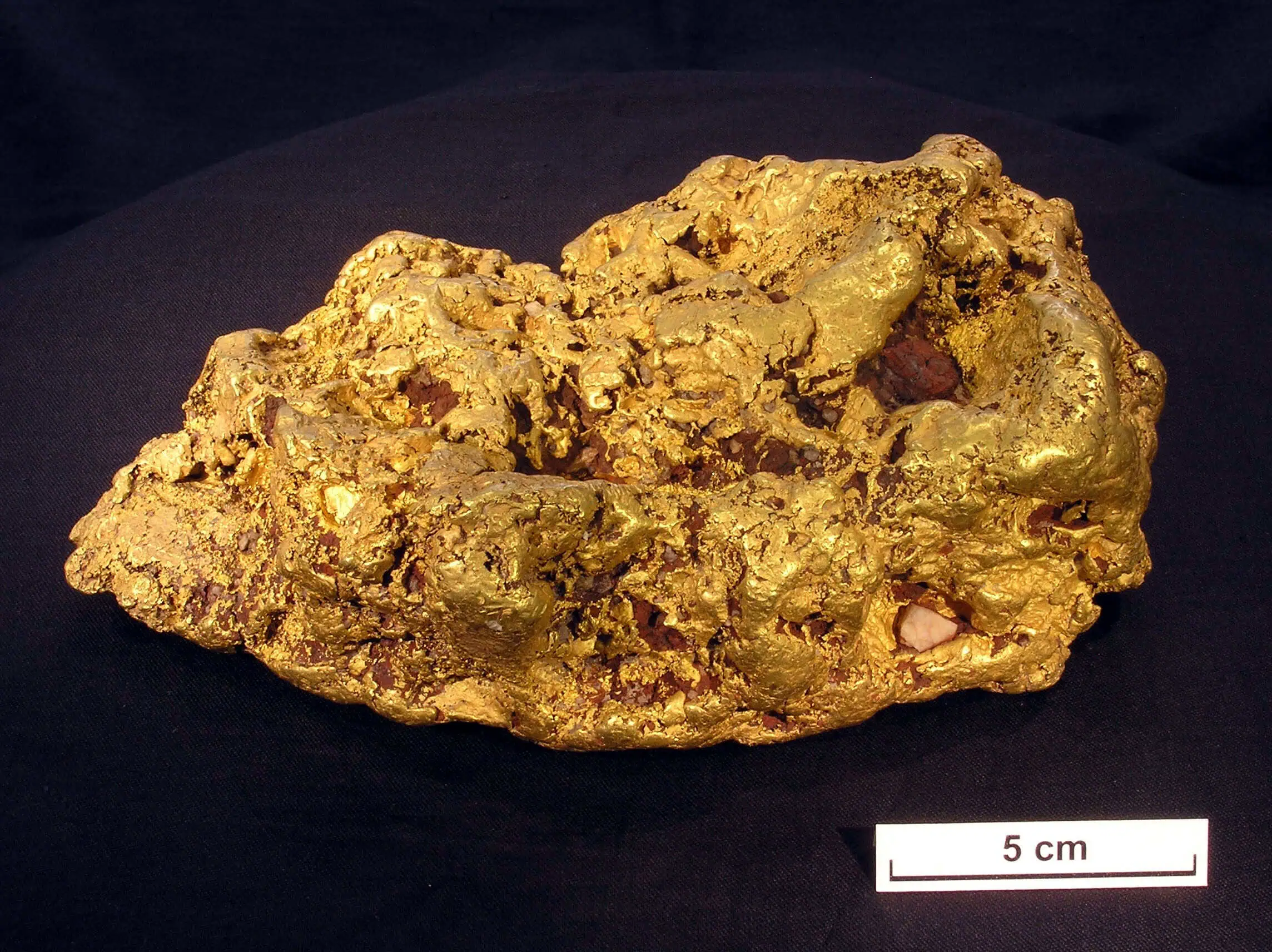

The Upper Peninsula is copper country and iron country. Almost nobody remembers that for a couple of decades it was also gold country. In 1880, a former druggist named Julius Ropes found gold-bearing quartz about five miles northwest of Ishpeming. Within two years he had the only commercially successful gold mine in Michigan history up and running.
Ropes was not a prospector by trade. Before the gold, he had been Ishpeming’s postmaster, a druggist, and a school board member. After the strike he moved fast, forming the Ropes Gold and Silver Company in 1881 and putting 35 men to work sinking the Curry shaft. The crews pulled gold from milky quartz veins using mercury amalgamation and gravity separation, and the operation ran for roughly fifteen years.

How much gold actually came out
By the time financial trouble forced the mine to close in 1897, it had shipped about $645,792 worth of gold and silver in period dollars. The U.S. Geological Survey puts that closer to $24 million in today’s money. The first load even went out on what was billed as the first bullion train ever run in Michigan.
The gold was real enough that stealing it became a problem. Pilfering got so bad the company threw up a high fence and searched every worker on the way out. In one now-famous incident, two miners were caught with a trunk of stolen gold worth about $3,000, roughly $100,000 today, just as they were about to sail for Europe.

The myth worth correcting
You will see it written almost everywhere that the Ropes Mine was the only gold mine east of the Mississippi River. That one is a stretch. North Carolina’s Reed Gold Mine produced the first documented gold in the United States back in 1799, and Georgia’s Dahlonega gold rush drew thousands of miners in 1828 and 1829, decades before Ropes ever picked up a rock.
What is accurate is narrower and still remarkable. The Ropes Mine was the only gold mine in Michigan that ever actually turned a commercial profit. Everything else the state tried came up with pretty rock and very little payable ore.
Still there, still fenced off
The mine changed hands for decades. Corrigan, McKinney and Company bought it around 1900 and cyanide-leached nearly $200,000 in gold from the leftover tailings. Callahan Mining reopened it in 1985 when gold prices spiked, sinking a modern shaft, until the ground gave way and low prices shut it for good in 1991. The shafts were capped, and erosion forced a final refill in 2001. It sits fenced off today.
You can still pan for U.P. gold, legally
Here is the useful part. According to the Michigan Department of Natural Resources, recreational gold panning is allowed on state-owned land as long as the state also owns the mineral rights. Most of what you would find is glacial placer gold, tiny flakes carried in by ice and scattered through streams rather than locked in veins, so bring patience. But the gold in the U.P. is real, and Julius Ropes proved it.
Sources, credits, and reporting details
Sources & accountability
How this story was reported
Legacy source review pending. This published article has not yet passed Yooper’s current source-readiness gate.
Editorial methodNot yet classified
Image provenanceAI imagery status not yet declared
Accountable reviewerNot yet assigned
Last verifiedNot yet recorded
Next required reviewNot yet scheduled
Sources: U.S. Geological Survey; Michigan Department of Natural Resources; the A.E. Seaman Mineral Museum at Michigan Tech; The Mining Journal (Marquette).
Direct links, claim-level support, dates, credits, and editorial accountability may still be incomplete.