The entire copper boom that built Michigan’s Upper Peninsula traces back to one man, one canoe, and a report he filed in 1841. His name was Douglass Houghton, Michigan’s first state geologist. And here is the part that usually gets left out: the man who set off the rush spent his last years warning people not to come.
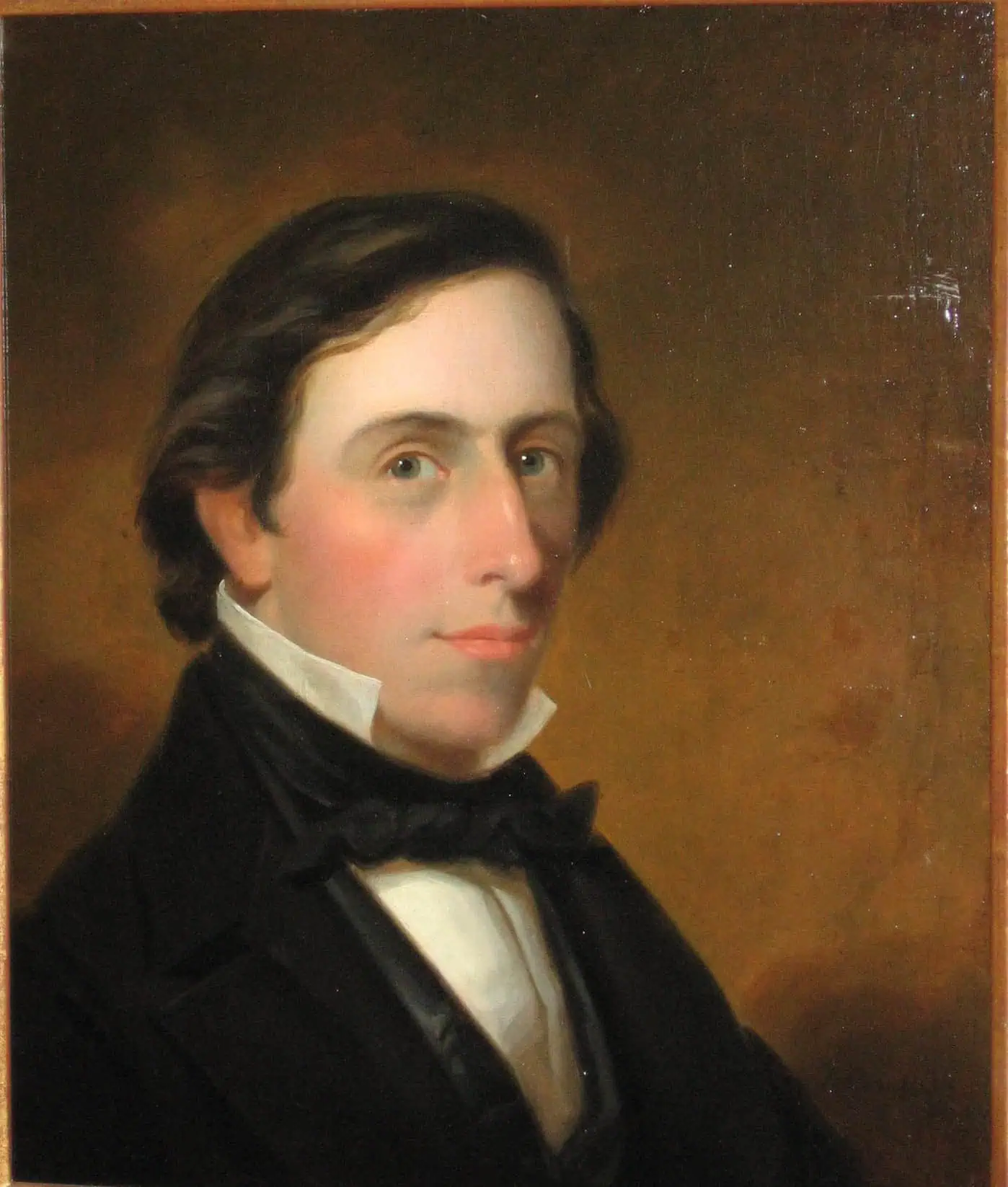
Houghton was not a prospector. He was a physician and a scientist from New York who came to Detroit in 1830, and in 1831 and 1832 he paddled Lake Superior as the doctor on Henry Schoolcraft’s expeditions. Along the way he vaccinated more than two thousand Ojibwe against smallpox and took a hard look at the copper in the rocks of the Keweenaw.

The report that started a rush
In February 1841, Houghton handed the state legislature his fourth annual report. Twenty-seven of its pages were about Keweenaw copper, and he noted the ore was richer than what was then being mined in Cornwall. Word spread across the country, and by 1843 the Copper Rush was on. It was the first great mining boom in American history, and it beat the California Gold Rush by about five years.
But Houghton saw the mania coming and tried to cool it. In the same report, he warned prospectors to look closely before the step is taken that would, in his words, most certainly end in disappointment and ruin. Almost nobody listened. Thousands poured north chasing copper, and plenty of them found exactly the ruin he predicted.

The part the copper story leaves out
There is a bigger correction buried in all this. Houghton did not discover the copper. The Ojibwe and the peoples before them had mined Lake Superior copper for thousands of years, and Houghton himself was shown it. What his 1841 report actually did was trigger the mining rush that would push those same communities aside. He was a careful scientist who understood the copper’s value, not the first human to find it.
A storm off Eagle River
By 1845 the state had run out of survey money, so Houghton convinced the federal government to fund a combined land and geological survey of the Keweenaw. On October 13, 1845, he and several companions set out by small boat from Eagle Harbor toward Eagle River. A sudden, violent storm came up, against warnings, and the boat capsized. Houghton and two others drowned. He was 36.
His body was not found until the following spring, when it washed up on a beach near Eagle River. He was carried back to Detroit and buried at Elmwood Cemetery. He left behind a wife, two daughters, and a survey he never finished.
Why his name is everywhere
You cannot travel the U.P. without running into him. The city of Houghton, Houghton County, and Houghton Lake, the largest inland lake in the state, all carry his name, as does Douglass Houghton Falls near Calumet, the tallest waterfall in Michigan. There is a residence hall named for him at Michigan Tech and a marker in Eagle River that a local historical society put up in 1914. For a man who spent barely eight years as state geologist and never filed his final report, that is a long shadow.
More worth reading


Yooper Hub community
The conversation
Know something this story missed? Corrections and additions get read by an editor and folded into the article, with credit.
Real neighbors, real names. A Yooper Hub editor reads your first comment before it appears; after that you’re a known neighbor and your comments post right away. No account required. Community guidelines
Nothing here yet. A sentence is plenty: a correction, a name, or what you remember about this place.
Golden 25 trust review · #13
Verified context for this Yooper Hub story
- Evidence refreshed
- July 13, 2026
- Source readiness
- Live source review complete.
- Corrections status
- No material correction note is recorded on this article.
- Image rights
- Featured and in-story images have documented rights records.
Sources, credits, and reporting details
Sources & accountability
How this story was reported
Editorial methodArchival synthesis
Accountable editor:Keegan O’Brien, publisher and editor.
Last verifiedJul. 13, 2026
Corrections statusNo material correction note is recorded on this article.
AI assistanceResearched and drafted with AI tools. Reviewed and approved by editor Keegan O’Brien. Tool: Claude Max.
Verification note: Houghton's offices, survey records, field work, and death were checked against the CMU and University of Michigan archival descriptions. Featured image rights and attribution independently verified against the retained source record on 2026-07-14; attachment 1629 restored under Keegan O'Brien dated approval.
Primary sources
-
Douglass Houghton Papers, 1830-1846 — Central Michigan University Clarke Historical Library / University of Michigan Finding Aids
Accessed Jul. 13, 2026.
-
Douglass Houghton Papers, 1829-1845 — University of Michigan Bentley Historical Library
Accessed Jul. 13, 2026.
Photo and media credits
-
Douglass Houghton portrait — Alvah Bradish
Featured image record. Accessed Jul. 14, 2026. public domain in the United States.
identify this as a painted portrait, not a photograph.
