On a hilltop just outside Ironwood, in the far western corner of the U.P., stands a steel tower so tall it is almost unsettling to stand beneath. It is Copper Peak, and it is the only ski flying hill in the entire Western Hemisphere. Not ski jumping. Ski flying, the bigger, wilder version of the sport, where athletes launch off a tower the height of a 24-story building and soar more than 500 feet through the air before they land.
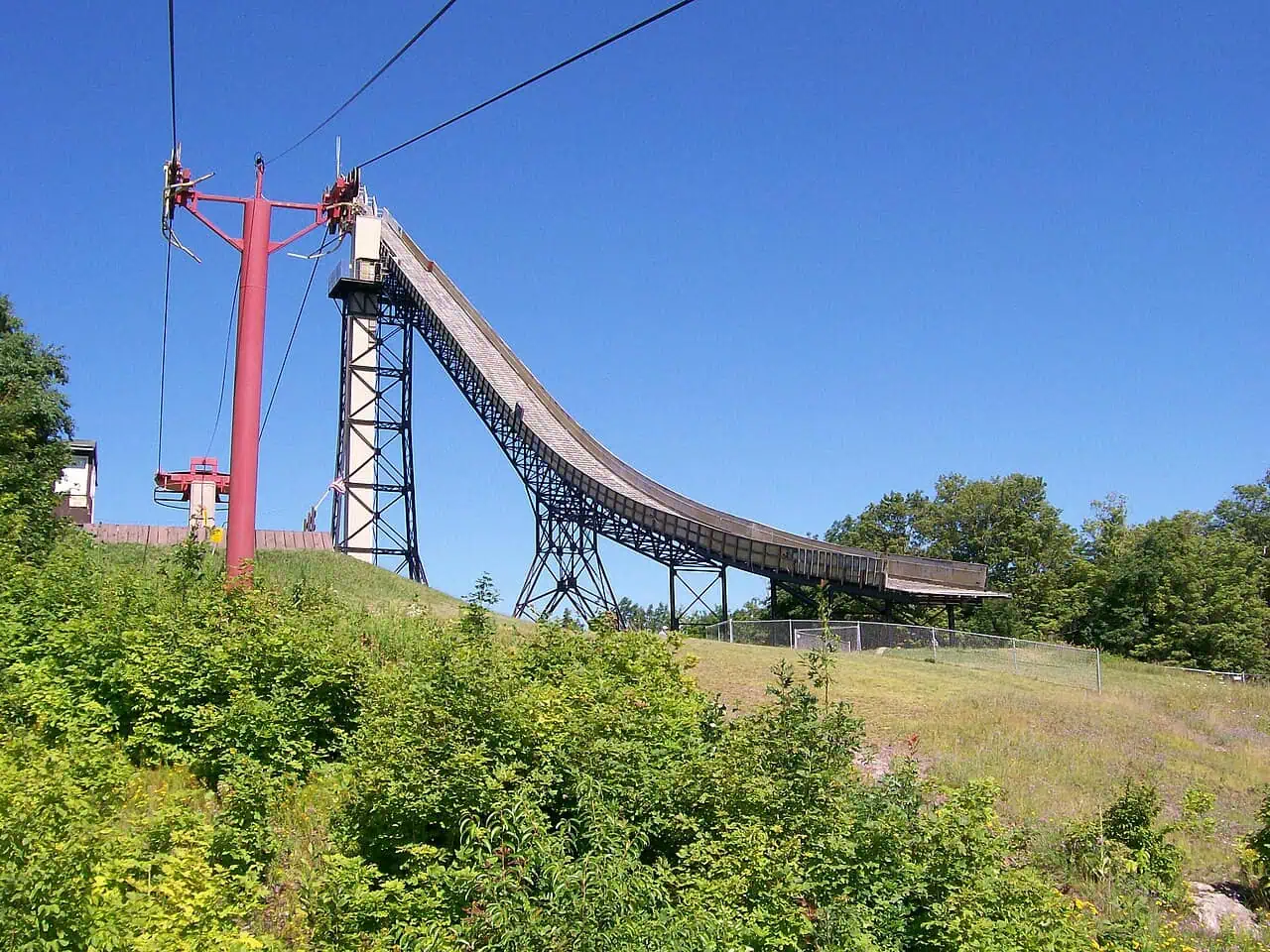
That distinction trips a lot of people up. A normal ski jump is impressive. A ski flying hill is a different animal entirely, a giant built so skiers stay airborne for the length of a football field and a half. There are only a handful of them on the planet, and every other one is in Europe. The record off Copper Peak is 518 feet, set by two Austrians back to back in 1994. To stand at the top of the inrun is to look down a 469-foot steel slide and understand exactly why they call the whole thing the Adventure Ride.

A tower on a hill built over a failed copper mine
The hill itself, Chippewa Hill, rises about 360 feet of solid volcanic rock above the surrounding forest. It got its name back in 1845, when a mining company tunneled in looking for copper and found none. That tunnel is still there. More than a century later, in 1969, the Gogebic Range Ski Club decided their corner of the U.P. deserved a place on the world stage and convinced an engineer named Lauren Larsen to design the tallest artificial ski jump tower on earth. It went up in under a year, 300 tons of weathered steel cantilevered off the top of the hill. From 1970 to 1994 it hosted ten international competitions. Then it went quiet.
You can ride to the top
For most of the last thirty years, Copper Peak has been a summer attraction, and an unforgettable one. You ride an 800-foot chairlift up Chippewa Hill, take an elevator 18 stories up the tower, and if your nerves hold, climb eight more flights of stairs to the starting gate the ski flyers used. From up there, roughly 1,000 feet above Lake Superior, the lookout takes in around 2,500 square miles. On a clear day you can see three states, Lake Superior, and across the water into Canada. The whole structure sways a little in the wind. That is part of the deal.
And it’s coming back
Here is the part that makes this more than a relic. In 2022 the State of Michigan put 20 million dollars toward rebuilding Copper Peak into a modern, year-round ski flying hill, and the work is happening right now, with a new landing hill scheduled to be finished by the end of 2026. The international ski federation has committed to bringing World Cup events back, and the U.S. and Norwegian national teams have already agreed to train here. The man leading the charge is Bob Jacquart, the same Ironwood guy who saved the Stormy Kromer cap. If it all comes together, the only ski flying hill in the Americas will be launching the best in the world off that tower again, maybe as soon as 2028.
It is a strange and wonderful thing to find in the woods outside a small mining town: a tower built purely so human beings could fly a little farther than anywhere else on this side of the world. The U.P. put it up once on sheer nerve. It is about to do it again.
More worth reading


Yooper Hub community
The conversation
Know something this story missed? Corrections and additions get read by an editor and folded into the article, with credit.
Real neighbors, real names. A Yooper Hub editor reads your first comment before it appears; after that you’re a known neighbor and your comments post right away. No account required. Community guidelines
Nothing here yet. A sentence is plenty: a correction, a name, or what you remember about this place.
Sources, credits, and reporting details
Sources & accountability
How this story was reported
Editorial methodArchival synthesis
Last verifiedJul. 13, 2026
Corrections statusNo material correction identified in the July 13, 2026 source review.
AI assistanceResearched and drafted with AI tools. Reviewed and approved by editor Keegan O’Brien.
Verification note: CEO-directed review checked the central claims against 1 direct public evidence link on July 13, 2026. No material correction was identified.
Primary sources
-
Direct evidence for: The Only Ski Flying Hill in the Western Hemisphere Is Hidden Outside Ironwood — Copperpeak
Accessed Jul. 13, 2026.
Direct public evidence reviewed against the article on July 13, 2026.
Photo and media credits
-
copper-peak-ski-flying-hill — Creator or rights holder named in the WordPress attachment caption
Featured image record. Accessed Jul. 13, 2026. CC BY-SA 3.0.
Supports: Featured image used by this article.
Copper Peak, the only ski flying hill in the Western Hemisphere, near Ironwood. Photo: C. Bradshaw / Wikimedia Commons (CC BY-SA 3.0).