You’ve heard “Win one for the Gipper” your whole life. The Gipper was a Yooper
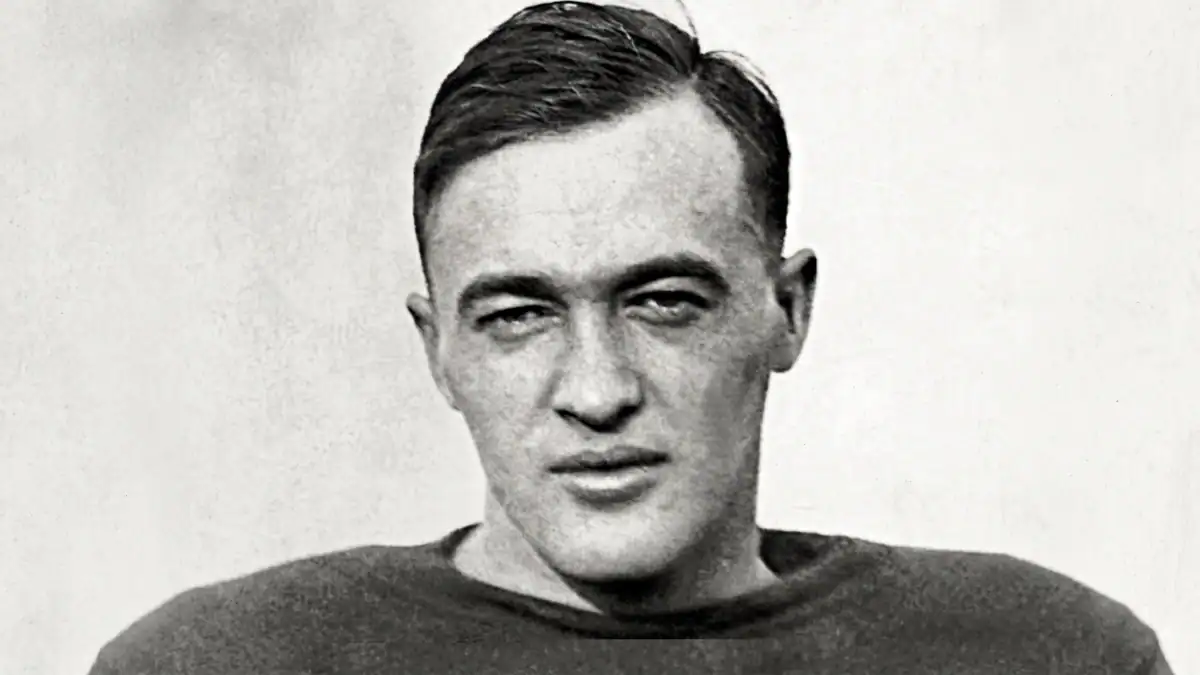
You have heard the line a thousand times. “Win one for the Gipper.” It shows up in locker rooms, movies, even presidential speeches. And the man behind it was a kid from a tiny Copper Country town.
His name was George Gipp, and he was born in Laurium in 1895.
Here is the wild part. Gipp was not even a football guy. Growing up in the Keweenaw, he was a baseball and basketball standout and, by most accounts, a pool hall hustler who would rather shoot a game of billiards than run a lap.

He went off to Notre Dame in 1916 on a baseball scholarship. Then one afternoon a coach named Knute Rockne spotted him on a field, casually drop-kicking a football 60 yards in his street shoes. Rockne talked him into joining the team, and college football was never quite the same.
Because it turned out Gipp could do everything. He ran, he passed, he punted, he kicked. He became Notre Dame’s first All-American, set a rushing record that stood until 1978, and posted a yards-per-carry mark that still stands today. He helped turn Notre Dame into a national powerhouse. The Copper Country has a way of producing sports history. It is the same corner of the U.P. where professional hockey was basically born.

And then, at the height of it all, he was gone. Two weeks after being named All-American, Gipp came down with a strep throat that turned into pneumonia, picked up, the story goes, while giving punting lessons after his final game. In 1920, before antibiotics, there was nothing the doctors could do.
He died on December 14, 1920. He was 25 years old. Back home, the businesses of Laurium and Calumet closed for his funeral, and he was laid to rest in the Copper Country soil he came from.

Eight years later, with Notre Dame trailing Army and the season slipping away, Rockne gave the speech that made Gipp immortal. He told his players that on his deathbed, Gipp had asked him to one day tell a struggling team to go out and “win just one for the Gipper.” Notre Dame rallied and won.
Historians still argue about whether Gipp ever really said those words. But it never mattered. The line took on a life of its own. He is one more name in the U.P.’s surprising sports legacy, right alongside the two coaching legends from tiny Iron Mountain.
A young actor named Ronald Reagan played Gipp in a 1940 film, picked up “the Gipper” as a nickname, and carried it all the way to the White House. Not bad for a pool hall hustler from Laurium.
So the next time you hear someone say “win one for the Gipper,” you can let them in on a little secret. The Gipper was a Yooper.
Featured image credit: “George gipp portrait.jpg,” unknown author, pre-1920, public domain, via Wikimedia Commons.
More worth reading


Yooper Hub community
The conversation
Know something this story missed? Corrections and additions get read by an editor and folded into the article, with credit.
Real neighbors, real names. A Yooper Hub editor reads your first comment before it appears; after that you’re a known neighbor and your comments post right away. No account required. Community guidelines
Nothing here yet. A sentence is plenty: a correction, a name, or what you remember about this place.
Sources, credits, and reporting details
Sources & accountability
How this story was reported
Editorial methodAggregation
Last verifiedJul. 13, 2026
Corrections statusNo material correction identified in the July 13, 2026 source review.
AI assistanceResearched and drafted with AI tools. Reviewed and approved by editor Keegan O’Brien.
Verification note: CEO-directed review checked the central claims against 1 direct public evidence link on July 13, 2026. No material correction was identified.
Primary sources
-
Direct evidence for: One of the Most Famous Lines in Sports Came From a Kid Born in the U.P. — Magazine
Accessed Jul. 13, 2026.
Direct public evidence reviewed against the article on July 13, 2026.
Photo and media credits
-
George Gipp portrait — Creator or rights holder named in the WordPress attachment caption
Featured image record. Accessed Jul. 13, 2026. public domain.
Supports: Featured image used by this article.
Portrait of George Gipp, pre-1920. Unknown author, public domain, via Wikimedia Commons.