A Cornish miner’s lunch crossed an ocean, went down into the copper mines, and became the food Yoopers will argue about forever
Up here, the pasty is not just a meal. It is a heritage you can hold in one hand.
This humble little meat pie has been feeding Yoopers for more than 150 years, and it got to the U.P. the same way a lot of things did. Down in the mines.
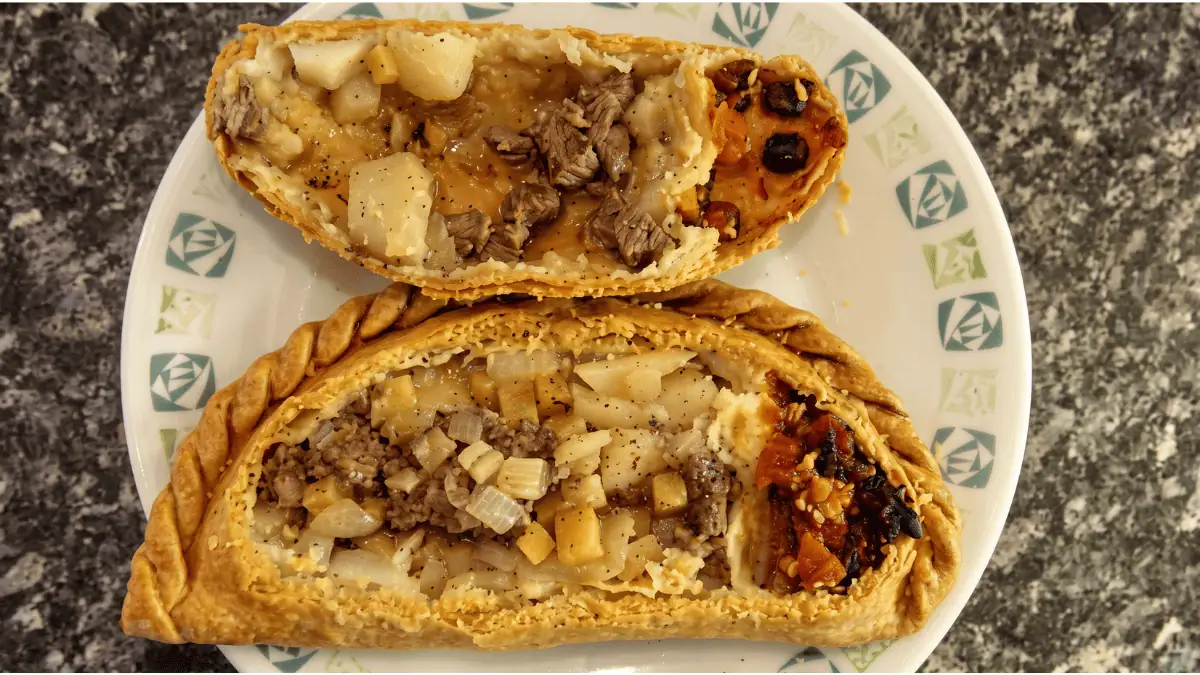
If you have somehow never had one, a pasty is a hearty half-moon of flaky crust packed with beef, potato, onion, and rutabaga, seasoned simply with salt and pepper. Think of it as a pot pie without the pot.
First things first, though. It is pronounced “PASS-tee,” with a short A, like “nasty.” If you say “PACE-tee,” you are talking about something else entirely, and a Yooper will be happy to correct you.
The pasty came from Cornwall, England, where it started as a tin miner’s lunch. It was cheap, filling, portable, and you could eat the whole thing with your hands.
That thick, crimped edge running along the side was not just for looks. It was a handle. A miner could grip the pasty by the crust with grimy hands, eat the filling, and toss the dirty part away. In mines where the rock carried arsenic, that throwaway handle was no small thing.
Miners would even reheat them on a shovel held over the candle on their hat.
When Cornish tin mining dried up in the 1800s, those miners, who called themselves Cousin Jacks and Cousin Jennies, sailed for the copper and iron boomtowns of the U.P. Places like Calumet, Houghton, Ishpeming, and Iron Mountain. They brought their mining know-how, and they brought the pasty.
Finnish and Italian immigrants poured into the same mines, fell in love with the pasty their Cornish coworkers were eating, and made it their own. By the time the mining slowed after World War II, the pasty was here for good.
It got so woven into Michigan life that in 1968, Governor George Romney declared May 24 the first statewide Michigan Pasty Day.
And now for the part that can end friendships.
Does a real pasty have rutabaga, or is that where you draw the line? Some swear by it, some swap in carrots, some skip the root vegetable altogether.
And then there is the big one. Ketchup or gravy? Ask that in the wrong kitchen and you had better be ready to defend yourself.
However you take yours, the pasty is a piece of U.P. heritage worth holding onto, the same way folks are fighting to save the century-old Toonerville Trolley.
It also happens to be the perfect road food. Grab a couple for the cooler on your way out to the painted cliffs of Pictured Rocks and you are set for the day.
And if you want to go all in, the old mining town of Calumet throws a Pasty Fest every summer, usually in late June, with a parade, live music, and a bake-off.
More than 3,000 miles and a century and a half from a Cornish mineshaft, the pasty is still doing exactly what it was built to do up here. Filling up hungry Yoopers, and starting friendly arguments.
Recommended Reads
The Northern Lights over Lake Superior are pure magic, and here’s where to catch them
The story behind America’s largest bear ranch, tucked into the woods north of Newberry
Thousands drive past this tiny U.P. town every day and almost nobody knows its story
Topics: pasty, Upper Peninsula, Yooper food, Cornish, Calumet, Pasty Fest, mining history, Michigan, food
More worth reading


Yooper Hub community
The conversation
Know something this story missed? Corrections and additions get read by an editor and folded into the article, with credit.
Real neighbors, real names. A Yooper Hub editor reads your first comment before it appears; after that you’re a known neighbor and your comments post right away. No account required. Community guidelines
Nothing here yet. A sentence is plenty: a correction, a name, or what you remember about this place.
Sources, credits, and reporting details
Sources & accountability
How this story was reported
Editorial methodService and public-interest reporting
Last verifiedJul. 13, 2026
Corrections statusNo material correction identified in the July 13, 2026 source review.
AI assistanceResearched and drafted with AI tools. Reviewed and approved by editor Keegan O’Brien.
Verification note: CEO-directed review checked the central claims against 1 direct public evidence link on July 13, 2026. No material correction was identified. Featured image rights and attribution independently verified against the retained source record on 2026-07-14; attachment 444 restored under Keegan O'Brien dated approval.
Primary sources
-
Direct evidence for: The Pasty Isn’t Just Lunch in the U.P. It’s a Heritage, a Mining Legacy, and an Argument Waiting to Happen — Michigan Technological University
Accessed Jul. 13, 2026.
Direct public evidence reviewed against the article on July 13, 2026.
Photo and media credits
-
Pasty — Bobak Ha'Eri
Featured image record. Accessed Jul. 14, 2026. CC BY-SA 2.5.
Supports: A baked pasty cut open to show the filling. Photo: Bobak Ha'Eri / Wikimedia Commons (CC BY-SA 2.5).
replace the incorrect Keith Ryan / GFDL credit. Any adapted crop remains subject to the CC BY-SA 2.5 terms.
