On October 1 the federal cap on airline subsidy per passenger at Escanaba, Houghton, Iron Mountain, Ironwood and Sault Ste. Marie drops from $1,000 to $850. That is written into the FAA Reauthorization Act of 2024, and no vote this fall can change it. The same month, the spending law that funds the program says the cap does not apply. Both are true, and understanding why is the whole story.
Essential Air Service pays a carrier to fly a route the market would not support. The five Upper Peninsula airports in the program cost about $30 million a year combined, according to the Department of Transportation’s May 2026 report. Sawyer International in Marquette is not in the program and none of this applies to it.
What the 2024 law says
The statute, 49 U.S.C. 41731, makes a community eligible only if its subsidy per passenger stays under a cap. The 2024 act rewrote that cap in steps: under $1,000 for the fiscal year that begins before October 1, 2026, and under $850 for the fiscal year that begins after September 30, 2026. Communities within 175 miles of a large or medium hub have a lower $650 line. The $850 test is measured on fiscal year 2027 data, October 2026 through September 2027, so the earliest the department could act on it is late 2027.

The Secretary of Transportation can waive the $650 tier and the ten-passenger-a-day minimum. The statute gives no waiver for the $1,000 or $850 line. A community that exceeds it loses eligibility through a show-cause order.
Why it is switched off right now
Every year the appropriations bill that funds the program has carried a rider. The fiscal 2026 version reads that “the requirements established under subparagraphs (B) and (C) of section 41731(a)(1) shall not apply to maintain eligibility.” Subparagraph (C) is the per-passenger cap. The department’s March 2026 order for Waterloo, Iowa states it plainly: many eligibility requirements, including the cap, “do not currently apply.”
The continuing resolution that runs through December 11 carries fiscal 2026 terms forward. Whether the rider survives into the fiscal 2027 transportation bill is the open question, and it is the one that decides whether $850 ever bites. TV6’s April series on the program framed the threat as the budget request, $142 million against $514 million enacted. That is real, but the cap is a separate mechanism and the series did not mention it.
Where the U.P. airports stand
The department does not publish subsidy per passenger in its report. Its method divides the annual subsidy by passengers in both directions. Using twice the FAA’s 2024 enplanements as that figure, our estimates are Sault Ste. Marie about $94, Iron Mountain about $129, Houghton about $135, Escanaba about $157, and Ironwood about $544.

Ironwood boarded 7,091 passengers in 2024, the lowest of the five by a wide margin, and it is the only one within sight of the line.
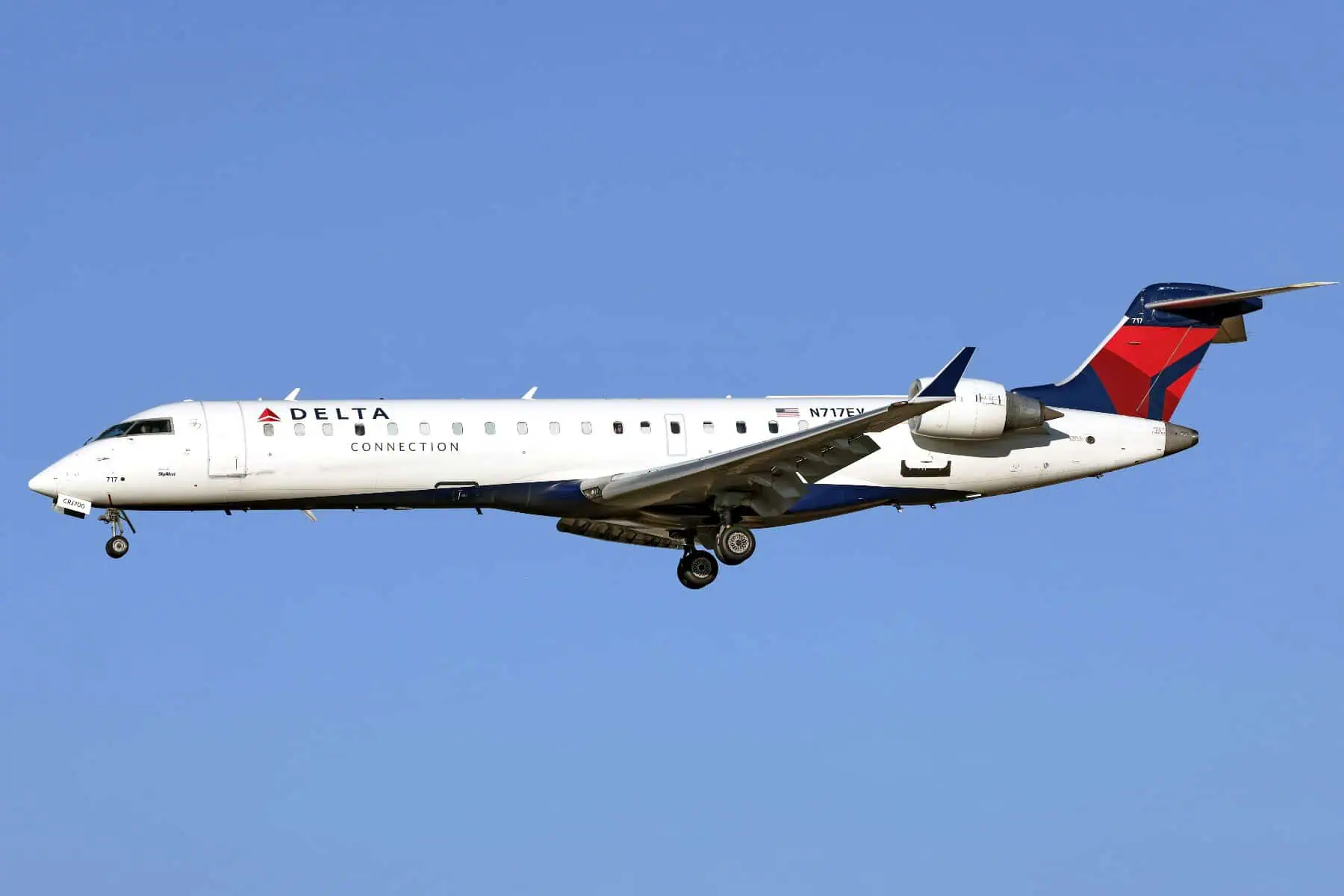
Subsidies are also falling, not rising. Escanaba’s new SkyWest contract, Delta Connection to Detroit and Minneapolis on a CRJ550, is $5,361,460 a year, down from $6,899,725 in the October 2024 report. Iron Mountain’s new SkyWest contract is $5,015,812, down from $7,068,428. Sault Ste. Marie is $4,984,855. Houghton, on SkyWest as United Express to Chicago, is $6,969,646. Ironwood, on Denver Air Connection, is $7,709,208 through September 2027.
How to read your airport’s subsidy
The department posts a Subsidized EAS Report every few months listing every community, carrier, hub, frequency and annual rate. Each contract has a selection order on regulations.gov under a docket number that starts with DOT-OST. The order gives the bids, the winning rate by year, and the contract dates. Escanaba’s is Order 2026-1-19, Houghton’s is 2024-12-9, and Iron Mountain and Sault Ste. Marie are both in Order 2026-1-15.
Named sources: 49 U.S.C. 41731 as amended by the FAA Reauthorization Act of 2024, Public Law 118-63, section 561; U.S. Department of Transportation Subsidized EAS Report, May 2026 and October 2024; DOT Order 2026-1-19 (Escanaba) and Order 2026-3-12 (Waterloo, Iowa); Consolidated Appropriations Act, 2026, Payments to Air Carriers proviso; FAA calendar year 2024 commercial service enplanements; TV6 Investigates, April 22, 2026.
More worth reading


Yooper Hub community
The conversation
Know something this story missed? Corrections and additions get read by an editor and folded into the article, with credit.
Real neighbors, real names. A Yooper Hub editor reads your first comment before it appears; after that you’re a known neighbor and your comments post right away. No account required. Community guidelines
Nothing here yet. A sentence is plenty: a correction, a name, or what you remember about this place.
Sources, credits, and reporting details
Sources & accountability
How this story was reported
Editorial methodNot yet classified
Last verifiedNot yet recorded
Corrections statusNo material correction note is recorded on this article.
AI assistanceResearched and drafted with AI tools. Reviewed and approved by editor Keegan O’Brien.