Updated Sept. 10, 2026: Added the Natural Resources Commission’s 2026 antlerless-license limits for the U.P., the DNR’s winter ranking and its 2026 habitat grants, and tightened the WLUC quotes to match the report.
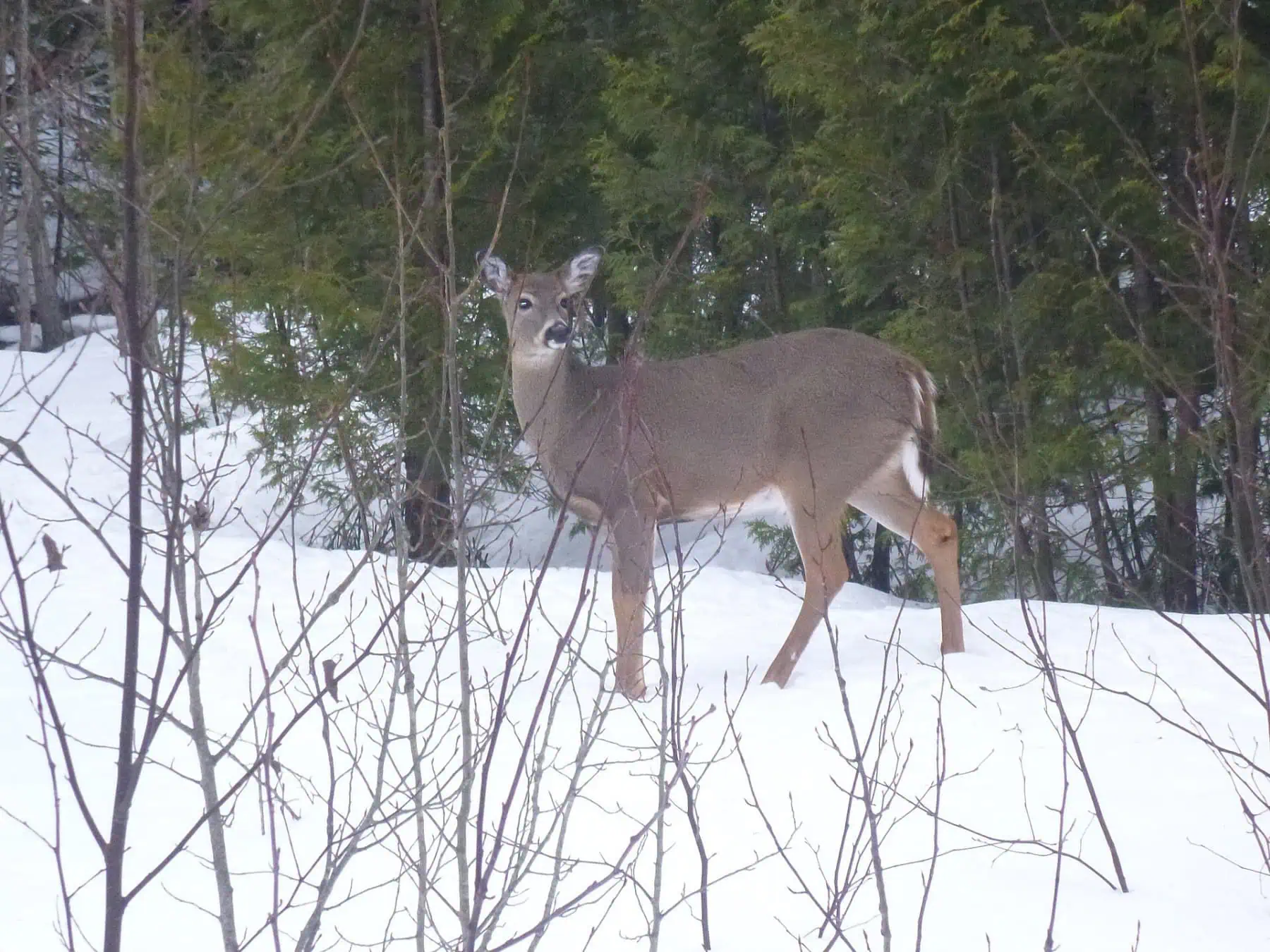
Michigan’s 2025-26 Upper Peninsula winter was severe enough to leave a mark on the deer herd long after the snow disappeared. The Michigan DNR recorded 111 days when the U.P.-wide average snow depth was at least 12 inches. The agency classifies a winter as severe when that threshold lasts 90 days or more. The DNR ranks 2025-26 as the fourth-most severe winter since 2003. The most severe, 2013-14, logged 128 days.
That duration matters because deep snow limits food, makes travel harder, and forces deer to burn the fat reserves they built before winter. DNR biologists found extensive signs of starvation during field examinations earlier in 2026. Fawns and already-weakened animals are the most vulnerable, and malnourished does may produce fewer or smaller fawns.
What the DNR is watching now
The department uses SNODAS, the Snow Data Assimilation System produced by the National Weather Service, to track average snow depth across the U.P. Its July 9 bulletin said six of the past nine U.P. winters had been classified as severe. It also reported that mid-March blizzards dumped three feet of snow on parts of the U.P. in two days, and that snow persisted into mid-May.
WLUC reported on July 10 that the DNR was still monitoring the herd and did not yet have an exact population count. Wildlife biologist Brian Roell and wildlife technician Caleb Eckloff told the station the impact would be greater in the northern U.P. than in the southern U.P., and Roell said, “we do know there are going to be fewer deer on the landscape.” That is an informed outlook, not a completed herd census.
The state had already acted on the winter before this story ran. On May 13 the Natural Resources Commission limited universal antlerless deer licenses in the U.P. to six of its southernmost deer management units (022, 055, 121, 122, 155 and 255) for the 2026 season and eliminated the U.P. antlerless access permit drawing. The DNR’s supporting memo said “reduced deer numbers are expected in 2026 due to this severe winter.”
Wintering complexes remain part of the response. Dense cedar, hemlock, and other conifer cover can reduce the energy deer spend moving through snow while nearby habitat provides browse. The DNR works with landowners and local partners on habitat projects, and in July it said it is funding 14 U.P. projects with nearly $200,000 in 2026, double its past yearly amount. Even so, the full effect of one severe winter can take more than one season to measure.
Read the original records
- Michigan DNR: Another severe winter hampers U.P. deer herd, sent July 9, 2026.
- WLUC: DNR tracking deer herd after historic winter, published July 10, 2026.
- Watch WLUC’s report on its official YouTube channel.
More worth reading


Sources, credits, and reporting details
Sources & accountability
How this story was reported
Editorial methodAggregation
Accountable editor:Keegan O’Brien, publisher and editor.
Last verifiedSep. 10, 2026
Corrections statusA material correction or update note is published in this article.
AI assistanceResearched and drafted with AI tools. Reviewed and approved by editor Keegan O’Brien.
Verification note: Checked against the Michigan DNR's July 9, 2026 bulletin, WLUC's July 10 report and WLUC's YouTube listing on July 22, 2026, and rechecked Sept. 10, 2026. As of Sept. 10 the DNR had published no 2026 U.P. herd estimate or winter-survival result. Updated Sept. 10 with the Natural Resources Commission's May 13 antlerless-license limits, the DNR's winter ranking and 2026 habitat grants, and closer wording of the WLUC quotes.
Primary sources
-
Showcasing the DNR: Another severe winter hampers U.P. deer herd — Michigan Department of Natural Resources
Published Jul. 9, 2026. Accessed Jul. 22, 2026.
Official agency bulletin. This story paraphrases its facts and does not reuse its images.
-
Natural Resources Commission approves deer regulation changes for 2026 and 2027 — Michigan Department of Natural Resources
Published May. 15, 2026. Accessed Sep. 10, 2026. State agency news release; paraphrase and short attributed quotes only.
-
2026-2028 Deer Regulations, Wildlife Conservation Order Amendment No. 6 of 2026 (memorandum to the Natural Resources Commission) — Michigan Department of Natural Resources / Natural Resources Commission
Published Apr. 13, 2026. Accessed Sep. 10, 2026. State agency public record; short attributed quotes only.
Supports: Supports the DNR's rationale: "Reduced deer numbers are expected in 2026 due to this severe winter."
-
Deer Wintering Complexes — Michigan Department of Natural Resources
Accessed Sep. 10, 2026. State agency web page; paraphrase with attribution.
-
DNR doubles deer habitat grant funding in UP — Michigan Department of Natural Resources
Published Jul. 15, 2026. Accessed Sep. 10, 2026. State agency news release; paraphrase and short attributed quotes only.
-
Snow Data Assimilation System (SNODAS) Data Products at NSIDC, Version 1 (G02158) — National Snow and Ice Data Center (data from NOAA NWS National Operational Hydrologic Remote Sensing Center)
Accessed Sep. 10, 2026. Dataset documentation; cite as NOHRSC (2004), G02158 v1.
Additional reporting
-
DNR tracking deer herd after historic winter — WLUC
Published Jul. 10, 2026. Accessed Jul. 22, 2026.
Attributed reporting. YooperHub does not reproduce WLUC's text, photos or footage.
Photo and media credits
-
DNR tracking deer herd after historic winter — Upper Michigan's Source | TV6 & FOX UP
Accessed Jul. 22, 2026. Publisher retains copyright. Shown through YouTube's standard embedded player..
Supports: Identifies the video shown on this page as WLUC's own upload on its official YouTube channel.
The video plays through YouTube's standard player. YooperHub does not host, download or edit it.
-
White-tailed deer in the snow (56aaf2de-ddff-4b58-a9f9-4bcd7fd25801).JPG (featured image) — National Park Service, via Wikimedia Commons
Featured image record. Accessed Sep. 10, 2026. Public domain.
Photographed 2017-03-06. Resized for the site.
.JPG)