When prospectors swarmed the Keweenaw Peninsula in the 1840s chasing copper, they kept stumbling on something strange in the woods: old pits dug into the rock, filled in with dirt and grown over with trees, with rounded stone hammers scattered around them. In some of the richest spots, the diggers realized the best copper had already been found and partly worked. They had not discovered the U.P.’s copper at all. Someone had beaten them to it by thousands of years.
Long before the mining boom, before Michigan was a state, before the pyramids for that matter, Native peoples of the Lake Superior region were mining the pure copper of the Keweenaw and Isle Royale. It is one of the oldest metalworking traditions anywhere in the Americas, and by some measures among the oldest in the world.

Seven thousand years, no smelting
Archaeologists call it the Old Copper Culture, and its story keeps getting older. The traditional estimate had people working Lake Superior copper starting around 7,000 years ago and continuing for several thousand years. More recent research, using metal traces trapped in the mud at the bottom of lakes next to the old mines, suggests mining may have begun as far back as 9,500 years ago, which would push it thousands of years earlier than anyone thought.
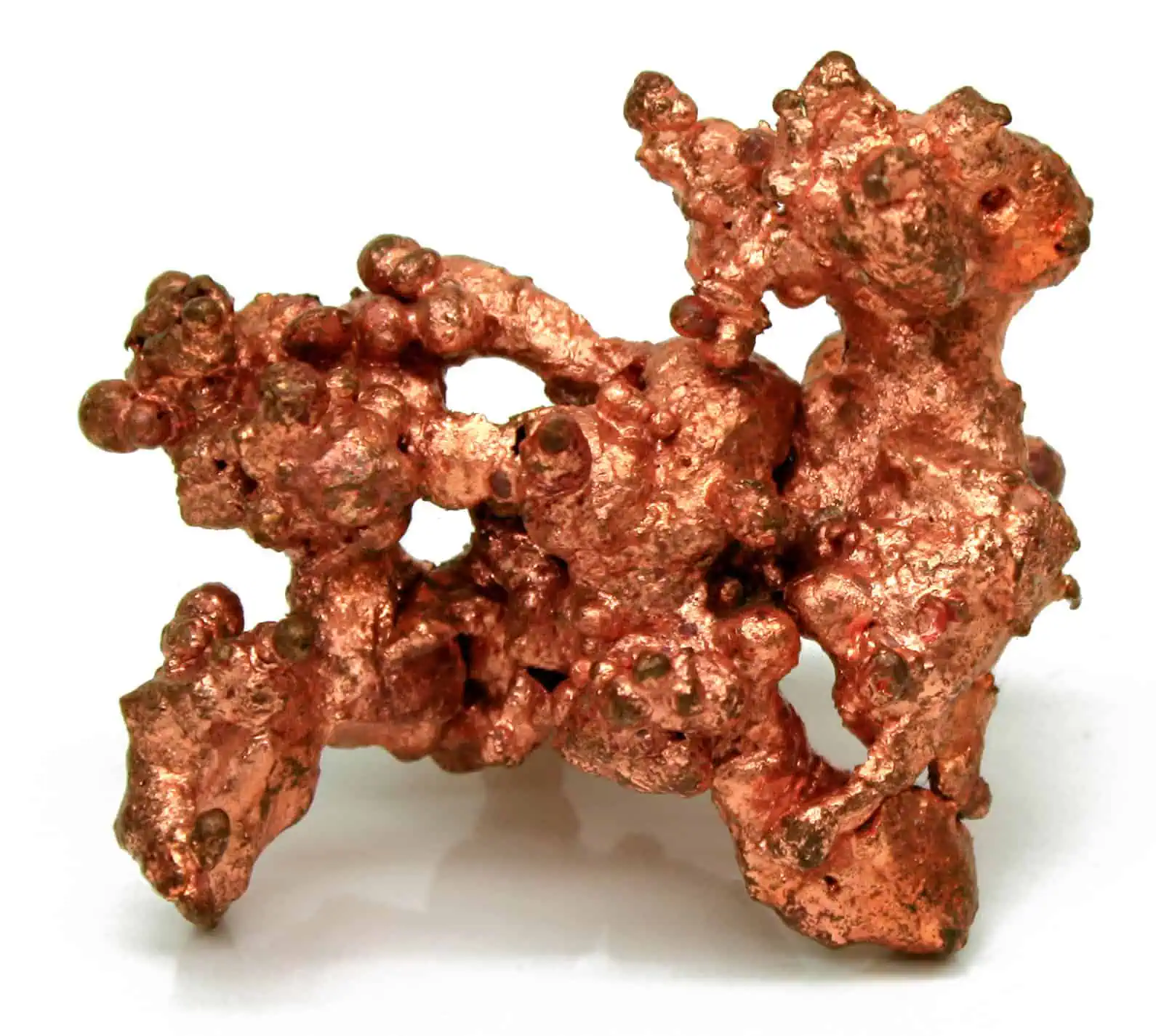
What makes it remarkable is how they did it. The copper here is native copper, meaning it comes out of the ground almost pure, up to 99 percent, in veins and chunks near the surface. That is incredibly rare. It meant the ancient miners never had to smelt anything. They cracked the copper loose from the bedrock, sometimes by building fires against the rock and then dousing it to shatter it, and hammered the metal cold into knives, spear points, fishhooks, awls, and beads. In tests, replicas of their copper arrow points performed about as well as stone ones.

Pits you can still find in the woods
The scale was enormous, spread across a very long time. On Isle Royale alone, archaeologists have documented more than a thousand ancient mining pits, with thousands more scattered down the Keweenaw. Many are still out there today, shallow depressions under the forest floor of Isle Royale National Park, quietly marking where people worked for a hundred generations.
You will sometimes read that these miners pulled more than a billion pounds of copper out of the ground. Take that with a grain of salt. Archaeologists consider those huge figures poorly supported guesses, and the real total is simply unknown. What is not in doubt is that the copper traveled. Tools and ornaments made from Lake Superior copper have turned up at ancient sites hundreds of miles away, carried along trade routes that stretched across much of the continent. The U.P. was a source of something valuable a very, very long time before anyone filed a mining claim.
Why it stopped
Then, around 3,000 years ago, the intensive mining wound down. Archaeologists are not entirely sure why. The tradition of working copper into everyday tools gave way over time to using it more for ornaments and status objects, and the great pits were largely left alone. When the 1840s miners came along and found them, they mostly treated the ancient hammerstones as curiosities, a few kept on a shelf in the mine office next to the ore samples. It took a long time for people to grasp what they were actually looking at, the remains of one of the oldest mining operations on Earth, sitting right under the U.P.’s newest one.
More worth reading


Yooper Hub community
The conversation
Know something this story missed? Corrections and additions get read by an editor and folded into the article, with credit.
Real neighbors, real names. A Yooper Hub editor reads your first comment before it appears; after that you’re a known neighbor and your comments post right away. No account required. Community guidelines
Nothing here yet. A sentence is plenty: a correction, a name, or what you remember about this place.
Sources, credits, and reporting details
Sources & accountability
How this story was reported
Editorial methodArchival synthesis
Last verifiedJul. 13, 2026
Corrections statusNo material correction identified in the July 13, 2026 source review.
AI assistanceResearched and drafted with AI tools. Reviewed and approved by editor Keegan O’Brien.
Verification note: CEO-directed review checked the central claims against 1 direct public evidence link on July 13, 2026. No material correction was identified. Featured image rights and attribution independently verified against the retained source record on 2026-07-14; attachment 1735 restored under Keegan O'Brien dated approval.
Primary sources
-
Direct evidence for: People Were Mining the U.P.’s Copper 7,000 Years Ago, and the 1840s Prospectors Found Their Pits — National Park Service
Accessed Jul. 13, 2026.
Direct public evidence reviewed against the article on July 13, 2026.
Photo and media credits
-
Native Copper Macro Digon3 — Jonathan Zander
Featured image record. Accessed Jul. 14, 2026. CC BY-SA 3.0.
Supports: A native copper specimen. Photo: Jonathan Zander / Wikimedia Commons (CC BY-SA 3.0).
generic specimen image. Remove the unsupported claim that this particular specimen came from the Lake Superior region.
