Spend any time on a Lake Superior beach in the U.P. and you will eventually see someone doing it, head down, moving slow, eyes scanning the wet gravel at the waterline. They are hunting agates. It is practically a Yooper birthright, a treasure hunt that plays out on beaches from the Keweenaw to Whitefish Point, and most people bucket-deep in it never stop to think about what they are actually holding. Those little banded stones are around a billion years old.
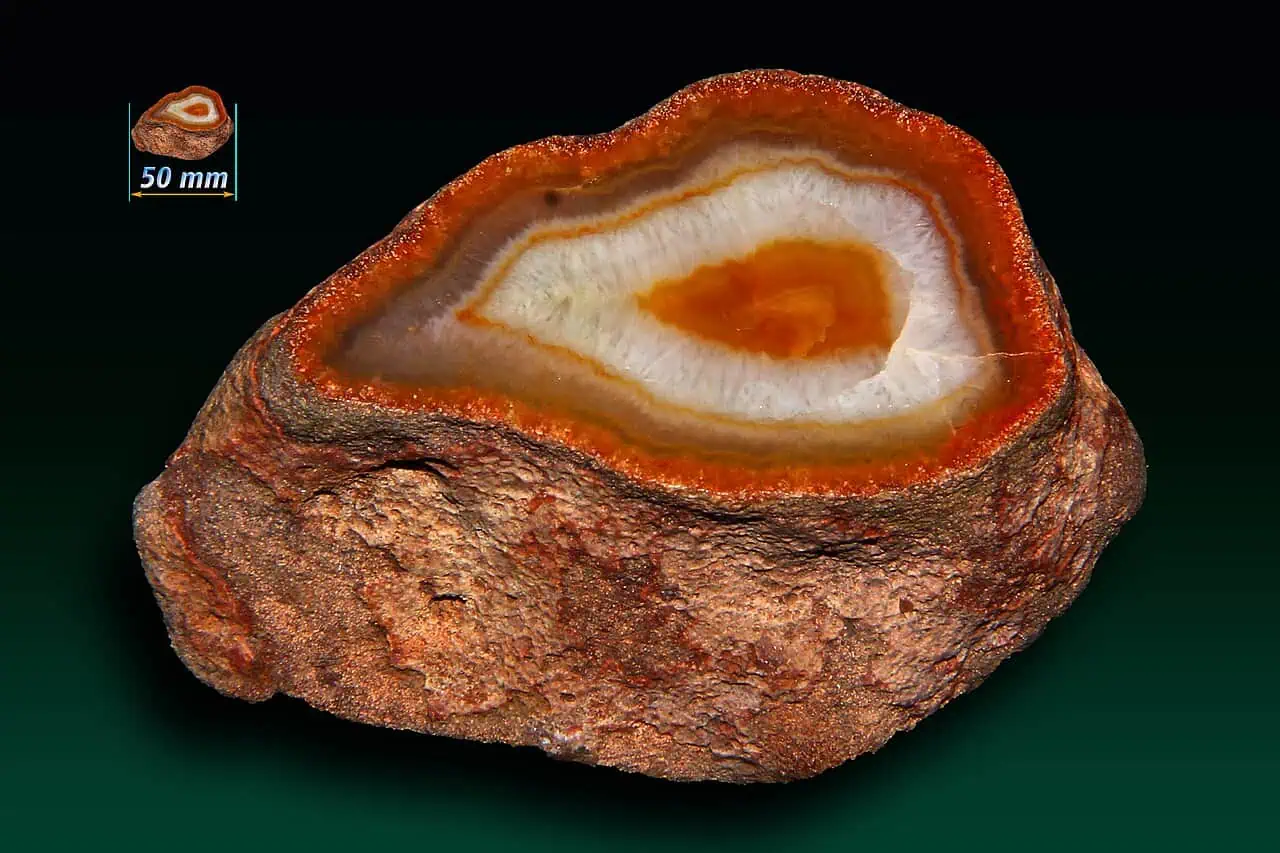
The story of a Lake Superior agate starts about 1.1 billion years ago, when the middle of the North American continent was quite literally trying to tear itself apart. Molten rock poured out through a giant crack that ran right through what is now Lake Superior, and then the rifting stalled and failed. As that lava cooled, it trapped countless bubbles of gas. Over enormous stretches of time, mineral-rich water seeped into those pockets and filled them layer by layer, building the banded quartz we call agate. The deep red and orange in the bands comes from iron, the same iron that gave the U.P. its famous ore ranges.

How they ended up on the beach
Here is the part that surprises people. The agates are not forming in the lake today, and you will find them nowhere near any lava. That is because the glaciers did the moving. As the great ice sheets ground south across the region during the ice ages, they tore agates out of the ancient bedrock and dragged them for miles, dropping them in gravel, on beaches, and in farm fields all over the Upper Peninsula and well beyond it. That is why a rockhound can turn up a Lake Superior agate in an inland gravel pit as easily as at the water’s edge.
How to actually spot one
Finding one takes a little practice, because a good agate hides in plain sight among a million ordinary stones. The single most reliable test is translucency. Hold a candidate up to the sun and a real agate will glow at the edges as the light passes through it, where a plain rock stays dull. Beyond that, look for curved bands running in a fortress-like pattern, a waxy, almost greasy shine on any chipped spot, and a pitted, dimpled surface. Many carry a rusty reddish stain. Wet stones are far easier to read than dry ones, so work right along the waterline, and go after a storm, when the waves have churned up and dropped a fresh batch.
Where to go, and a few rules
You can hunt agates on public beaches up and down the Lake Superior shore, and inland gravel pits often hold bigger stones that have not been picked over for a century. Just know where you are standing. Collecting is not allowed inside Pictured Rocks National Lakeshore and other protected areas, so admire those and leave them. If you want to get good fast, Grand Marais has an entire museum devoted to these stones, the Gitche Gumee Agate and History Museum, where you can see world-class specimens and learn what you are looking for. Fill a jar, line a windowsill, and you will have a piece of the U.P. older than the lake itself.
It is a humbling thing, once you know. The next time you are out on the shore turning over stones, remember that the pretty striped rock in your palm was formed when the continent cracked open, carried here under a mile of ice, and dropped on the beach for you to find a billion years later.
More worth reading


Yooper Hub community
The conversation
Know something this story missed? Corrections and additions get read by an editor and folded into the article, with credit.
Real neighbors, real names. A Yooper Hub editor reads your first comment before it appears; after that you’re a known neighbor and your comments post right away. No account required. Community guidelines
Nothing here yet. A sentence is plenty: a correction, a name, or what you remember about this place.
Sources, credits, and reporting details
Sources & accountability
How this story was reported
Editorial methodAggregation
Last verifiedJul. 13, 2026
Corrections statusNo material correction identified in the July 13, 2026 source review.
AI assistanceResearched and drafted with AI tools. Reviewed and approved by editor Keegan O’Brien.
Verification note: CEO-directed review checked the central claims against 1 direct public evidence link on July 13, 2026. No material correction was identified.
Primary sources
-
Direct evidence for: The Rocks Yoopers Hunt on Lake Superior Beaches Are a Billion Years Old — Dnr
Accessed Jul. 13, 2026.
Direct public evidence reviewed against the article on July 13, 2026.
Photo and media credits
-
lake-superior-agate — Creator or rights holder named in the WordPress attachment caption
Featured image record. Accessed Jul. 13, 2026. CC BY-SA 4.0.
Supports: Featured image used by this article.
A Lake Superior agate, the banded, iron-red stone rockhounds hunt along the shore. Photo: Lech Darski / Wikimedia Commons (CC BY-SA 4.0).