An island wilderness of wolves and moose, with no roads and a lake on it that has its own island. And it’s the least-visited national park in the lower 48.
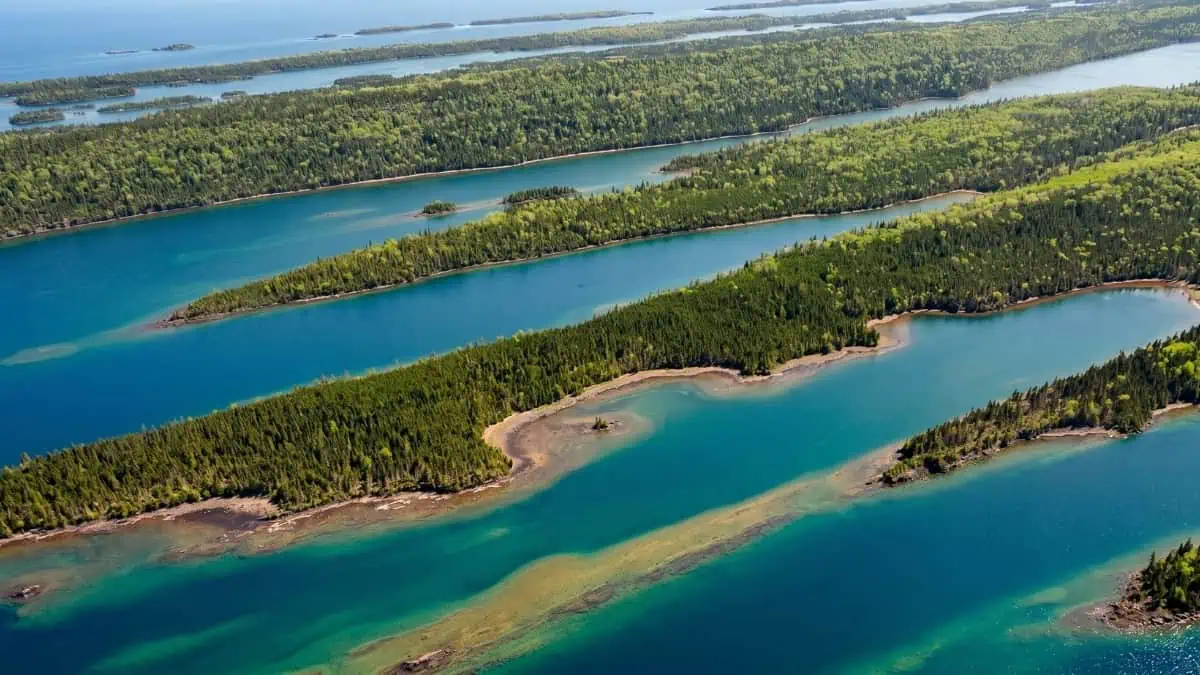
It is called Isle Royale, and it sits way out in the cold blue of Lake Superior, a rugged island wilderness closer to Minnesota and Canada than to the rest of Michigan, but ours all the same. It is the largest island in the lake, roughly 50 miles long, ringed by a scattering of more than 400 smaller ones.
And here is the wild part. Of all the national parks in America, Isle Royale is the least visited in the entire lower 48. While millions of people pour into the Smokies or the Grand Canyon every year, Isle Royale sees fewer than 30,000. You could fit a whole year of its visitors into a single busy morning at most parks.

There is a good reason so few make the trip. You cannot drive there. There are no roads on the island at all, and no cars allowed. The only way in is by ferry or seaplane across some of the moodiest water in the country, and the park shuts down completely every winter, the only national park in the country that closes its doors entirely. From November until spring, the island belongs to the wolves.
And there really are wolves out there, along with moose that swam across the lake more than a century ago and never left. Isle Royale is home to the longest-running predator-and-prey study in the world, scientists tracking those wolves and moose chasing each other across the island since 1958. The wolf numbers dwindled so low a few years back that the park had to bring in new ones to keep the balance. And here is a strange one: for all that wildlife, there is not a single bear on the whole island.

Now for the fact that will short-circuit your brain a little. Isle Royale is an island, in a lake. But the island itself has lakes on it. And the biggest of those, Siskiwit Lake, has its own islands. The largest one is called Ryan Island, which makes it the largest island, in a lake, on an island, in a lake. Read that twice. It is real, and it is sitting out there in Lake Superior right now. If you really want to fall down the rabbit hole, there is even a tiny rock on Ryan Island, sitting in a seasonal pond, taking the whole thing one absurd layer deeper.
The place feels like the edge of the map. Most of it is protected wilderness, laced with more than 150 miles of foot trails and not much else. The few who do make the trip tend to really commit, because Isle Royale’s backcountry gets more use per acre than any other national park in the country. People go to vanish for days, to paddle the quiet inland lakes, and to dive the cold, clear water over a graveyard of old shipwrecks.
It has a deep history, too. Long before it was a park, people were digging copper out of this island, some of those mining pits more than 4,500 years old. Later came fishermen and lighthouse keepers, scratching out a living on the rock. It officially became a national park in 1940.
For Yoopers, Isle Royale is one of those quiet sources of pride you do not think about often enough. Most of the country has no idea Michigan even has a national park, let alone one this wild, this remote, this completely untamed. It is a piece of true, roadless wilderness floating out in the greatest of the Great Lakes, and it belongs to us.
So no, you cannot just pull up and park. You have to want it. You have to cross the big lake to get there. But for the few thousand who make that trip every summer, Isle Royale gives them something almost nowhere else in the Midwest still can. Real, untouched quiet, and a whole island of it.
Some of the best places are the hardest to reach. This one might be the proof.
Featured image credit: Aerial view of Isle Royale National Park in Lake Superior. NPS photo, public domain. Image enhanced for clarity.
Explore more: Lake Superior Stories
More worth reading


Yooper Hub community
The conversation
Know something this story missed? Corrections and additions get read by an editor and folded into the article, with credit.
Real neighbors, real names. A Yooper Hub editor reads your first comment before it appears; after that you’re a known neighbor and your comments post right away. No account required. Community guidelines
Nothing here yet. A sentence is plenty: a correction, a name, or what you remember about this place.
Sources, credits, and reporting details
Sources & accountability
How this story was reported
Editorial methodAggregation
Last verifiedJul. 13, 2026
Corrections statusNo material correction identified in the July 13, 2026 source review.
AI assistanceResearched and drafted with AI tools. Reviewed and approved by editor Keegan O’Brien.
Verification note: CEO-directed review checked the central claims against 1 direct public evidence link on July 13, 2026. No material correction was identified.
Primary sources
-
Direct evidence for: Isle Royale Is Michigan’s Only National Park, and the Least-Visited One in the Lower 48 — National Park Service
Accessed Jul. 13, 2026.
Direct public evidence reviewed against the article on July 13, 2026.
Photo and media credits
-
Isle Royale National Park Aerial View — Creator or rights holder named in the WordPress attachment caption
Featured image record. Accessed Jul. 13, 2026. public domain.
Supports: Featured image used by this article.
Aerial view of Isle Royale National Park in Lake Superior. NPS photo, public domain. Image enhanced for clarity. Aerial view of Isle Royale National Park used for a Yooper Hub article about Michigan’s least-visited national park. Original image via National Park Service, enhanced for clarity.