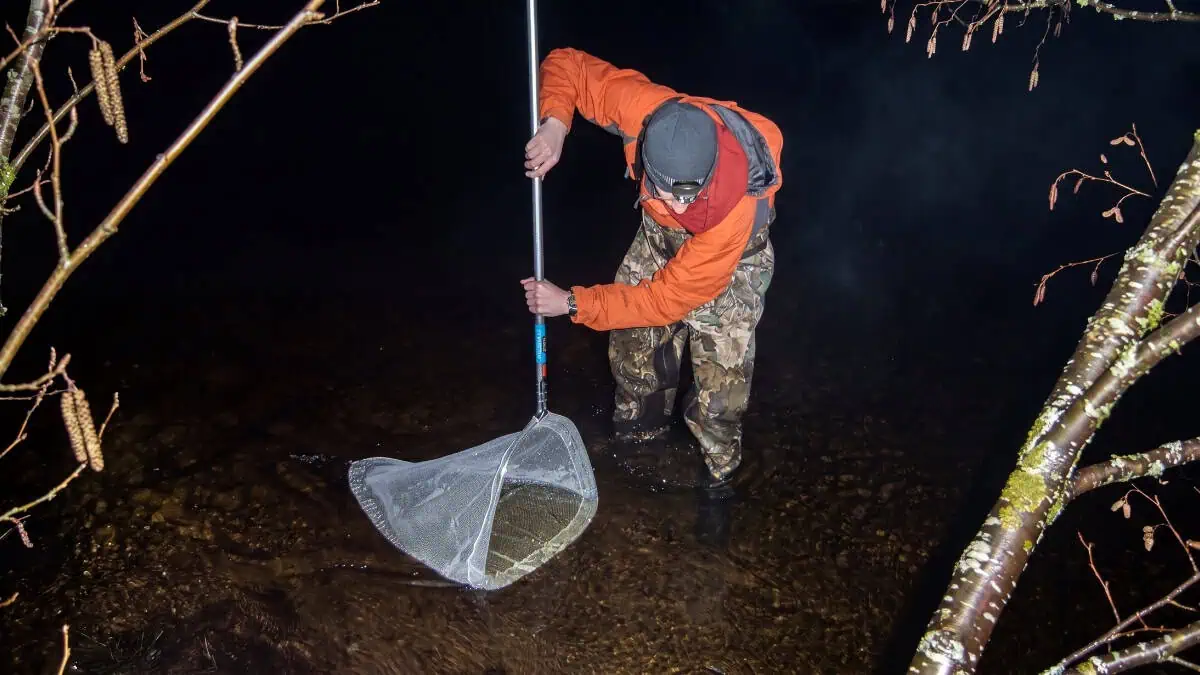
It is past midnight, the water is barely above freezing, and you are standing knee-deep in a dark U.P. stream with a net in your hands, waiting. Then the run hits, and all at once your net comes up heavy and silver and wriggling with fish.
Welcome to smelt dipping, one of the most beloved and frankly bizarre spring traditions the Upper Peninsula has.

Here is the short version for anyone who never grew up with it. Smelt are little silvery fish, about as long as your hand, that spend most of the year out in the deep, cold water of the Great Lakes. But every spring, usually in April, they pour up the rivers and streams at night to spawn. For a few short weeks, if you are in the right creek at the right hour, they come through by the thousands.
So Yoopers go and get them. You pull on waders, grab a dip net and a five-gallon bucket, and head down to the water after dark, usually with a bonfire going on the bank and a few people you love. One person dips, another dumps the catch in the bucket, and you do it again and again until your arms are tired and your pail is full.
It sounds miserable. It is cold, it is wet, it is the middle of the night. And just about everybody who has done it would go back tomorrow.
Part of it is the haul, but the real payoff comes later, inside, warm, when you fry them up. You clean smelt with kitchen scissors, not a knife, snipping off the heads and cleaning them out fast. Then they go into hot oil whole, and you eat them by the dozen, crispy and golden and salty. It is right up there with a whitefish dinner on the list of foods that taste like home.
If you want to do it like a true Yooper, tradition says you bite the head off your very first smelt of the night for good luck. Take that one with a grain of salt, or don’t.

The other thing you should know is that smelt dipping is a bit of a secret society. Ask a Yooper where the smelt are running and you will get about the same answer you would get asking where their morel spots are. A friendly smile, and probably a lie. The runs depend on rain and water temperature, so the timing changes every year. Some folks watch the river data online. Others just wait for word to spread, and when it does, it spreads fast.
Here is the part that makes this a U.P. story and not just a Michigan one. Smelt are not even native here. They were dropped into a lake downstate back in 1912, spread into the Great Lakes, and absolutely exploded. For decades, the runs were enormous. Whole towns threw smelt festivals, and people hauled the fish out by the millions of pounds.
Then, sometime around the middle of the last century, the smelt started to vanish. Nobody is entirely sure why. Changing lakes, new predators, invasive species, all of it gets blamed. The big runs the old-timers talk about are mostly gone now, and the festivals went with them.
But the tradition did not die. It just moved north. These days, the best smelt dipping left in the state is in U.P. streams, which means the Upper Peninsula has quietly become the last real stronghold of one of the Great Lakes’ great spring rituals.
So if you want to try it, the window is short and it is loud with frogs and cold to the bone. Grab a fishing license, check the DNR’s rules on nets and streams, find some people who know what they are doing, and get out there after dark. Bring a bucket. Bring a thermos. Build a fire.
Because smelt dipping was never really about the fish. It is about standing in a freezing river at midnight with the people you grew up with, the same way Yoopers have for generations, waiting together for the water to come alive. That, and the bonfire and the camp afterward, is about as U.P. as spring gets.
Featured image credit: Smelt dipping near Houghton, Michigan, April 2006. Photo by Tgwalt via Wikipedia, public domain.
Explore more: Lake Superior Stories
More worth reading


Yooper Hub community
The conversation
Know something this story missed? Corrections and additions get read by an editor and folded into the article, with credit.
Real neighbors, real names. A Yooper Hub editor reads your first comment before it appears; after that you’re a known neighbor and your comments post right away. No account required. Community guidelines
Nothing here yet. A sentence is plenty: a correction, a name, or what you remember about this place.
Sources, credits, and reporting details
Sources & accountability
How this story was reported
Editorial methodService and public-interest reporting
Last verifiedJul. 13, 2026
Corrections statusNo material correction identified in the July 13, 2026 source review.
AI assistanceResearched and drafted with AI tools. Reviewed and approved by editor Keegan O’Brien.
Verification note: CEO-directed review checked the central claims against 1 direct public evidence link on July 13, 2026. No material correction was identified.
Primary sources
-
Direct evidence for: Smelt Dipping Is the Wild U.P. Spring Tradition Where Yoopers Wade Into Freezing Rivers at Midnight — State of Michigan
Accessed Jul. 13, 2026.
Direct public evidence reviewed against the article on July 13, 2026.
Photo and media credits
-
Smelt Dipping Near Houghton Michigan — Creator or rights holder named in the WordPress attachment caption
Featured image record. Accessed Jul. 13, 2026. public domain.
Supports: Featured image used by this article.
Smelt dipping near Houghton, Michigan, April 2006. Photo by Tgwalt via Wikipedia, public domain. Public domain image showing smelt dipping near Houghton, Michigan in April 2006.