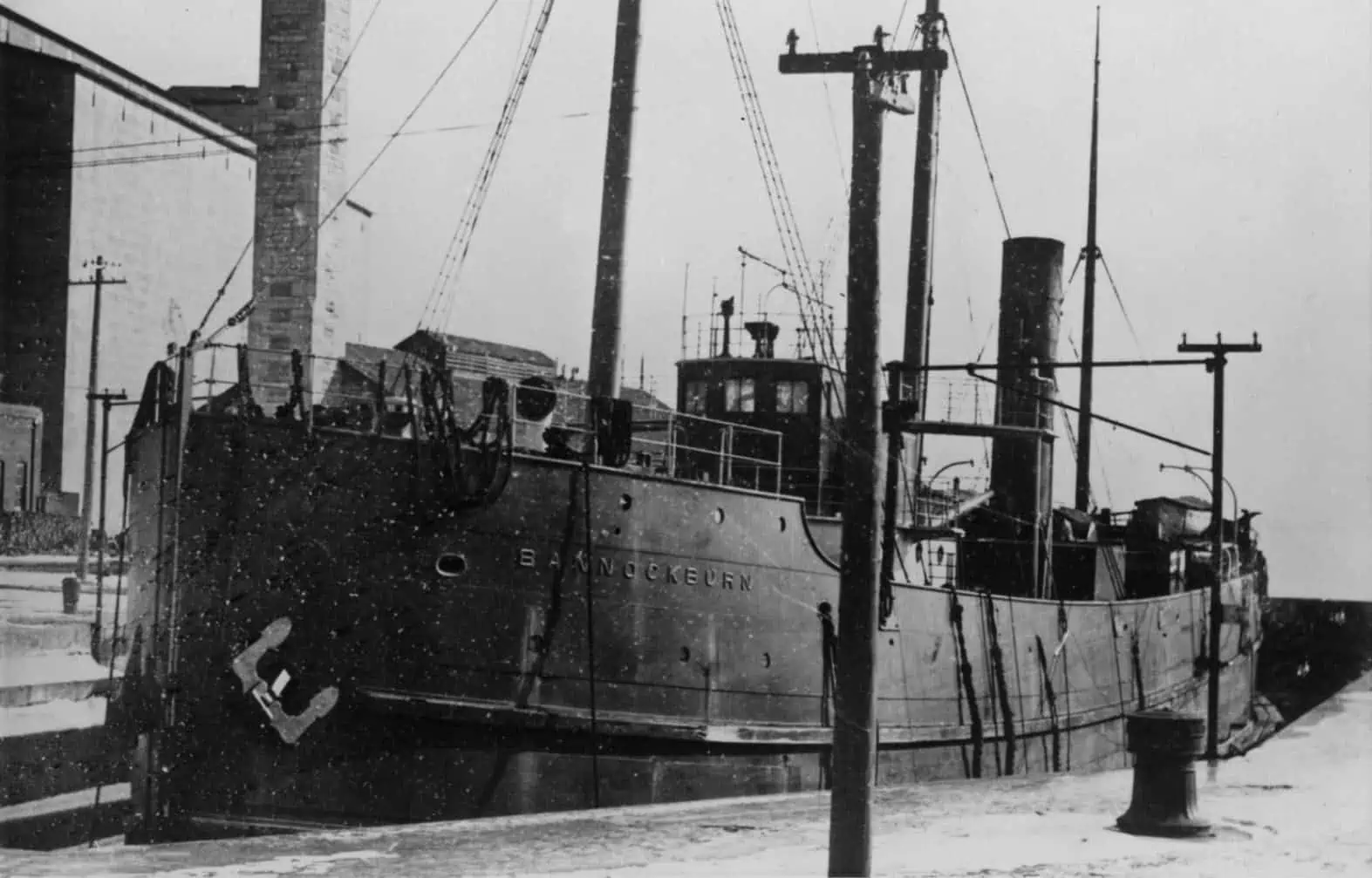

On the afternoon of November 21, 1902, the captain of the steamer Algonquin spotted another freighter a few miles off through the haze on Lake Superior. He recognized her as the Bannockburn, a steel grain carrier bound down the lake. He glanced away, looked back, and she was gone. He figured the fog had swallowed her. He was the last person to ever knowingly see the Bannockburn or the twenty men aboard her.
The ship had left Fort William, Ontario the day before, loaded with 85,000 bushels of wheat and headed for Georgian Bay. She never arrived. She was reported overdue at the Soo Locks, but nobody worried much at first, because the weather that night had been vicious and plenty of ships ran late. Then the days stacked up, and the families started asking questions nobody could answer.

A search that turned up almost nothing
What followed was a maddening stretch of false hope. A shipping manager told a newspaper he had word the Bannockburn was safely anchored on the north shore with her crew alive. He later admitted he had made that up from a secondhand rumor. A passing steamer had plowed through a field of floating debris near Stannard Rock a few days after she vanished, but at the time nobody knew a ship was even missing.
The lake gave back one thing. On December 12, more than three weeks after she disappeared, the keeper of the Grand Marais Life-Saving Station on the U.P. shore found a single cork life preserver stenciled Bannockburn washed up on the beach. Some accounts add a lone oar. That is the entire physical record of the ship. No hull, no wreckage field, no bodies, then or since.

Why she became a ghost
Most of the roughly 6,000 wrecks on the Great Lakes rest in quiet obscurity. The Bannockburn did not. Within a year, sailors were calling her the Flying Dutchman of Lake Superior, and for over a century crews have claimed to glimpse her low gray shape sliding through the storm scud, lamps burning, before she fades back into the dark. The stories say she appears before bad weather, an omen more than a ghost.
Part of the legend is simple heartbreak. The captain, George Wood of Port Dalhousie, was the old man of the crew at 37. Most of his men were teenagers, one wheelsman just 16, boys who signed on for good pay and a little adventure on the last run of the season. When a ship takes that many young lives and leaves nothing to bury, people fill the silence with a story.
The best guess nobody can prove
The likeliest explanation is grimly ordinary. The Caribou Island lighthouse had been shut off for the season on November 15, and Caribou is ringed by a dangerous reef. A captain running blind in a blizzard, looking for a light that was not lit, might never have known he was on the rocks until the hull struck. There is a hint of support for it too. When the Soo Locks were drained that winter, workers found a loose steel hull plate thought to be from the Bannockburn, meaning she may have sailed with a hidden weak point. It fits. It just cannot be proven, and Lake Superior, as the old line goes, seldom gives up her dead.
Sources, credits, and reporting details
Sources & accountability
How this story was reported
Legacy source review pending. This published article has not yet passed Yooper’s current source-readiness gate.
Editorial methodNot yet classified
Image provenanceAI imagery status not yet declared
Accountable reviewerNot yet assigned
Last verifiedNot yet recorded
Sources: Fred Landon, “The Loss of the Bannockburn” (Inland Seas, 1957); maritime historian Brendon Baillod; Dwight Boyer, Ghost Ships of the Great Lakes; and contemporary 1902 newspaper coverage archived by the National Museum of the Great Lakes.
Direct links, claim-level support, dates, credits, and editorial accountability may still be incomplete.