On May 18, 1849, a boat carrying the men who would found Marquette sailed into the lower harbor, and the first person to greet them was already home. His name was Charles Kawbawgam. He had been sent to welcome the newcomers, and he ended up welcoming an entire city into existence. Fifty-three years later, when he died, that city gave him a funeral procession most senators never get.

The chief who met the boat
Kawbawgam was an Ojibwe chief of the Crane clan, remembered in his own church funeral record as the last chief of the Sault band between Marquette and Sault Ste. Marie. Hired to greet the arriving settlers, he stayed, living first in a wigwam near the lakeshore. He and his community helped the newcomers survive their first hard years, and as the iron towns grew he made his living as a hunter and fisherman, supplying meat and fish to the mining companies.
Here is a detail that says everything about the man. Kawbawgam never learned English. It did not matter. Peter White, who became the most powerful man in Marquette, spoke Ojibwe, and the two were close friends for half a century. Bishop Frederic Baraga, the famous Snowshoe Priest, spoke with him in Ojibwe too.
Charlotte’s fight
His wife Charlotte carried a story of her own. Her father, Marji-Gesick, was the Ojibwe leader who in 1845 guided Philo Everett to iron ore glittering in the roots of a fallen tree near Teal Lake, the strike that opened the entire Marquette Iron Range. The company promised him a share and broke the promise. After his death, Charlotte found his certificate and took the Jackson Iron Company to court.
In 1889 the Michigan Supreme Court ruled that her parents’ marriage under Chippewa law had to be recognized by Michigan’s courts, making Charlotte her father’s lawful heir. It was a landmark for Native American rights in this state. Decades later, an Ishpeming lawyer named John Voelker turned her case into the novel Laughing Whitefish, the same John Voelker who wrote Anatomy of a Murder.

Pushed to the edges, honored at the end
The honest version of this story includes what came between. The Ojibwe community that helped Marquette survive was slowly pushed to the city’s margins as it prospered. But Kawbawgam himself was never forgotten. In 1886, Marquette citizens raised the money to build the aging couple a house out on Presque Isle, where they lived their last years looking at Lake Superior, Charlotte by then blind.
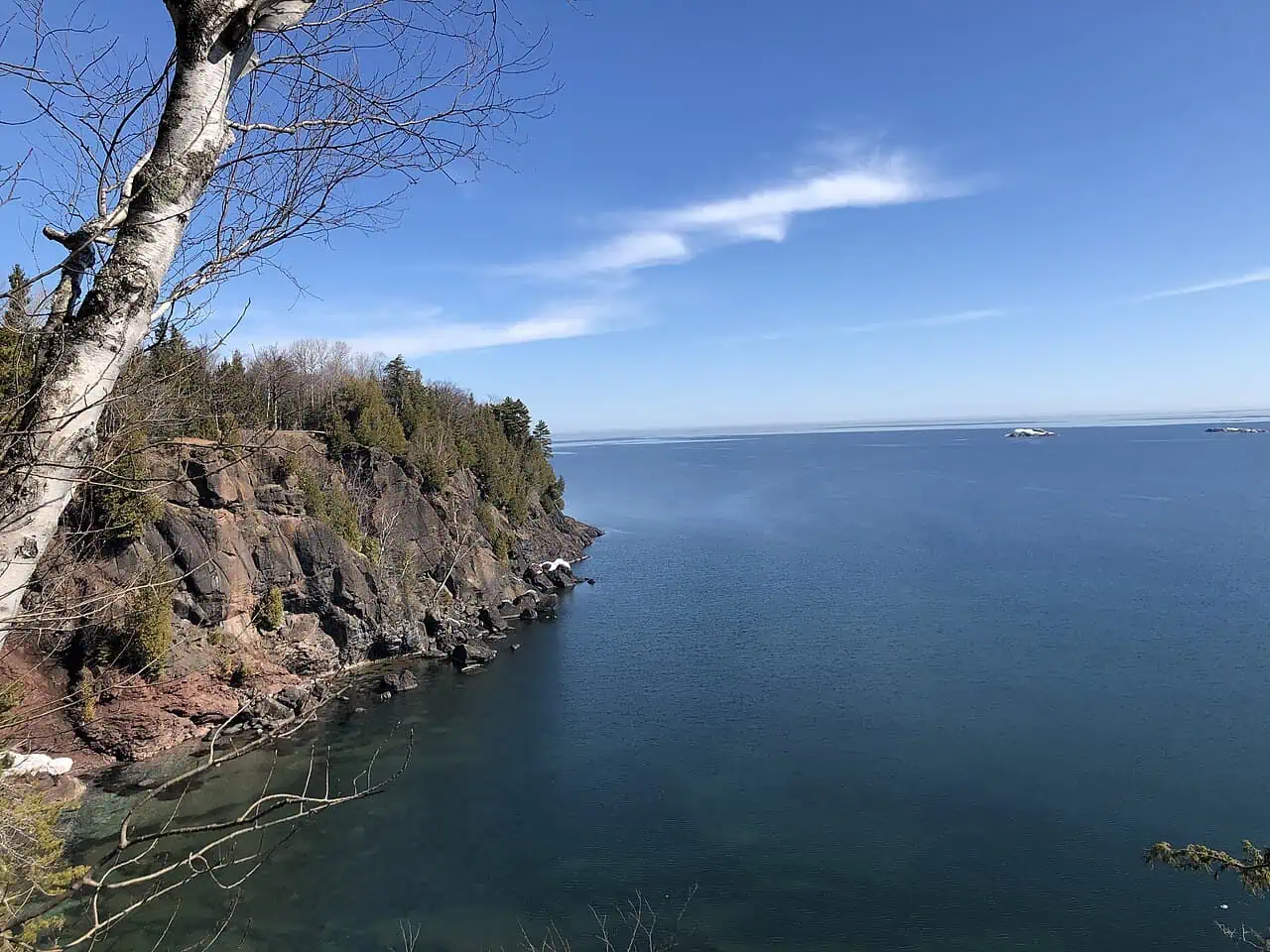
Kawbawgam died of typhoid on December 28, 1902. Peter White arranged everything. After a solemn high Mass at St. Peter Cathedral, a procession of streetcars carried the chief the length of the city to Presque Isle, where he was buried on the bluff above the water he had lived beside his whole life. For years the grave had no stone, until a great boulder washed up on the Presque Isle shore and was set in place as his marker. Lake Superior, in other words, supplied the headstone. Charlotte joined him beneath it in 1904.
Standing there today
The grave still sits on its rise in Presque Isle Park, one of the most beautiful spots in Marquette, and people still climb the hill to pay their respects. The stories Charlie and Charlotte told were written down in the 1890s and survive in a book, Ojibwa Narratives, and her father’s name lives on in the Marji Gesick endurance race run through the iron hills he opened. If you visit, go quietly. It is a grave first and a landmark second.
Marquette’s very first greeting came from Charlie Kawbawgam, and the city’s farewell to him filled its streets. Not many places can say their story begins and ends its first chapter with the same man.
Sources, credits, and reporting details
Sources & accountability
How this story was reported
Legacy source review pending. This published article has not yet passed Yooper’s current source-readiness gate.
Editorial methodNot yet classified
Image provenanceAI imagery status not yet declared
Accountable reviewerNot yet assigned
Last verifiedNot yet recorded
Next required reviewNot yet scheduled
Sources: The Mining Journal; Tyler Tichelaar, ‘Kawbawgam: The Chief, The Legend, The Man’; Russell Magnaghi, ‘The Ojibwe in Marquette County, Michigan’; Michigan Historical Review (Rebecca J. Mead).
Direct links, claim-level support, dates, credits, and editorial accountability may still be incomplete.