In September 1679, a brand new sailing ship loaded with a fortune in furs left an island near Green Bay, fired a farewell cannon shot, and sailed east into Lake Michigan. It was never seen again. No wreckage, no bodies, no survivors. More than 340 years later, Le Griffon is still the most hunted shipwreck on the Great Lakes, and the best guess for where it went down sits right off the U.P.
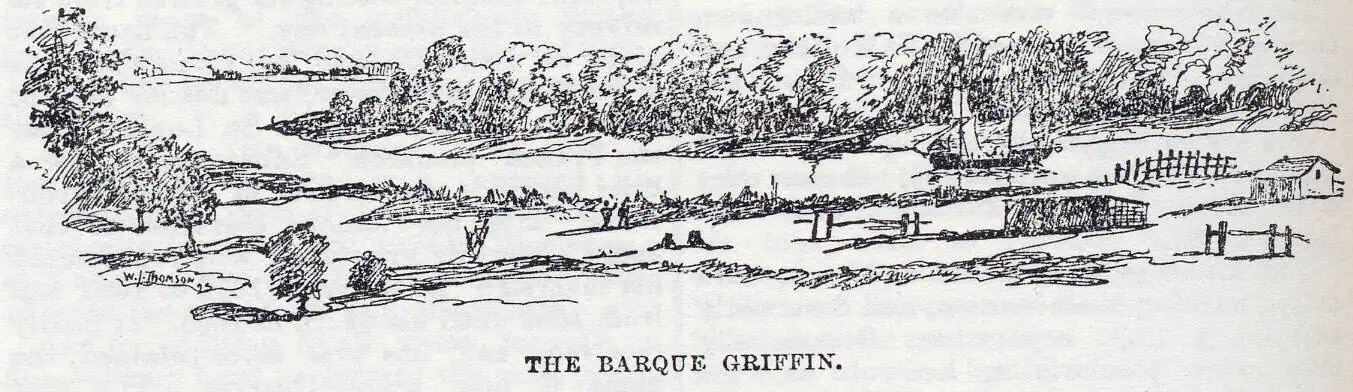
The ship belonged to Rene-Robert Cavelier, Sieur de La Salle, the French explorer chasing a fur-trade fortune and a route to the Pacific. He built Le Griffon on the Niagara River and, in August 1679, sailed her across Lake Erie, Lake Huron, and into Lake Michigan, the first full-sized European ship ever to cross the upper Great Lakes. She was about 45 tons, armed with cannons, and carried a carved griffin at the bow.

The vanishing
At an island near Green Bay, La Salle loaded roughly 12,000 pounds of furs aboard, then stayed behind to keep exploring by canoe. He sent the ship back toward Niagara on September 18 with a crew of six and a parting gun salute. That salute was the last anyone ever heard of her. By late November she still had not arrived, and she never would.
Nobody knows what happened. La Salle himself believed the crew scuttled her and ran off with the furs. Father Louis Hennepin, who sailed on the maiden voyage, blamed a storm. Others pointed at rival fur traders, at Jesuits, at a Native attack, even at a curse said to have been laid on the ship before she launched. There is no proof for any of it.

The myth worth correcting
You will often read that Le Griffon was the first ship ever lost on the Great Lakes. That is not quite true. La Salle lost an earlier, smaller vessel on Lake Ontario in January 1679, months before Le Griffon disappeared. What Le Griffon can claim is being the first full-sized sailing ship on the upper lakes, and by far the most famous of the roughly 6,000 wrecks that would follow her to the bottom.
Why the U.P. is at the center of it
Shipwreck hunters joke that Le Griffon is the most-found ship on the Great Lakes, because people keep announcing they have found her and keep being wrong. Of 22 claims made since the 1800s, all but two have been flatly debunked. One of the two live candidates is a field of old timber next to Poverty Island, at the mouth of Green Bay off the U.P.’s Garden Peninsula, where diver Steve Libert has spent decades chasing an oak beam he is convinced is the real thing.
Not everyone buys it. Maritime historians point out that the suspected site is only about 80 feet deep with a limestone bottom and heavy wave action, conditions that would likely have ground a 1600s wooden ship down to almost nothing over three and a half centuries. The debate is still open, which is exactly why the hunt never ends.
Why you cannot just go dig it up
Here is the practical part worth knowing. Even if someone does find Le Griffon in Michigan waters, they cannot simply keep it. Under the federal Abandoned Shipwreck Act, historic wrecks in the Great Lakes belong to the state they lie in, and Michigan has gone to court to protect exactly these kinds of sites. That is why the Poverty Island claim came wrapped in lawsuits rather than a salvage operation. The Great Lakes keep their wrecks, and for now they are keeping this one.
More worth reading


Yooper Hub community
The conversation
Know something this story missed? Corrections and additions get read by an editor and folded into the article, with credit.
Real neighbors, real names. A Yooper Hub editor reads your first comment before it appears; after that you’re a known neighbor and your comments post right away. No account required. Community guidelines
Nothing here yet. A sentence is plenty: a correction, a name, or what you remember about this place.
Sources, credits, and reporting details
Sources & accountability
How this story was reported
Editorial methodArchival synthesis
Last verifiedJul. 13, 2026
Corrections statusNo material correction identified in the July 13, 2026 source review.
AI assistanceResearched and drafted with AI tools. Reviewed and approved by editor Keegan O’Brien.
Verification note: CEO-directed review checked the central claims against 1 direct public evidence link on July 13, 2026. No material correction was identified. Featured image rights and attribution independently verified against the retained source record on 2026-07-14; attachment 1649 restored under Keegan O'Brien dated approval.
Primary sources
-
Direct evidence for: The Great Lakes’ Most Hunted Shipwreck Has Been Missing Since 1679 — State of Michigan
Accessed Jul. 13, 2026.
Direct public evidence reviewed against the article on July 13, 2026.
Photo and media credits
-
The Barque Griffin on the Great Lakes — W. J. Thompson
Featured image record. Accessed Jul. 14, 2026. public domain in the United States.
the non-contemporary, imaginative-depiction disclosure is mandatory.
